



The Future of Bitcoin Mining: Transitioning to AI and HPC
In his recent State of the Union address, President Donald Trump emphasized innovation policy aimed at alleviating concerns over restrictive trade practices and promoting economic resilience. During this time, Bitcoin (BTC) experienced a brief rally, peaking at $69,000 before retracting by 6% in the following days. This volatility in Bitcoin’s price showcases the ongoing challenges faced by miners, particularly as long-term bearish trends persist. As Bitcoin’s "electrical cost" has significantly decreased from $71,000 in Q4 2025 to around $53,500 now, operational pressure intensifies for miners, spurring a shift toward more efficient mining practices.
The Evolving Landscape of Bitcoin Mining
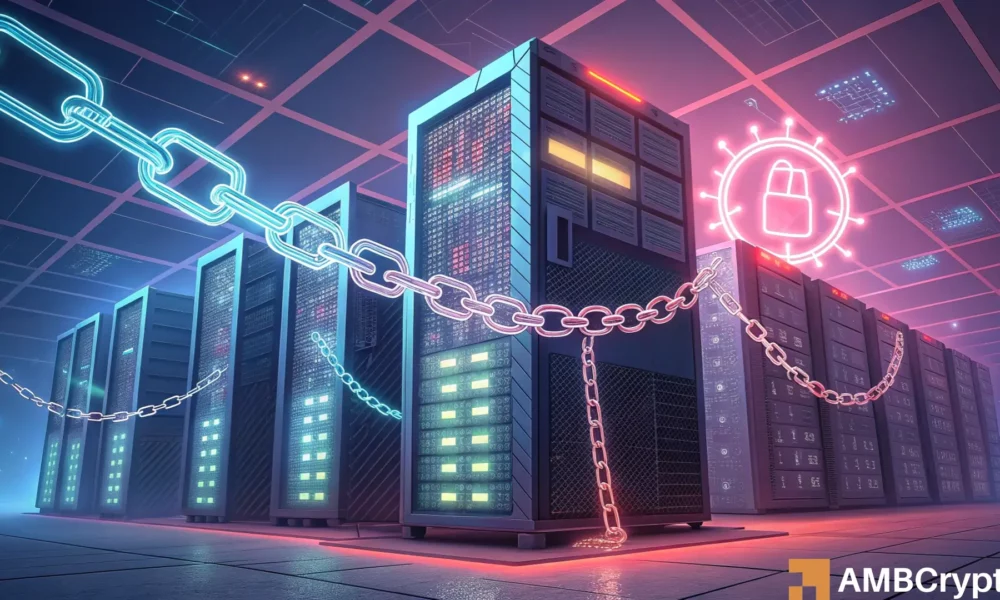
Recent analyses reveal that the Bitcoin mining landscape is undergoing a significant transformation, largely driven by advancements in artificial intelligence (AI) and high-performance computing (HPC). A report from VanEck in August 2024 highlighted the growing importance of Bitcoin miners in AI and HPC sectors. The report pointed out that while Bitcoin miners currently trade at about $4.5 million per megawatt (MW) of installed capacity, high-performance data centers boast valuations of $30 million per MW or more. This stark discrepancy suggests a tremendous valuation arbitrage opportunity for miners, which could potentially double their market capitalization by 2028 if 20% of their capacity is redirected toward AI and HPC workloads.
Financial Opportunities in AI and Data Centers
Beyond operational efficiency, the financial implications are significant as well. Analysts have noted that there has been an influx of bonding activity within Bitcoin mining and AI infrastructure sectors, with $33 billion of long-term senior notes being issued in the last year. The bond market indicates a diverse risk profile, where well-established energy companies command lower interest rates, while Bitcoin infrastructure firms like CoreWeave face a speculative-grade credit with higher yields of up to 9.25%. This environment enables miners to leverage their existing capabilities, offering critical AI and HPC services within a short timeframe, which could significantly improve their financial stability and valuation metrics.
Industry Innovations and Strategic Shifts
Companies are already taking proactive steps to expand their role from traditional Bitcoin mining to more diversified data center operations. For instance, TeraWulf’s recent financial reports underline a shift from solely mining BTC to becoming a player in AI infrastructure. Key partnerships, such as long-term lease agreements with Core42 and FluidStack for 60 MW and 380 MW respectively, enhance revenue stability. In the same spirit, Marathon Digital’s earnings call outlined a collaborative venture with Starwood Digital Ventures, positioning them to convert their existing sites into dedicated data centers. This joint venture not only secures capital through Starwood’s institutional investors but also creates a pathway towards substantial IT capacity growth, further propelling the industry’s evolution.
The Risks and Rewards of Transition
Despite the promising developments in transitioning to AI and HPC, questions about the sustainability of demand linger. The continuing appetite for AI services will determine whether the premium capital becomes justifiable. If demand persists, enhanced asset values and accelerating revenues may facilitate smoother debt refinancing. Conversely, a significant drop in AI demand could stymie the momentum of these initiatives, placing undue financial strain on miners. The risks associated with high debt levels, if left unchecked, could jeopardize the future viability of these firms.
Conclusion: A Crucial Pivot for Bitcoin Miners
With Bitcoin prices sinking and mining complexities increasing, the current landscape presents Bitcoin mining firms with a stark choice: adapt or face potential obsolescence. Transitioning operational capacity toward AI and HPC data centers not only offers a more profitable future but may be a vital move for large-scale miners needing to remain competitive. This strategic pivot emphasizes the importance of leveraging existing resources to navigate an evolving technological landscape, ensuring sustainability in an increasingly competitive market. As the future unfolds, the decisions made by these energy-intensive players will undoubtedly shape the trajectory of Bitcoin and the broader cryptocurrency ecosystem.