



Ethereum: The Backbone of Web3 Amidst Layer-2 Ascendance
Ethereum (ETH) has long been recognized as the foundational layer of the burgeoning Web3 ecosystem. However, recent data reveals a significant shift in transaction activity, as Layer-2 (L2) networks have begun to dominate the landscape, handling most transactions from the Ethereum blockchain. This transformation emphasizes Ethereum’s critical role as the "digital oil" of the decentralized world, even as its own on-chain numbers exhibit a cooling trend.
The Rise of Layer-2 Networks
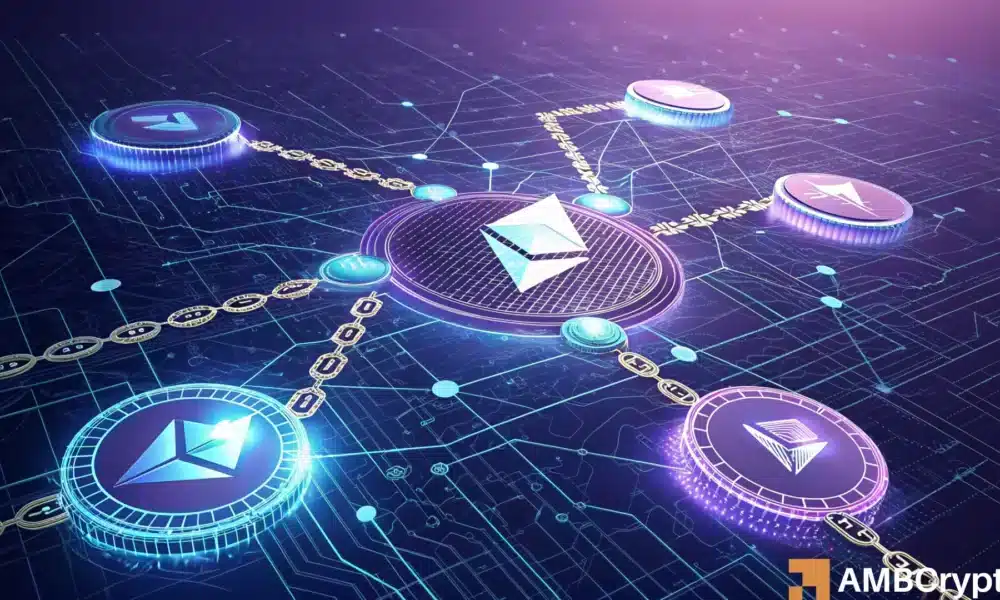
Recent statistics illustrate the compelling shift toward Layer-2 networks, particularly Polygon, Arbitrum, and Optimism, which now account for a substantial portion of total Ethereum transactions. While Ethereum’s mainnet has historically been the hub for transactions, these L2 solutions have evolved into superior alternatives. Processing between 2-4 million transactions daily, they offer speed and cost advantages that have drawn users away from the primary chain. Smaller rollup solutions like Linea, Scroll, and zkSync still contribute to the mix but command only a minor share of the overall transaction volume.
Implications for Ethereum’s “Digital Oil” Narrative
The notion of Ethereum as the “digital oil” underscores its utility within the blockchain economy, fueled by EIP-1559’s fee burn mechanism. However, the narrative is challenged by recent statistics reflecting an inflationary supply of ETH, even as Layer-2 adoption grows. Critics argue that the migration of transaction revenue off-chain—including sequencer fees and Maximal Extractable Value (MEV)—dilutes the returns to Ethereum itself. On the other hand, supporters assert that Ethereum’s evolving role as essential infrastructure could redefine its value, suggesting that it should be viewed not merely as a commodity but as the foundational land upon which decentralized applications are built.
Decoupling: A Slower L1 Does Not Equate to a Weak ETH
While some metrics indicate a downturn—such as a decrease in Total Value Locked (TVL) nearing $66 billion—this does not reflect a decline in Ethereum’s intrinsic value. Data from DeFiLlama reveals the continuing migration of activity to Layer-2 networks. Interestingly, derivatives traders are still treating ETH with optimism. Notably, Ki Young Ju, the CEO of CryptoQuant, highlighted that Ethereum is undervalued, with 10 out of 12 valuation models suggesting ETH is trading well below its fair value. The Composite Fair Value estimate places ETH around $4.8k, signifying that it may be as much as 59% undervalued despite macroeconomic headwinds.
A Robust Market for Ethereum
Aggregated Open Interest in Ethereum remains robust, hovering above $15 billion, while Funding Rates stay consistently positive. This indicates that the market still perceives ETH as integral to the ecosystem rather than simply a fading asset. In spite of the thinning activity on Ethereum’s base layer, enthusiastic supporters remain steadfast, signaling a belief in Ethereum’s enduring value proposition.
Final Thoughts: Confidence Amidst Challenges
As Layer-2 adoption accelerates, Ethereum’s underlying value case remains intact. Although on-chain metrics may not reflect the same vigor, the market stills holds confidence in ETH’s potential. The current landscape indicates an evolution rather than a decline, with Ethereum poised to maintain its status as the core infrastructure of Web3. As L2 solutions take center stage, Ethereum’s foundational role is more vital than ever, laying the groundwork for future innovations and decentralized applications.
In conclusion, while the dynamics of transaction volume have shifted dramatically, Ethereum’s essence as the backbone of the decentralized economy continues to thrive, making it a compelling asset for investors and developers alike. As the ecosystem evolves, Ethereum’s significance remains undiminished, reinforcing its place in the digital landscape.