




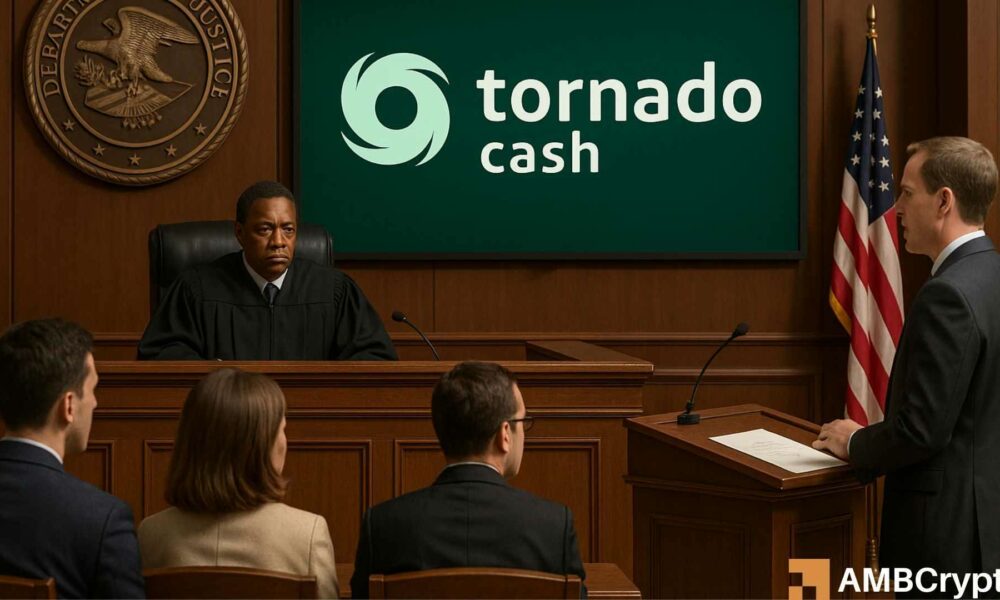
DOJ Clarification on Dragonfly and Tornado Cash: What You Need to Know
The evolving dynamics between cryptocurrency regulations and venture capital firms have recently spotlighted the U.S. Department of Justice (DOJ) and its potential legal action against the crypto VC firm Dragonfly. Speculation arose when DOJ officials hinted in court that Dragonfly could face charges for its support of Tornado Cash, an open-source privacy protocol. However, the DOJ has since clarified its stance, asserting that no charges are forthcoming against Dragonfly or its personnel. This development not only alleviates immediate fears for Dragonfly but also raises significant discussions about the implications for the cryptocurrency sector.
DOJ’s Statement and Backtrack
The recent announcement by the DOJ clarified that it is not pursuing charges against Dragonfly related to its investment in Tornado Cash. Thane Rehn, a Federal Prosecutor, emphasized in a statement that "recent media reports were inaccurate and misleading." He further confirmed that the DOJ has not singled out Dragonfly, its directors, officers, or any employees as targets of any investigation. This official backtrack is crucial as it highlights the need for precise communication from regulatory bodies, especially in such a sensitive and rapidly evolving market as cryptocurrency.
Dragonfly’s Response
In light of the uncertainty, Dragonfly has openly expressed its willingness to defend its investment in Tornado Cash. Some industry leaders, including Hasseeb Qureshi, Dragonfly’s managing partner, suggested that the DOJ’s initial comments in court represented a serious overreach. Qureshi condemned the idea that investors could be prosecuted solely for supporting open-source privacy technology. His remarks indicate a growing frustration within the crypto community regarding potential regulatory oversteps that could stifle innovation and freedom in open-source software development.
Legal and Ethical Concerns
The situation begs the question: what constitutes an ethical approach for regulators in an industry marked by rapid innovation? Qureshi pointed out that the DOJ’s insinuations could potentially have a chilling effect on investors, who may feel discouraged from supporting projects that aim to enhance privacy. Given the growing focus on privacy rights and open-source software in America, these developments will likely spark significant debate surrounding the ethical boundaries of regulatory intervention.
Impact on Open-Source and Crypto Communities
The incident has far-reaching implications for not only Dragonfly but the broader tech and crypto communities. Legal actions against investors backing crypto protocols could set a concerning precedent. Qureshi emphasized that the outcome of this case could significantly affect open-source software and privacy rights in the U.S. The fear is that if investor support is penalized, the ecosystem of innovation might stagnate. Stakeholders remain hopeful that the judicial system will navigate complex issues of legality while upholding the values fundamental to the tech space.
The Future of Tornado Cash
Tornado Cash has a complicated history, having been removed from the U.S. sanctions list in early 2025. The protocol found itself under scrutiny after allegations that North Korean hackers utilized it for money laundering. While the DOJ has backed off from directly pursuing Dragonfly, the developers of Tornado Cash, including Roman Storm, still face potential legal challenges that could unfold in coming days. As the situation evolves, the focus will certainly remain on how regulatory bodies interpret laws pertaining to technology and finance moving forward.
Conclusion
In summary, the DOJ’s recent actions regarding Dragonfly and Tornado Cash encapsulate a moment of significant concern and commentary in the cryptocurrency landscape. As regulatory discussions continue, the broader implications for investors, open-source projects, and privacy rights remain critical to watch. The evolving legalities not only impact stakeholders involved but will shape the future landscape of cryptocurrency innovation and regulation. As the discussions continue, the hope is for a balanced approach that allows for ongoing innovation while ensuring compliance and ethical considerations are met.