



Stripe’s Tempo: A Revolutionary Shift in Payment Blockchain Dynamics
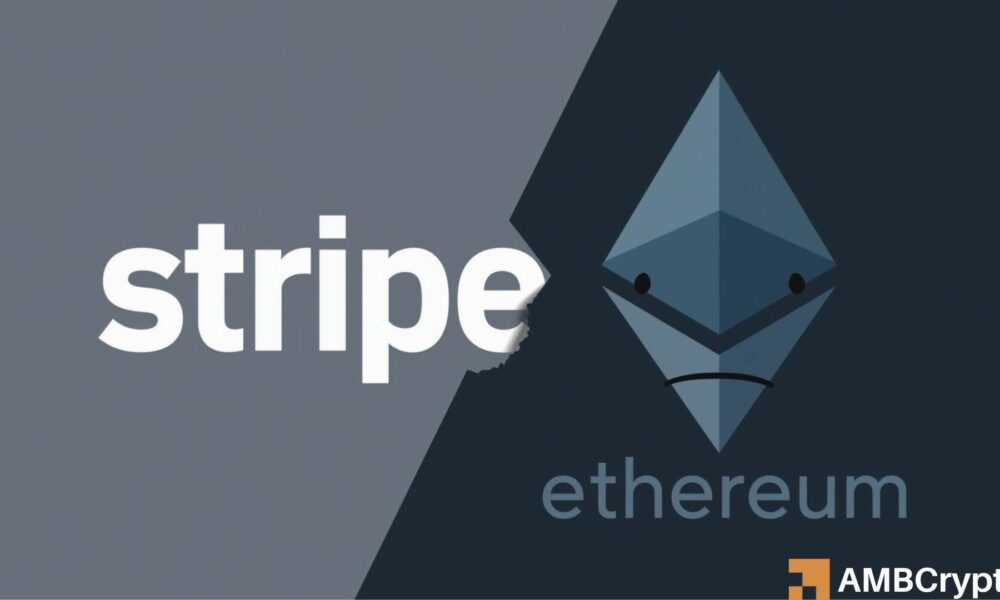
Stripe has recently made headlines by launching Tempo, a groundbreaking Layer 1 (L1) blockchain designed primarily for payment services. Unlike initial expectations that it would function as an Ethereum Layer 2 (L2) solution, Tempo will operate as a standalone blockchain, setting it apart from much of the existing decentralized infrastructure. This shift not only positions Stripe alongside tech giants such as Google, which is also exploring stablecoin frameworks, but it raises critical questions about the long-term implications for Ethereum’s dominance in the stablecoin and tokenized assets arena.
The Launch of Tempo: A New Era for Stripe and Blockchain
In collaboration with Paradigm, Stripe’s Tempo aims to redefine the blockchain landscape, particularly for financial services. Patrick Collison, Stripe’s CEO, emphasized that existing blockchains are not adequately designed for the increasing demand for stablecoin transactions within the Stripe ecosystem. Specifically, he identified limitations such as low throughput and poor user experience as reasons for skipping the L2 route. Instead, Tempo will utilize stablecoins for transaction fees, creating a more user-friendly financial ecosystem devoid of the complexities associated with blockchain-specific tokens.
Competition for Ethereum’s Market Share
The emergence of Tempo raises significant concerns for Ethereum and its associated L2 solutions, which have been heavily promoted as scalable pathways for decentralized applications. As Tempo seeks to cater to a variety of uses—including AI-driven payments and tokenized deposits—it’s poised to attract users and operators from the Ethereum ecosystem. As the competition heats up with additional players like Google’s GCUL also entering the fray, there’s a distinct possibility that Ethereum may experience a decline in market share, particularly in the stablecoin sector.
Insights from Industry Experts
Industry experts are already weighing in on the potential impact of Tempo. Tushar Jain, co-founder of Multicoin Capital, labeled the launch “the beginning of the end for L2s.” This statement reflects a growing sentiment among investors that Ethereum’s role as a leading settlement layer for digital transactions might be challenged significantly by Tempo’s introduction. Similarly, Jon Charbonneau, a seasoned crypto investor, echoed this sentiment by suggesting that those heavily invested in Ethereum are now diversifying by building their own Layer 1 solutions, questioning the sustainability of Ethereum’s position.
Tempo’s Unique Value Propositions
Despite these challenges, Tempo comes with promising features that make it a noteworthy contender in the blockchain space. With its focus on decentralized services and significant industry partnerships, it positions itself as an attractive option for businesses seeking functionalities in payments. Chuk Okpalugo, product lead at Paxos, acknowledged that Tempo has the necessary components to succeed, including an appealing narrative around permissionless technology. The real test will be coordinating its diverse partnerships, but Stripe’s established distribution network could simplify the process.
Market Sentiment and Ethereum’s Future
The initial market reaction following Tempo’s announcement saw a slight decrease in Ethereum’s value, indicating investor concern about the potential for competition. As new blockchains like Tempo become operational, it will be crucial to monitor investor behavior and market dynamics closely. The introduction of these alternative solutions may alter the blockchain ecosystem, presenting not only challenges but also opportunities for innovation and adaptation in the industry.
Conclusion: A Shift in the Blockchain Landscape
As Stripe’s Tempo embarks on this ambitious journey to redefine payment-focused blockchain technology, its impact on Ethereum and the broader market will be closely scrutinized. With the possibility of shifting user preferences and the increased competition for the use of stablecoins and tokenized transactions, this could signify a transformative period for digital finance. The coming months will be pivotal in determining whether Tempo can carve out its niche and influence the trajectory of blockchain technology moving forward.