




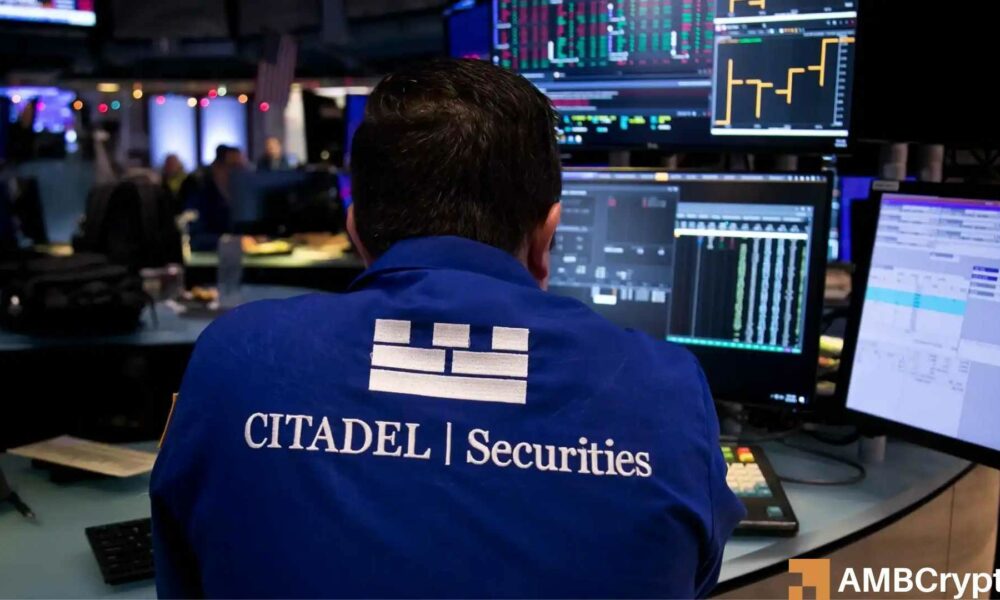
Citadel Securities and Its Controversial Stance on DeFi Platforms
Citadel Securities, the world’s foremost market maker, has recently stirred up considerable controversy within the cryptocurrency community due to its cautious stance regarding decentralized finance (DeFi) platforms. In a notable correspondence sent to the U.S. Securities and Exchange Commission (SEC), Citadel praised the potential for tokenized equities and blockchain technology to enhance market functionalities such as clearing, settlement efficiency, and investor options. However, the firm argued that if DeFi platforms are to manage tokenized stocks and exchange-traded funds (ETFs), they must comply with the same regulations that govern traditional exchanges. This calls for greater oversight and transparency, which has drawn sharp criticism from various corners of the crypto industry.
Citadel’s sentiment reflects a broader concern about the regulatory implications of unregulated DeFi platforms. The firm emphasized that exempting these platforms from oversight could severely undermine the regulatory framework designed to protect investors and ensure market integrity. By advocating for compliance with existing rules, Citadel effectively positions itself as a defender of investor rights while simultaneously raising alarm about the lack of accountability within the DeFi space. This perspective is not without its critics, however, particularly among those who see such demands as a barrier to innovation and a threat to the decentralized ethos of blockchain technology.
One prominent critique came from Hayden Adams, the CEO of Uniswap, one of the leading DeFi platforms on the Ethereum network. Adams accused Citadel and its CEO, Ken Griffin, of engaging in covert lobbying against the DeFi sector. He articulated that the firm’s resistance to open-source, peer-to-peer technology—capable of democratizing liquidity creation—exemplifies a protective stance for traditional financial systems that could be disrupted by DeFi innovation. This friction underscores a fundamental divide between the objectives of traditional market makers like Citadel and those advocating for the disruptive capabilities of DeFi.
Adding another layer to this controversy, some industry insiders interpreted Citadel’s position as a declaration of war on the cryptocurrency sector as a whole. Jerk Chervinsky, Chief Legal Officer at crypto venture capital firm Variant Fund, suggested that Citadel’s opposition was entirely anticipated, given the existential threat DeFi poses to its traditionally intermediary role in financial markets. Chervinsky’s remarks hint at a growing sentiment among crypto enthusiasts that established financial players may seek to protect their interests at the expense of technological advancement and market democratization.
The implications of Citadel’s statements extend beyond a mere difference in opinion on DeFi regulation; they signal potential challenges for forthcoming cryptocurrency legislation. The firm’s views align with those of other traditional financial players, as reflected by its affiliation with the World Federation of Exchanges (WFE). This stance complicates the ongoing discussions surrounding DeFi regulations and could hinder progress on the broader crypto market structure bill. Notably, a DeFi legislation proposal nearly derailed negotiations in October, and the recently circulated draft has faced widespread disapproval from DeFi advocates, labeling it unsafe for sector participants.
As regulatory frameworks attempt to adapt to the rapidly evolving landscape of decentralized finance, balancing the interests of both traditional and innovative financial players presents an ongoing challenge. If regulators succumb to the pressures of established market makers, the vision of a decentralized, transparent financial system may be compromised. On the other hand, failing to implement adequate regulations could lead to significant risks for investors currently engaging with DeFi platforms. Stakeholders must remain vigilant as discussions unfold, ensuring that protective measures do not stifle innovation and progress in the cryptocurrency sphere.
In conclusion, Citadel Securities takes a firm stance against DeFi platforms operating without the same regulatory scrutiny as traditional financial institutions. While they profess to advocate for investor protection, their actions could be perceived as defensive measures safeguarding their business models in the face of disruptive innovation. The ongoing debate underscores the need for careful consideration of how emerging technologies in finance can be integrated into existing frameworks without undermining their fundamental transformative potential. The coming months will be critical as the regulatory landscape continues to evolve, and all eyes will be on how these tensions between traditional finance and DeFi are navigated.