



Wealth Concentration in Bitcoin: Decentralization Under Threat?
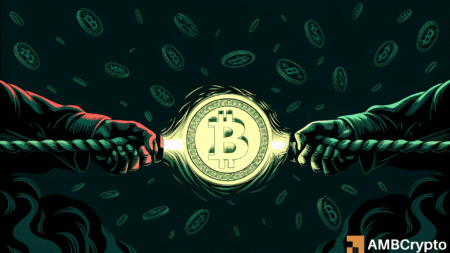
Bitcoin (BTC) was founded on the principles of decentralization and financial freedom, aiming to distribute wealth among a broad range of participants. However, recent trends illustrate a concerning shift in the cryptocurrency landscape. Currently, over 20,000 Bitcoin wallets hold more than $10 million each, collectively accounting for nearly 10% of the total BTC supply. This phenomenon of wealth concentration raises crucial questions about Bitcoin’s foundational ethos and its evolving dynamics in a growing financial ecosystem.
Whale Accumulation: A Meaningful Trend
Recent data highlights that over 20,000 Bitcoin addresses own at least $10 million worth of BTC, amounting to an impressive $200 billion. This represents approximately 9.43% of the entire Bitcoin supply and more than 21% of its realized market cap. Notably, the trend of accumulation is not merely anecdotal; more than 622 new wallets surpassing the 10 BTC threshold have emerged in under a month. This burgeoning "club" of wealthy Bitcoin holders signifies a broader and more concerning shift in the cryptocurrency market.
Unlike previous bull markets, where wallet accumulation peaked during price surges, the current trend sees rapid growth in wealthy wallets even amidst slower retail participation. This contrasts sharply with earlier periods, prompting analysts to investigate the broader implications for Bitcoin’s distribution of wealth.
The Illusion of Decentralization
While Bitcoin has been celebrated for its decentralized architecture, the reality of wealth distribution suggests otherwise. The top 20,000 Bitcoin addresses collectively control a staggering 1.87 million BTC, creating an uneven financial hierarchy reminiscent of traditional finance systems. In this emerging structure, a select few—often referred to as "whales," "sharks," and "dolphins"—hold disproportionate influence over market trends and price movements, substantially overshadowing retail investors.
The implications of this wealth concentration challenge Bitcoin’s initial promise of an equitable financial system. While transactions remain permissionless and accessible to anyone with an internet connection, the dynamics of buying and selling are increasingly being dictated by these large holders. Their actions can significantly affect market liquidity, leaving less room for smaller investors to maneuver within this digital economy.
Retail Investors: Cautious or Concerned?
The growing presence of large Bitcoin holders brings to the forefront a significant question: should retail investors express concern over this trend? The answer largely depends on one’s perspective on Bitcoin’s fundamental purpose. From one viewpoint, this concentration of wealth seems to undermine the vision of a decentralized currency, creating barriers for smaller, more vulnerable participants. Conversely, the increasing involvement of institutional players might signal long-term trust in Bitcoin, leading to a more stable marketplace with improved liquidity.
However, the real challenge lies in the implications for price discovery. With large stakeholders having the means to instigate significant market movements, the fair and organic pricing of Bitcoin comes into question. Maintaining an open and balanced network for all users, regardless of wealth, is becoming an essential discussion point among stakeholders in the Bitcoin ecosystem.
Market Dynamics and Future Implications
As Bitcoin’s market continues to mature, the increasing concentration of wealth within a small subset of addresses raises various implications. On one hand, the heightened institutional interest can foster greater legitimacy, potentially leading to wider acceptance of Bitcoin as a viable asset class. On the other hand, if the concentration of assets remains unchecked, it could deter participation from smaller investors, ultimately damaging the foundational principle of decentralization.
The ongoing accumulation by large holders makes it imperative for both investors and regulators to closely monitor market dynamics. If large players continue to dominate, the risk of market manipulation cannot be dismissed. Therefore, ensuring protections for retail investors while fostering a robust institutional market will be crucial in maintaining Bitcoin’s integrity.
Remain Vigilant: The Future of Bitcoin
As we look ahead, the Bitcoin community must navigate the challenges posed by wealth concentration. Maintaining an equitable, transparent, and decentralized financial system will be a central theme for the network’s future development. Robust discussions surrounding governance, regulation, and market integrity will prove vital for balancing the interests of various stakeholders.
In summary, while Bitcoin was built on the foundation of decentralization, the reality today portrays a landscape where wealth is increasingly concentrated among a select few. The coming years will likely shape the narrative surrounding Bitcoin and its ability to uphold its original vision while accommodating the demands of an evolving financial ecosystem. Whether Bitcoin can transcend these challenges will determine not only its future but also the broader acceptance of digital currencies as a sustainable financial alternative.