



Stablecoins in a Volatile Market: The Dominance of USDC and Its Implications for Solana
The digital currency landscape continues to shift, with stablecoins establishing themselves as dependable havens amid market volatility. Q4 2025 clearly illustrated this trend, particularly for Circle’s USDC, the second-largest stablecoin, which demonstrated remarkable resilience and performance. Throughout this challenging quarter, USDC showcased a substantial market capitalization exceeding $70 billion, reflecting a staggering 72% increase in circulation to reach $75.3 billion. Furthermore, with a transaction volume soaring to $11.9 trillion, an impressive 247% spike, USDC proved its value as a stable and attractive asset within the crypto ecosystem, as evidenced by its total revenue of $770 million, marking a 77% rise.
Circle’s Q4 earnings report, released in January, revealed a significant uptick in share prices, which surged 35%. This rebound not only signaled a recovery from losses incurred earlier in the year but also restored investor confidence within a market beset by declining asset values; the crypto sector experienced a 20% downturn, marking the most significant decline since the bearish trends of 2022. Circle’s performance in the face of adversity demonstrates USDC’s increasing importance as a risk-averse instrument and a crucial hedge against unpredictable market conditions.
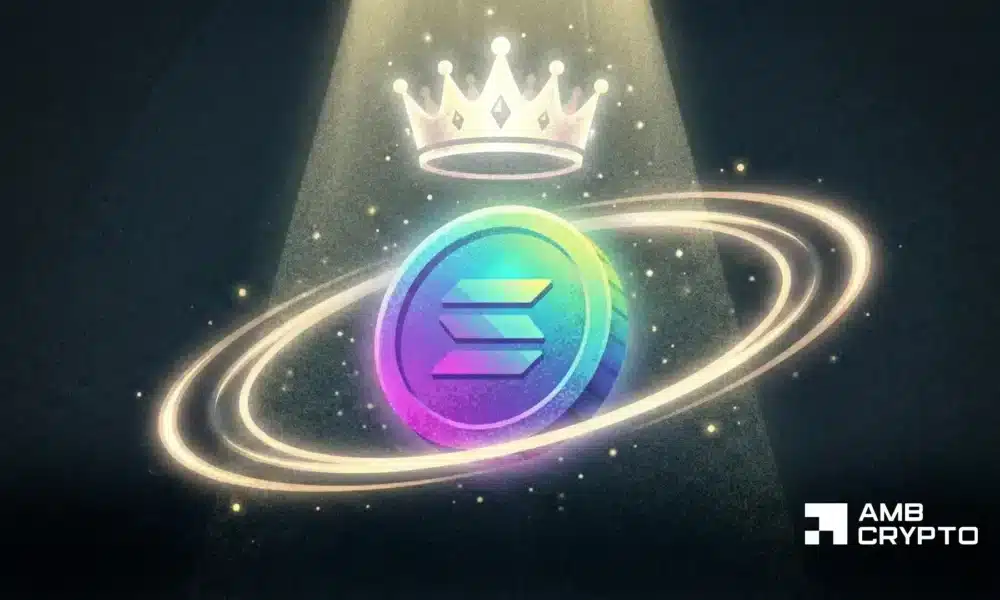
As shifts in the blockchain ecosystem continue, USDC’s growth places a spotlight on the Solana network, known for its high-speed transactions and decentralized finance (DeFi) capabilities. Currently, Solana leads in USDC liquidity, controlling nearly 53% of the stablecoin market valued at $15.34 billion. This dominance positions USDC not only as a cornerstone of Solana’s DeFi ecosystem but also as a driving factor for the network’s future potential. Michael Saylor, a prominent figure in the crypto space, has recently expressed optimism regarding Solana, predicting a significant evolution in digital credit applications via blockchain technology.
The emergence of digital credit based on blockchain technologies is pivotal in bridging the gap between traditional finance (TradFi) and decentralized finance (DeFi). Saylor’s vision of instant transactions and 24/7 trading suggests that the integration of traditional financial systems with DeFi is imminent. In this evolving landscape, stablecoins like USDC are essential, fueling liquidity and supporting the functionality of decentralized platforms. Saylor’s endorsement of Solana, combined with USDC’s robust performance, lends significant credence to the network as a prime candidate for the next phase in digital finance.
Circling back to Circle’s strong Q4 results, the rising transaction volumes reflect an enthusiastic embrace of USDC among users, indicating its reliability and appeal in a turbulent market. As with any financial system, liquidity is crucial for sustaining large-scale DeFi activities, and USDC’s commanding presence on Solana serves as a testament to its importance within the sector. Recently, the minting of an additional $250 million USDC further reinforces its stronghold in the blockchain space, positioning it as a key player that significantly underpins Solana’s DeFi network’s liquidity requirements.
In summary, Circle’s exceptional performance in Q4 underscores the pivotal role that USDC plays within the cryptocurrency market landscape, particularly as a stable and reliable asset during challenging times. Its dominance on Solana not only enhances the network’s liquidity but also supports Michael Saylor’s optimistic outlook regarding the future of digital credit applications on the platform. As blockchain integration continues, stablecoins like USDC will likely become foundational components of emerging DeFi ecosystems, paving the way for innovations that bridge traditional and decentralized finance.