


The Rise of Ethereum: Driving Institutional Adoption in 2025
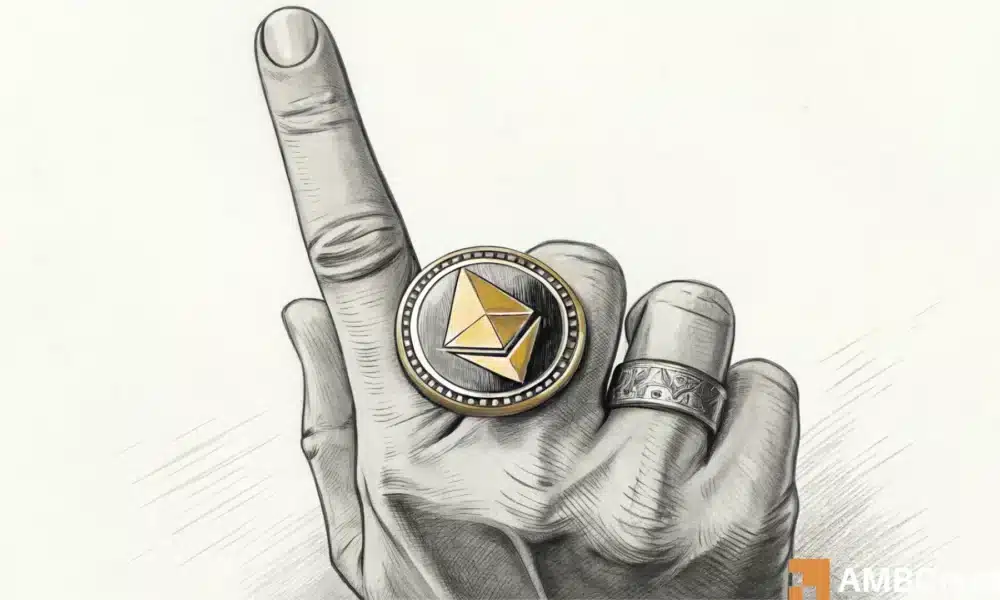
The landscape of asset management is undergoing a significant transformation as institutional participation in blockchain technology accelerates. This shift, particularly evident in the 2025 cycle, indicates a move toward what is being termed as "institutionalization." While the introduction of Exchange-Traded Funds (ETFs) in 2024 played a role in building credibility and accessibility within the crypto space, it was the transition of "utility-driven" assets onto the blockchain that catalyzed substantial adoption. Notably, the Real World Asset (RWA) sector has emerged as the key driver for institutional engagement, reflecting a broader trend that is anchored by Ethereum’s capabilities.
Larry Fink, CEO of BlackRock, has been vocal about the necessity of tokenization and articulated that Ethereum is the preferred platform for this transition. At the World Economic Forum, Fink underscored the urgency for the rapid adoption of tokenization, spotlighting countries like India and Brazil for their pioneering efforts in implementing tokenized currencies. His mention of the concept of a "One Common Blockchain" to facilitate this evolution has piqued interest across the market, leading many to speculate that Ethereum may be ideally positioned to fulfill this role.
When evaluating the current state of the RWA sector, the figures present a compelling narrative. Ethereum commands a dominant 60% share of the $22.6 billion RWA market, showcasing its substantial lead over competitors such as Binance Smart Chain, which holds a mere 10.2%. Additionally, BlackRock’s token, BUIDL, has already amassed over $1.5 billion on the Ethereum network, further solidifying its reputation as a go-to platform for tokenization. The launch of JPMorgan’s MONY token adds another layer of credibility, supporting the notion that Ethereum is firmly placed in the institutional spotlight as the preferred blockchain for these advancements.
A critical factor that has been highlighted by Fink is the cost-effectiveness associated with purchasing tokenized assets via blockchain compared to traditional finance (TradFi). In the financial traditional landscape, acquiring assets often incurs various fees and commissions, making it a costly affair. Conversely, tokenized assets on Ethereum exhibit significantly lower costs, which may become a pivotal differentiating factor for institutional investors. The pertinent question remains: does Ethereum live up to this promise? Recent developments indicate that it does, especially as 2025 has ushered in a series of major on-chain upgrades for ETH.
Following these upgrades, the average gas fee for transactions on Ethereum has plummeted to an impressive low of 0.5 Gwei. Meanwhile, analysis from Glassnode indicates a notable rise in Month-over-Month Activity Retention, signifying an increase in transactions and the establishment of new wallets on the Ethereum network. This combination of lower costs and heightened activity reveals that Ethereum is not just enhancing its technological infrastructure but is also fostering genuine adoption. Hence, Fink’s assertion that Ethereum could emerge as the "one common blockchain" for tokenized assets is becoming increasingly credible.
In conclusion, Ethereum’s preeminence in the RWA sector, currently commanding a 60% market share, is reinforced by the backing of influential institutions like BlackRock and JPMorgan. With declining gas fees and a marked uptick in user adoption, the narrative that Ethereum serves as the "one common blockchain" is rapidly gaining traction. As we navigate this evolving landscape, it is clear that Ethereum is not just witnessing institutional interest but is also becoming an integral part of the financial infrastructure of the future.