




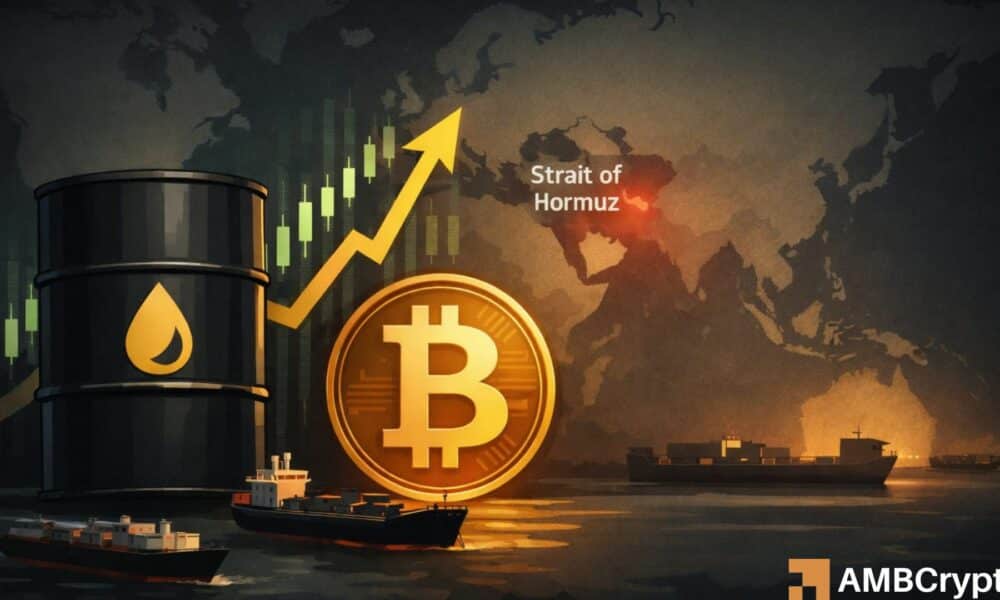
Rising Oil Prices and Bitcoin: An Interlinked Economic Dynamic
The recent surge in global oil prices, reaching nearly $90 per barrel, has been closely tied to escalating tensions in the Strait of Hormuz, a vital conduit for approximately 20% of global oil exports. This substantial increase of over 60% year-to-date has raised investor concerns about potential disruptions to shipping traffic. The geographical significance of the Strait—with around 35% of seaborne oil passing through—has caused markets to respond quickly by incorporating these geopolitical risks into energy pricing.
Beyond oil, this scenario presents fascinating correlations with Bitcoin (BTC) market cycles. Historical data suggests that heightened volatility in Brent crude often aligns with key transitional phases within the cryptocurrency sphere. Notably, significant oil price rallies in 2018 and 2022 coincided with periods of stagnation or consolidation in Bitcoin trading momentum. The implications of rising energy costs extend beyond direct commodities; they gradually elevate inflationary expectations, negatively impacting liquidity conditions across global markets. Consequently, investors tend to reduce their exposure to high-beta assets, including cryptocurrency, during such uncertain times.
Nevertheless, opinions are divided among analysts regarding the impact of rising inflation on Bitcoin. While some view Bitcoin as a hedge against currency debasement, supporting its value amid inflation shocks, the broader market remains uncertain on how Bitcoin will respond to ongoing macroeconomic pressures. The fluctuating landscape indicates a delicate balance between the potential of cryptocurrency as a secure investment and the risks that inflation poses to high-volatility assets like BTC.
The market experienced a significant shift when oil prices sharply declined after the G7 and IEA announced the release of 400 million barrels from strategic reserves. Initially, fears related to the Iranian crisis kept crude prices around $116, but the announcement prompted an 11% drop to nearly $103. This dramatic decline demonstrated rapid intervention against energy-led inflation expectations. Furthermore, statements from President Trump about a potential resolution to the Iran War contributed to even lower oil prices, showcasing how geopolitical developments can instantly affect market sentiments.
Notably, the fluctuations in oil prices do not only impact the commodity markets but also have cascading effects on cryptocurrency trading. When oil prices rise, inflation expectations tend to strengthen, pressuring central banks to adopt tighter monetary policies. Under such conditions, investors typically pull back from speculative assets like Bitcoin. However, the strategic reserve releases create an environment that can alleviate these pressures, stabilize inflation expectations, and perhaps allow the cryptocurrency market to regain its footing.
Despite the tumultuous macroeconomic scenario tied to oil, Bitcoin has demonstrated resilience. As of now, Bitcoin is steady at approximately $68,171, showing a modest gain of 1.3% despite external pressures. This stability aligns with decreasing supply on cryptocurrency exchanges, which have slipped to roughly 2.7 million BTC—the lowest since November 2019. This decline signals a trend of Long-Term Holders withdrawing from liquid markets, reflecting a move towards diversifying capital rather than an outright shift to energy assets.
In summary, Bitcoin’s performance in the midst of oil-driven market volatility indicates the complex interplay of global economic factors. Tightening exchange reserves and consistent ETF inflows highlight sustained institutional demand for BTC. As capital diversifies between energy hedges and the notion of digital scarcity, the prevailing macro liquidity conditions will continue as the primary driver influencing the momentum of Bitcoin’s market cycle. This multifaceted relationship between oil and cryptocurrency paints a compelling picture of modern financial dynamics where geopolitical and economic elements continually influence market trends.