




Bitcoin’s Current Market Dynamics: A Deep Dive into Loss Realizations and Future Predictions
Bitcoin [BTC], the leading cryptocurrency, has recently been navigating turbulent waters since its peak of $126k in October 2025. It has been trapped in a descending channel for a prolonged period, signaling a significant downtrend. As a result, Bitcoin has dropped below the Short-Term Holder (STH) Realized Price, a crucial indicator suggesting that all recent buyers are currently at a loss. This situation has raised alarm bells among investors and market analysts alike, indicating a challenging phase for the king of cryptocurrencies.
The Impact of Losses on Market Sentiment
Recent data from Checkonchain highlights a worrisome statistic: over 45.8% of Bitcoin’s total supply is currently held at a loss, leaving only 54.12% of holders in profit. The rising losses have led a significant number of market participants to capitulate, particularly larger investors or ‘whales.’ The sentiment is now marked by fear and uncertainty, significantly affecting market momentum.
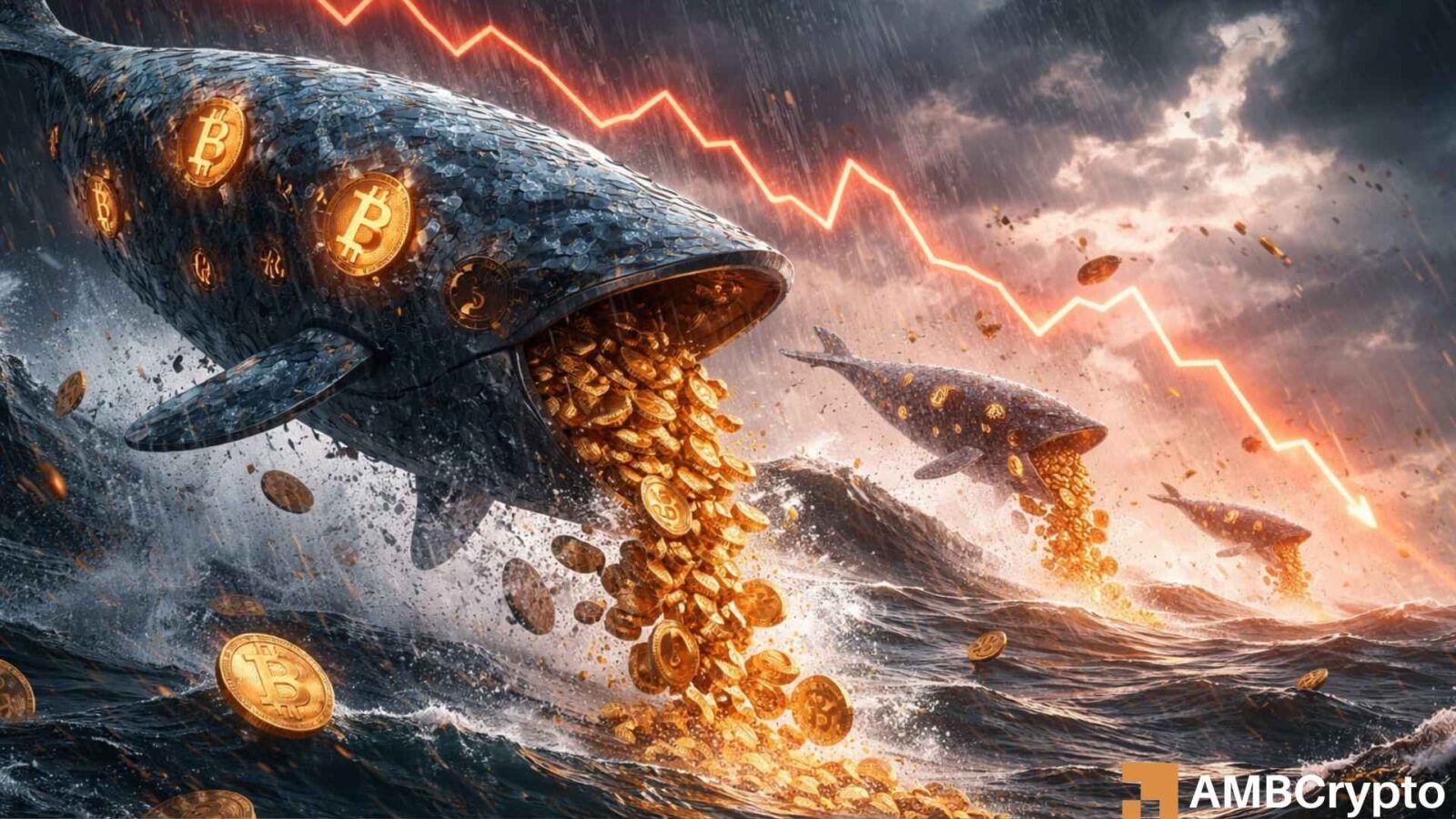
During the first quarter of 2026, Bitcoin whales—investors holding between 100 and 10,000 BTC—realized staggering losses amounting to $30.9 billion. Specifically, whales recorded losses averaging $337 million daily, a rate unseen since the bear market of 2022. Such aggressive loss realization not only points to a mass exodus but also marks one of the most intense distribution cycles in Bitcoin’s history.
Long-Term Holders and The Persistent Losses
The losses cultivated by long-term holders (LTH) paint a grim picture for Bitcoin’s prospects. Currently, LTHs are contributing around $200 million in realized losses daily. Historical trends show that sustained loss realization like this has rarely indicated the formation of market bottoms; instead, it typically precedes even deeper downtrends. Past cycles demonstrated that significant lows in price were correlated with reduced realized losses, averaging about $25 million per day. In contrast, today’s market still shows far higher levels of loss realization, leaving traders questioning whether the worst is yet to come.
Market Indecision Amid Rising Pressures
With LTH and STH supplies held at a loss remaining extremely high, there is a growing sentiment of fear that has led to a series of strategic moves to cut losses. Market participants seem increasingly concerned, opting for actions that reflect capital preservation amidst rising uncertainties. This behavior indicates a volatile period ahead, as loss realization continues to balloon.
Looking Ahead: What’s Next for Bitcoin?
Current market indicators reveal a nuanced view: while recent sentiments point towards capital preservation strategies, underlying forces remain strong enough to drive further losses. The downside risk has significantly increased, evidenced by the current volatility readings. The upside volatility stands at 1.9, while downside volatility reaches 1.6, creating a spread of -0.10, indicative of slight bearish sentiment.
The momentum bias also suggests weak momentum, leaving neither a clear upward nor downward trend. Historically, such conditions have commonly preceded extended periods of consolidation. If this prevailing sentiment persists, Bitcoin may maintain a sideways trading range between $70k and $65k. However, should loss realizations continue to accelerate amidst weakening demand, a sharper breakdown could occur, pushing Bitcoin towards critical support levels around $62,500.
A Final Summary
To summarize, Bitcoin’s financial landscape appears precarious as realized losses for Q1 hit an eye-watering $30.9 billion, with whales facing daily losses exceeding $337 million. The market currently grapples with indecision and reduced volatility, even as loss realization continues to rise. The dynamics at play suggest that the future remains uncertain, with both upside potential and downside risks weighing heavily on the minds of investors.
As Bitcoin navigates these turbulent waters, market sentiment remains highly susceptible to external factors, demanding close attention from traders and analysts alike.