



Diverging Capital Flows in Major Crypto Assets: Bitcoin, Ethereum, and XRP
As we move closer to 2026, capital flows across major cryptocurrencies like Bitcoin (BTC), Ethereum (ETH), and Ripple (XRP) are showing notable divergence. Factors such as valuation signals, demand for exchange-traded funds (ETFs), and supply behaviors are yielding differing narratives for these key digital assets. This article delves into how these variables are reshaping investor sentiment and positioning in the crypto market.
Bitcoin’s Rare Valuation Reset
Bitcoin has recently entered an unusual valuation range that is historically associated with market resets. Analyzing the NVT Golden Cross—a metric that compares Bitcoin’s market capitalization to its network activity—reveals that its price has declined more swiftly than network usage. Such conditions have only occurred a few times in the past, often preceding periods of forced selling and deleveraging. Interestingly, current network activity remains stable, suggesting that this drop in price is a market recalibration rather than an indication of fundamental weakness. As selling pressure subsides, accumulation often follows; however, immediate upside is not guaranteed. The current state suggests Bitcoin is trading at a valuation discount, a setup frequently aligned with future accumulation phases.
Ethereum’s Supply Dynamics Amidst ETF Challenges
In contrast to Bitcoin, Ethereum is experiencing complexities in its supply behavior despite facing considerable selling pressure from spot ETFs. Notable movements have been recorded, such as Resolve Labs withdrawing more than 13,000 ETH within a week. Additionally, Bitmine executed a large transaction adding over 30,000 ETH. These transactions indicate a redeployment of assets rather than outright distribution, yet the ETH ETFs continue to post net outflows. This situation highlights a critical distinction: while ETF movements may resemble bearish sentiment, they often reflect portfolio rebalancing rather than negative expectations for Ethereum’s future. On-chain activities indicate that ETH is moving into treasuries and liquidity structures, tightening available supply, which could provide a constructive outlook despite the pressures from ETF mechanics.
XRP’s Robust Institutional Demand
XRP has positioned itself uniquely within the ETF landscape. Since its launch, XRP spot ETFs have recorded consistent daily inflows, accumulating over $1.16 billion in total net assets. This consistent inflow pattern suggests a strong institutional interest, differing from the more volatile flows seen in Bitcoin and Ethereum. The steady demand contrasts sharply with general market hesitance, indicating that institutions are strategically allocating capital to XRP rather than engaging in short-term speculation. This ongoing accumulation via spot ETFs can serve as a precursor to structural price adjustments, emphasizing XRP’s adoption within regulated environments.
The Competitive Landscape Ahead of 2026
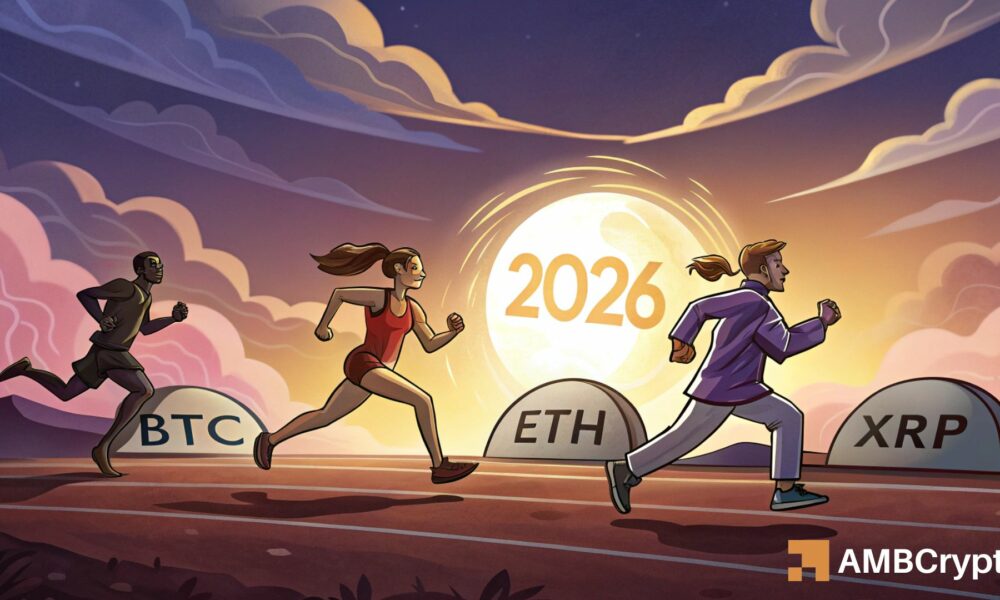
With each cryptocurrency following a distinct capital flow trajectory, investors face a critical question: which asset is best positioned to lead into 2026? Bitcoin’s valuation signals suggest a potential for recovery if normalization trends continue. On the other hand, Ethereum’s tightening supply dynamics and on-chain behaviors offer a constructive narrative, despite facing ETF-related selling pressures. Meanwhile, XRP’s sustained ETF inflows demonstrate a dedicated institutional interest, signaling its solid footing within the crypto market. Each of these assets carries its strengths, leading to various scenarios where no single asset emerges as the unequivocal winner.
Assessing Institutional Allocation Decisions
As the crypto landscape develops, understanding which factors will guide institutional allocation becomes crucial. If valuation normalization emerges as a dominant theme, Bitcoin may regain its lead. However, if network deployment and supply absorption take precedence, Ethereum could benefit significantly. Conversely, XRP stands to gain if regulated capital flows become the primary driving force. The unfolding dynamic among these cryptocurrencies will dictate how investors position their portfolios leading into 2026.
Conclusion: A Diversified Future for Crypto
The distinct paths being navigated by Bitcoin, Ethereum, and XRP reflect broader patterns of capital behavior in the crypto marketplace. While Bitcoin and Ethereum experience valuation and supply recalibration phases, XRP’s steady ETF inflows emphasize a fundamentally different institutional approach. As we look towards the future, these diverging scenarios underscore the importance of a diversified view on cryptocurrency investments, setting the stage for emerging trends and potential opportunities in the evolving landscape of digital assets.