



Understanding Recent Trends in Ethereum and Bitcoin Markets
The cryptocurrency market has recently experienced significant fluctuations, particularly affecting Ethereum (ETH) and Bitcoin (BTC). In just two days, Ethereum Open Interest plummeted by nearly $10 billion, while Bitcoin saw a decrease of over $5 billion. This substantial decline has erased weeks of gradual Futures accumulation, indicating a broader trend of unwinding leveraged positions. The market’s sudden drop can be attributed to cascading liquidations and a wave of panic selling, causing investors to exit their positions in a hurry.
Analyzing the ETH/BTC Ratio
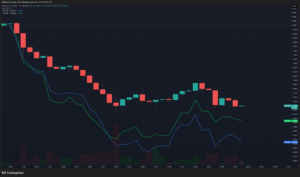
Another notable development during this period has been the ETH/BTC ratio, which fell sharply after a robust rally in July. This ratio decreased from 0.0325 to 0.0307, indicating a preference among traders for Bitcoin over Ethereum amidst this turbulent environment. This shift in trading behavior reflects a cautious approach to risk, likely influenced by the recent market corrections and the surrounding bearish sentiment.
The Shift in Funding Rates
On August 1st, both Ethereum and Bitcoin experienced a brief but notable negative turn in their Funding Rates on Binance, signaling a surge of bearish pressure. Ethereum’s Funding Rate dipped to -0.006%, while Bitcoin fell to -0.003%. This inversion suggests that short sellers were aggressively maintaining their positions, a phenomenon typically observed during long squeeze scenarios. However, by August 2nd, Funding Rates began to stabilize across various exchanges. Bitcoin’s aggregated funding returned to +0.0042, and Ethereum’s climbed to +0.0063. This recovery may indicate a cooling of bearish momentum, potentially signaling a shift towards market rebalancing or even the onset of a short squeeze.
The Role of Liquidation Zones
The analysis of liquidation zones is critical in understanding the recent market dynamics. The BTC and ETH Liquidation Heatmaps reveal that leveraged longs were severely impacted during the price drop. Areas of high liquidation—indicated by bright yellow bands—cluster around $117K for Bitcoin and $3600 for Ethereum. These price levels represent areas where long positions were forced to close, contributing to the acceleration of the market decline. As current prices consolidate just below these levels, they may serve as resistance points in the near term, not only based on technical indicators but also due to trader psychology.
The Future Outlook
Despite the intensity of the recent market corrections, the absence of substantial liquidation zones below current prices suggests that the worst of the deleveraging may have passed. Investors might find some reassurance in the potential for a market recovery; however, any upside movement will likely encounter resistance near the previously liquidated zones, which have now transformed into psychological barriers. Understanding these dynamics can help traders navigate the complexities of the current market landscape.
Conclusion: Navigating Market Uncertainty
As Ethereum and Bitcoin continue to navigate this volatile environment, traders must remain vigilant and adaptable. The recent liquidation events highlight the risks associated with leveraged trading, as well as the psychological factors that influence market movements. Staying informed about funding rates, liquidation zones, and the evolving ETH/BTC ratio can aid in making well-informed decisions in this unpredictable market. By understanding the underlying trends and signals, investors can better position themselves for potential opportunities amid the uncertainties of cryptocurrency trading.