



The Challenges Ahead for XRP: Tokenomics and Holder Confidence
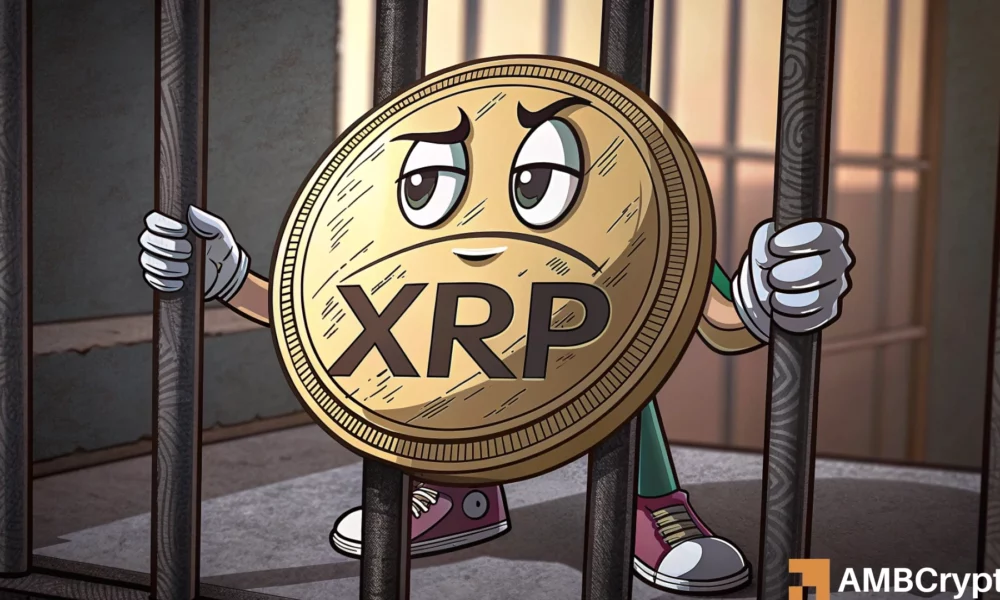
XRP, the cryptocurrency associated with Ripple, is facing significant headwinds that could jeopardize its future in the market. Following a turbulent week, XRP slipped back below its early May pricing, ultimately finishing the month down 1%. This places it alongside Cardano (ADA) as one of the few prominent cryptocurrencies to completely shed its May gains. As we enter June, XRP is struggling to regain a foothold, and it’s clear that the confidence of its holders is waning. The question now is whether XRP can find a sustainable base to recover from its recent downturn.
The Ripple Effect of Unrealized Losses
A recent report from Glassnode reveals that approximately 70% of XRP holders purchased their tokens near the peak price of $3.40. Consequently, many investors are sitting on unrealized losses, increasing the pressure to sell as the market stagnates. XRP’s Market Value to Realized Value (MVRV) ratio has seen a notable decline, dropping from 2.44 during mid-May—when the token briefly peaked at $2.58—to its current level of 2.04. This indicates that investors are witnessing a decrease in their unrealized profits, leading some to contemplate their position in the market as they aim to break even before potential further drops occur.
The Urgency for a Market Catalyst
As the clock ticks down on their patience, XRP holders find themselves in a challenging emotional landscape where fear and hope intersect. The current situation necessitates a new catalyst to reignite the market’s enthusiasm for XRP. Without renewed excitement, there’s a growing concern among investors that XRP could mirror the struggles faced by Solana. In that scenario, holders began to cut their losses, giving way to diminished confidence in the long-term value of the asset. The liquidity squeeze that Ripple is attempting to enact is, therefore, a crucial tactical move to prompt buying momentum.
A Liquidity Squeeze: Is It Enough?
Ripple’s development team is attempting to implement a classic liquidity squeeze by locking away 470 million XRP back into escrow. The hope is to increase perceived scarcity, thereby pushing the value up. However, this maneuver might not have the intended impact due to the sheer scale of XRP’s supply. With more than 58.7 billion tokens circulating against a total supply cap of 100 billion, XRP’s abundance stands in stark contrast to assets like Bitcoin, which boasts a limited supply of 21 million.
Long-term Viability and Market Perceptions
One analyst’s recent projection illustrates the limitations of XRP’s tokenomics; should Bitcoin someday reach a valuation of $100 million per coin, it implies that XRP would max out around $20. Once inflation is taken into account, that value only translates to about $1 in today’s dollars. This understanding contributes to the prevailing sentiment that while XRP certainly has utility, its expansive supply inherently limits its long-term upside potential. As this reality sinks in, the sense of frustration among investors could easily escalate into panic-driven capitulation.
The Path Forward for XRP
The current landscape for XRP is steeped in ambiguity; without addressing its fundamental tokenomics, the cryptocurrency risks amplifying existing cracks in holder confidence. For this digital asset to thrive, Ripple must concentrate on strengthening its fundamentals and stimulating market excitement. The challenge lies not just in securing short-term gains but in restoring trust and belief in long-term growth. In a fast-evolving cryptocurrency landscape, XRP needs to find innovative solutions that could entice both current and potential investors to remain engaged. Otherwise, the digital asset may continue to languish under the weight of its tokenomics, leaving its dedicated community yearning for a turnaround that seems increasingly distant.
In conclusion, while Ripple’s XRP has faced recent setbacks, the stakes are high for both the holders and the broader market. Finding effective catalysts and addressing underlying tokenomic issues will be crucial steps toward restoring confidence and encouraging a rebound in value.