



The Rise of Stablecoins: Paving the Future of Global Payments
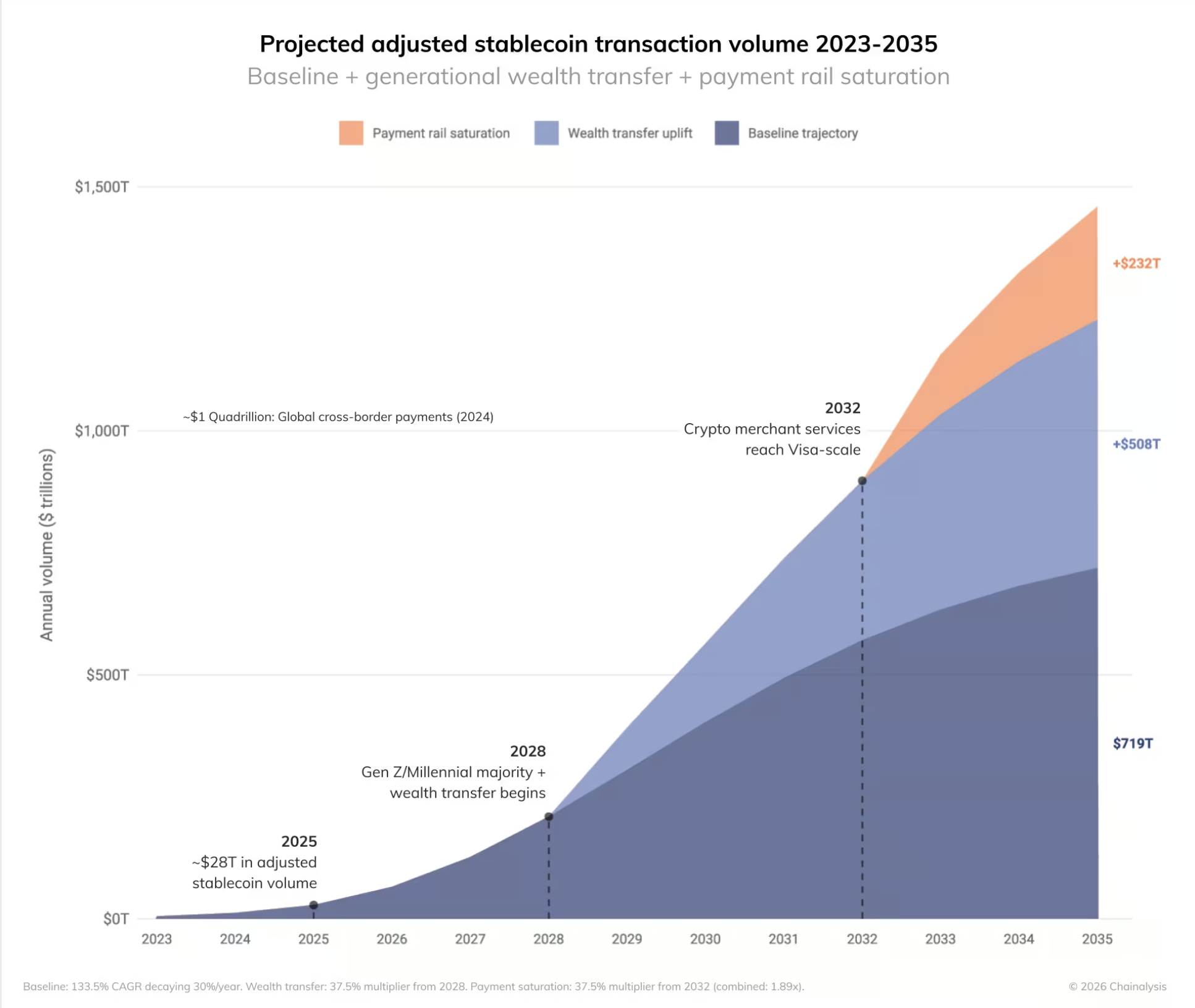
Stablecoins are rapidly transitioning from niche financial instruments to critical components of the global payment ecosystem. According to a recent Chainalysis report, stablecoin transaction volumes are projected to reach an astonishing $1.5 quadrillion within the next decade. With the baseline growth alone expected to push adjusted stablecoin volumes to around $719 trillion by 2035, the potential for these digital currencies is vast. Macro catalysts such as demographic shifts and increasing merchant adoption could further amplify this trend, signaling a new era in the financial landscape.
Key Catalysts Driving Growth
The Chainalysis report highlights two primary forces contributing to the anticipated surge in stablecoin transactions. The first catalyst is generational wealth transfer. Between 2028 and 2048, approximately $100 trillion is expected to switch hands from older generations to Millennials and Gen Z, who are generally more inclined toward digital assets. This demographic shift could create a favorable environment for stablecoins, as younger individuals have shown a propensity to embrace cryptocurrencies for daily transactions.
The second catalyst involves distribution dynamics within the payments sector. As stablecoins become increasingly integrated into merchant checkouts and backend payment systems, their use will become seamless and almost invisible. Consumers may no longer perceive using stablecoins as a distinct choice; instead, it will feel like part of the standard purchasing experience. This change could be further accelerated by the rise of AI-driven commerce, enhancing the convenience and speed of transactions conducted with stablecoins.
Implications for Payment Infrastructure
The convergence of these factors could position stablecoins to rival major payment giants like Visa and Mastercard by the 2030s. If adoption trends continue to escalate, it’s conceivable that stablecoin payment volumes could match or even exceed those of these established financial players in just a few years. This evolution signals a fundamental shift in how we perceive money and payments, moving toward a decentralized, blockchain-based future.
Real-World Adoption and Strategic Moves
The implications of this growing trend are not merely hypothetical. Established financial institutions are already making moves to accommodate stablecoins as integral components of their operations. For instance, Stripe’s acquisition of Bridge and Mastercard’s purchase of BVNK exemplify a broader industry trend where stablecoins are being integrated into core payment infrastructures rather than remaining as niche alternatives. Standard Chartered has also noted a faster-than-anticipated rise in stablecoin usage, indicating that businesses are increasingly finding new use cases for these digital assets.
Moreover, the rising demand for U.S. Treasuries—potentially amounting to $1 trillion due to stablecoin growth—further ties stablecoins into the larger scope of capital flows, suggesting that their impact may reach far beyond mere transactions.
Regulatory Landscape and Economic Concerns
While the growth potential is significant, it does not come without its challenges. Policymakers and regulators are still exploring the implications of widespread stablecoin adoption. A recent White House study indicated that stablecoin yields are unlikely to severely impact traditional bank lending, which alleviates some fears concerning deposit flight. Additionally, discussions are emerging around the notion that stablecoins could potentially channel deposits back into the U.S. banking system, depending on their structure.
This evolving regulatory framework will play a critical role in shaping the future of stablecoins and their integration within the global financial ecosystem.
Future Outlook: A New Era for Payments
Looking ahead, it is clear that the increasing prevalence of stablecoins will reshape the financial landscape. They promise to deliver faster, more efficient transaction methods, allowing individuals and businesses to engage in economic activities with unprecedented ease. However, as the landscape evolves, the balance between innovation and regulatory oversight will be crucial.
As we transition into this new era, the potential for stablecoins to redefine global payments cannot be overstated. With further advancements in technology, demographic transitions, and industry adaptations, stablecoins may very well establish themselves as foundational to a more inclusive and efficient payment system.
In conclusion, while there are hurdles to overcome, the trajectory for stablecoins appears promising. They are poised to not only transform how we transact but also to become an essential aspect of our financial future. As the market develops, keeping an eye on regulatory frameworks, technological innovations, and market trends will be vital for anyone engaged in the cryptocurrency landscape.