


Evaluating Ethereum’s Network Activity Boost Post-Fusaka Upgrade: A JPMorgan Analysis
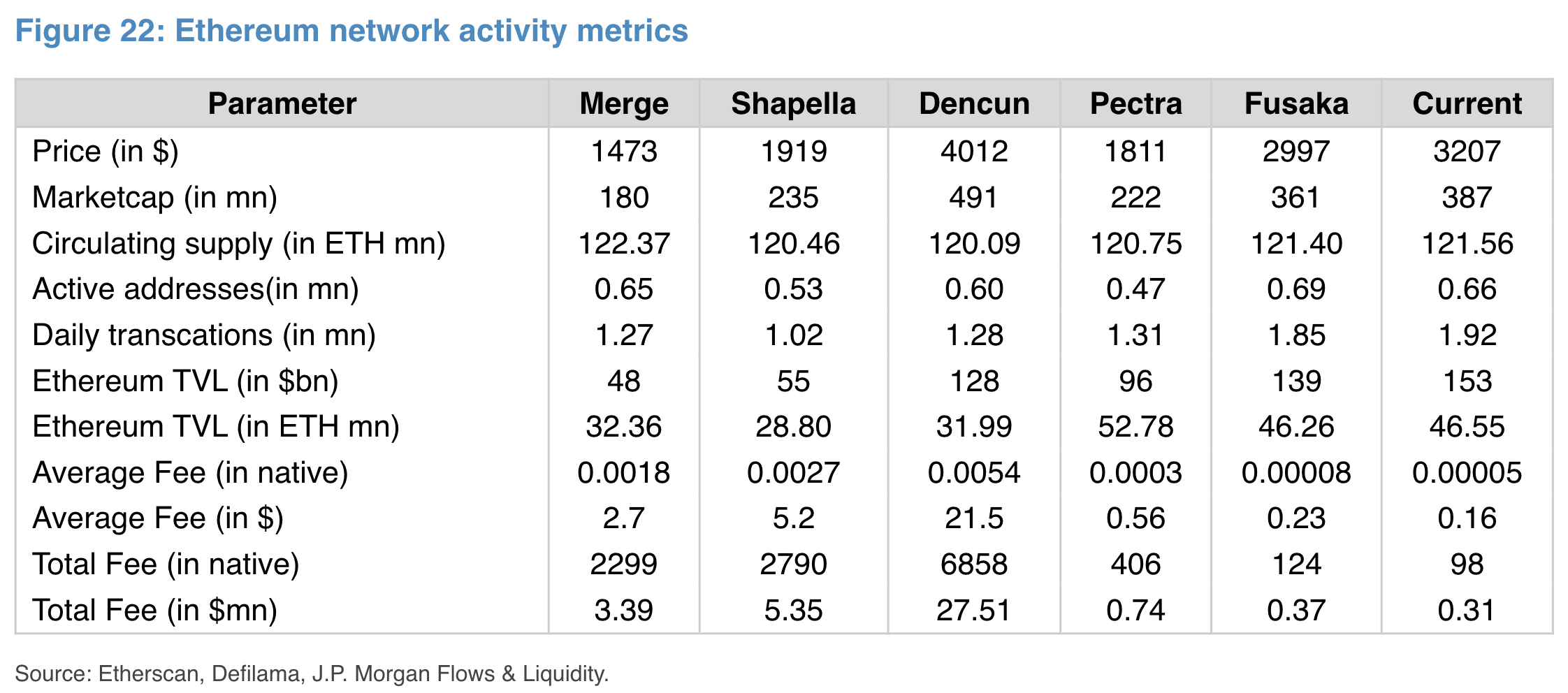
In the wake of Ethereum’s recent Fusaka upgrade, which went live on December 3, 2023, analysts at JPMorgan are fostering skepticism about the longevity of the surge in network activity. This upgrade expanded Ethereum’s data capacity from 15 to 21 blobs per block, leading to an immediate decline in transaction fees. The resulting drop sparked an uptick in active addresses and transaction volumes. However, the JPMorgan report, spearheaded by Managing Director Nikolaos Panigirtzoglou, raises questions about whether this increased activity can be sustained in the long term. They argue that the fundamental issues that have historically constrained Ethereum’s usage remain unresolved.
A critical factor contributing to this skepticism is the ongoing shift of activity from Ethereum’s main chain to Layer 2 networks like Base, Arbitrum, and Optimism. According to CryptoRank data, Base alone generates approximately 60%–70% of the total revenue across all Ethereum Layer 2 solutions. This migration reflects broader trends where users are increasingly looking for more efficient and cost-effective transaction solutions. As these Layer 2 networks continue to capture significant market activity, the Ethereum mainnet could struggle to maintain its relevance as a primary platform.
Additionally, competition from alternative blockchains presents an ongoing hurdle for Ethereum. Networks such as Solana are gaining traction by offering superior transaction speeds and lower costs, effectively siphoning off users and developers. This competitive landscape underscores the need for Ethereum to innovate continually to retain its user base and developers. The report highlights how Ethereum’s position is increasingly being challenged, and without strategic improvements, it risks losing more ground to these rival ecosystems.
The decline in speculative trading activity has further compounded Ethereum’s challenges. During the bulls of 2021-2022, elements such as initial coin offerings, non-fungible tokens (NFTs), and memecoins significantly boosted transaction volumes. However, as speculation has faded or migrated to other blockchains, Ethereum’s network activity has taken a hit. This decline in speculative activity has diminished one of the critical drivers that once supported Ethereum’s metrics, highlighting the necessity for Ethereum to cultivate new avenues of engagement and activity.
Moreover, the diversification of capital into application-specific blockchains has also impacted Ethereum’s network dynamics. Projects like Uniswap transitioning to their Layer 2, Unichain, and dYdX’s shift to independent chains demonstrate how liquidity is increasingly distributed across a wider range of platforms. These moves have allowed these projects to capture significant protocol revenue outside Ethereum’s ecosystem. As capital disperses, Ethereum may find itself at a disadvantage if it cannot adapt to retain and attract liquidity.
As a result of these factors, the dynamics of Ethereum’s fee generation and overall token economics have shifted. Decreased activity on the main chain has led to lowering fee burn rates, increasing the circulating supply of ETH and exerting downward pressure on its price. The analysts also pointed out a worrying trend in the decline of Ethereum’s total value locked in ETH terms between the Pectra and Fusaka upgrades, signaling potential investor concerns about the network’s future viability.
In summary, while the Fusaka upgrade has temporarily revitalized Ethereum’s network activity through increased transaction volumes and active addresses, JPMorgan analysts express doubts about the sustainability of this surge. Historically, successive upgrades have failed to maintain long-term enhancements to network activity, and the analysts believe that the reasons behind these limitations remain prevalent. As Ethereum navigates this challenging landscape, it must strategize effectively to bolster its competitive position and reclaim its users’ confidence in its network.
As the crypto market evolves, investors will be closely monitoring these developments and shifts in network dynamics to gauge the long-term viability of Ethereum against a backdrop of increasing competition and shifting user preferences.