




JPMorgan’s Bitcoin Insights: Mining Costs, Market Trends, and Future Projections
Bitcoin, the leading cryptocurrency, is facing dynamic fluctuations in its mining landscape as JPMorgan analysts recently reported significant changes in mining costs and hashrate trends. As of late, the estimated production cost of Bitcoin has dropped to $77,000 from $90,000 at the start of the year. This decrease in costs, largely attributed to a decline in network hashrate and mining difficulty, serves as a “soft price floor” for Bitcoin valuations. Investors and stakeholders in the cryptocurrency market should take note of these developments, as they may shape future mining operations and Bitcoin price movements.
Mining Cost Dynamics: A Favorable Shift
The falling mining costs, as noted in the report written by managing director Nikolaos Panigirtzoglou and his team, can significantly impact the profitability of miners. As mining difficulty decreases, it provides a cushion for miners still operating under current market conditions. This adjustment results in fewer hurdles for efficient miners who can now capture market shares vacated by their higher-cost counterparts that have been forced offline. The report projects a possible rebound in Bitcoin’s hashrate in response to the mining difficulty adjustment, signaling a potential rise in production costs in the near future. Thus, while the immediate outlook reflects lower costs, a strategic rebound could alter the trajectory of Bitcoin mining profitability.
The Hasrate Decline and Its Implications
JPMorgan’s analysis depicts that the recent slump in Bitcoin’s network hashrate has triggered the steepest drop in mining difficulty since the 2021 mining ban operationalized in China. The cumulative decline in mining difficulty has thus far reached approximately 15% year-to-date. This decline in hashrate, which adjusts about every two weeks for maintaining an average block generation time of 10 minutes, leads to a proportional decrease in mining difficulty. As miners adapt to less competition, they benefit from greater chances to earn block rewards, providing a refreshing environment for more efficient miners seeking to enhance their profitability in turbulent market conditions.
Key Challenges for Miners
JPMorgan analysts identified two primary catalysts for the abrupt drop in mining difficulty. The first is the sizable decrease in Bitcoin’s price, which has made operations unviable for many higher-cost mining operators—those utilizing outdated machinery or grappling with elevated energy expenses—forcing them to switch off their machines. The second includes environmental challenges, notably severe winter storms in the U.S. that disrupted large mining operations, particularly in Texas, as grid operators struggled to conserve energy. These factors have collectively enforced a capitulation among higher-cost miners and highlighted the pressing nature of operational viability in cryptocurrency mining.
The Stabilization of Mining Operations
Despite the chaos in the mining environment, a silver lining exists. As high-cost miners exit the market, the remaining miners see not only a stabilization of their operational capacities but also a clearer avenue to improve profitability. Reduced competition allows efficient miners to reclaim control over lost market share. Historical trends suggest that after significant downturns, like that seen post-China’s mining ban in 2021, the mining ecosystems tend to recover robustly. JPMorgan notes that the current phase may also leverage lower mining difficulty to re-establish upward momentum, which could shield remaining miners from further downturns while simultaneously bolstering Bitcoin’s overall market posture.
Future Predictions and Institutional Interest
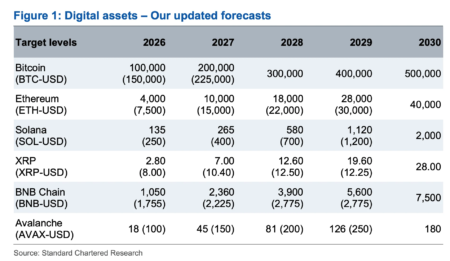
Despite the turbulent circumstances of the present mining environment, JPMorgan analysts maintain an optimistic perspective for the broader crypto market, projecting a potential resurgence in 2026. They anticipate driven interest from institutional investors rather than primarily relying on retail consumers. Institutional investors, backed by likely regulated frameworks—such as the anticipated Clarity Act in the U.S.—could invigorate crypto markets. The optimistic outlook extends to Bitcoin, with a long-term target set at $266,000, hinging on restoring positive sentiment and reallocating Bitcoin’s position as a formidable hedge against market uncertainties akin to gold.
Conclusion: Navigating a Shifting Landscape
As Bitcoin grapples with its evolving ecosystem, current mining costs and market dynamics offer a glimpse into a future rich with possibilities, tempered by ongoing challenges. Lower production costs, driven by recent changes in network hashrate and mining difficulty, suggest operational relief for miners, propelling them toward potential market recovery. With institutional capital and regulatory advancements on the horizon, Bitcoin may emerge not just as a digital asset but as a pivotal financial instrument, promising returns as market sentiment shifts. For stakeholders, staying tuned to these developments is crucial for navigating this intricate and evolving crypto landscape.