



Crypto Market Sees $100 Billion Decline Amid Federal Reserve Caution
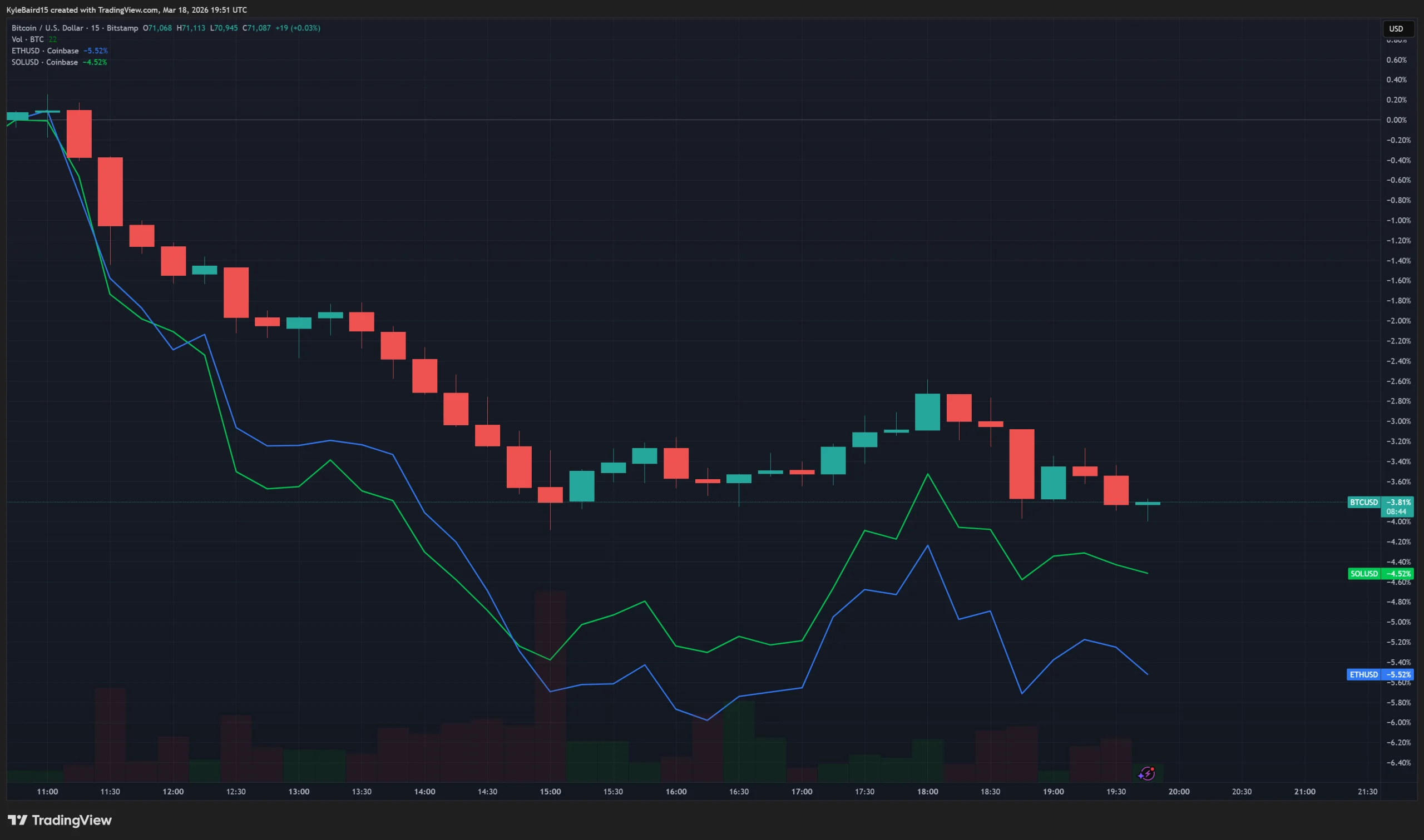
The cryptocurrency market has experienced a dramatic downturn, losing over $100 billion in value within a mere 24 hours. Bitcoin, alongside major altcoins, witnessed a significant retreat as concerns about global economic conditions impacted investor sentiment. Bitcoin’s market position fell about 5%, trading below $71,000 after reaching nearly $76,000 just a day earlier. This downward trend echoed across other major cryptocurrencies such as Ethereum, Solana, and Dogecoin, each seeing declines between 5% and 6%. The GMCI 30 index, which tracks the top 30 cryptocurrencies by market capitalization, also dropped approximately 5%, marking a year-to-date decline of 21%.
The Federal Reserve’s Policy and Its Implications
On the day of this market shift, the Federal Open Market Committee announced it would maintain the federal funds rate at 3.5% to 3.75%. This decision was widely anticipated by market participants, with futures traders indicating over a 99% likelihood of a pause in rate changes. Federal Reserve Chair Jerome Powell acknowledged that inflation remains "somewhat elevated" and illuminated uncertainties in the economic landscape, especially concerning rising energy prices fueled by geopolitical tensions in the Middle East. Powell’s remarks about the potential inflationary consequences of these energy price hikes further contributed to concerns among investors.
Ripple Effects on Risk Assets
The crypto market decline was not isolated; a retreat among broader risk assets was evident. The S&P 500 index fell toward a four-month low, while commodity prices also dipped significantly. Gold plummeted about 3%, settling around $4,850, and silver experienced a steep decline of roughly 4%, hitting a one-month low near $75. Analysts had previously cautioned that the crypto market entered the Fed’s decision with fragile momentum, leading to uncertainties about future price movements.
Macro Influences on the Crypto Market
As QCP Capital pointed out, Bitcoin’s trajectory appears increasingly influenced by macroeconomic factors rather than cryptocurrency-specific events. The expansion of derivatives positioning in recent weeks has heightened the potential for volatility, particularly if macroeconomic conditions worsen. Analysts noted that elevated open interest and uneven inflows into exchange-traded funds (ETFs) left the market vulnerable to shifts in risk sentiment, adding an extra layer of complexity for investors.
Geopolitical Tensions and Market Sensitivity
The interplay of lingering geopolitical issues, particularly regarding oil prices and the surrounding uncertainties, could destabilize market conditions further. Samuel Leyne, co-head of crypto trading at Marex, commented that any sign of caution in policy can lead to a tightening of the "risk budget." This environment reveals the fragility of what might seem like strong market rallies, indicating that even minor shifts in macro conditions could undercut momentum.
Conclusion: Navigating a Volatile Landscape
As the cryptocurrency market grapples with significant fluctuations and external pressures, investors should exercise caution and remain vigilant for signals from both economic policy and geopolitical developments. Despite the allure of short-term gains in the crypto space, the current landscape underscores the importance of a comprehensive understanding of macroeconomic dynamics that are increasingly governing the market’s movements. It’s essential for investors to engage strategically, informed by the prevailing economic indicators, as they navigate this complex and often tumultuous investment environment.