




Bitcoin Prices Plunge: Understanding the Recent Drop and Its Implications
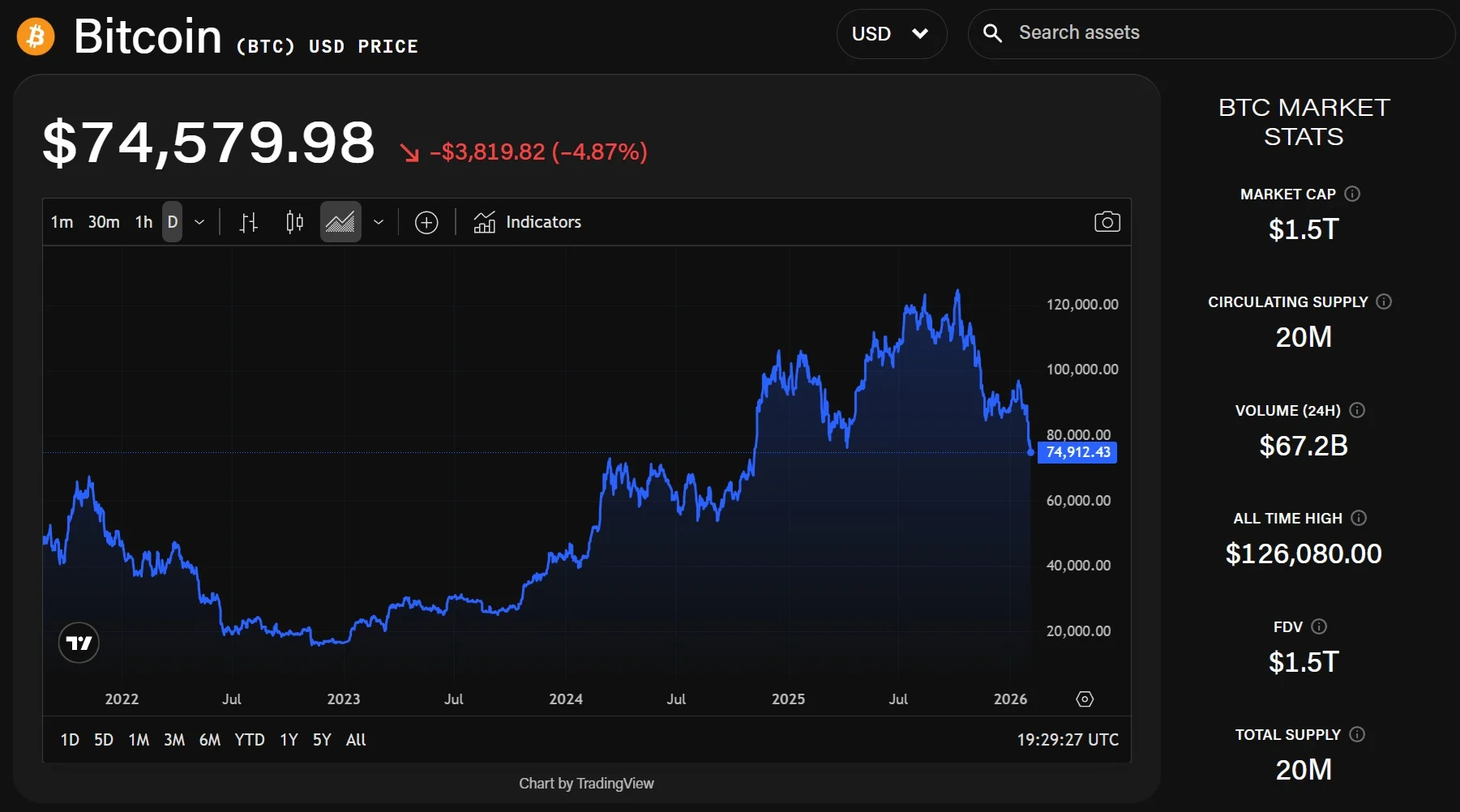
Bitcoin, the leading cryptocurrency, has recently seen its value dive dramatically below $74,000, marking a significant decrease from its previous highs. As of early November 2024, Bitcoin is trading around $73,000, a price point reminiscent of the period just before Donald Trump’s election victory in 2016. This moment in history was pivotal for the cryptocurrency market, as Trump openly supported the sector during his campaign. While Bitcoin reached an all-time high of $126,080 on October 6, 2025, the ensuing months have witnessed a considerable decline in its value, alongside similar trends affecting both major and minor cryptocurrencies.
The data from Glassnode highlights that 44% of Bitcoin’s supply is currently "underwater," meaning these assets are being held at a loss due to recent price drops exceeding 30% from a prior peak of $108,000. This has reduced the percentage of Bitcoin in profit from 78% to 56%. Sean Rose, an account manager at Glassnode, notes that traders who bought close to the all-time highs now find themselves in a precarious position, potentially leading to an increase in selling pressure from those deemed "weak hands."
Adding fuel to the fire, recent trading actions have seen substantial liquidations in the derivatives market, with approximately $122 million in crypto long positions and another $26 million in short positions liquidated within just an hour. Over the past day, a total of $663 million in liquidations has occurred, amplifying market volatility. Current indicators, specifically the Relative Strength Index (RSI), suggest Bitcoin is hovering near oversold levels, which historically precedes further declines. A similar drop today could propel Bitcoin towards the $60,000 mark.
Factors Contributing to Decline
The recent downturn in Bitcoin’s price can be attributed to multiple factors, with macroeconomic uncertainty being at the forefront. The looming threat of a U.S. government shutdown has bred investor anxiety, prompting a ripple effect across financial markets. The tech-heavy Nasdaq Composite, for instance, has dropped 2.2%, reflecting broader market pessimism. Other cryptocurrencies are also feeling the pinch; Ethereum has plummeted over 9% to below $2,200, while Solana and XRP have posted declines of over 7% and 6.6%, respectively.
Crypto-related stocks have similarly underperformed, with prominent companies like Coinbase and the bitcoin-focused Strategy seeing declines of over 6% and 8%. In contrast to this trend, Terawulf has managed to stand out positively, attributed to news of strategic acquisitions in AI infrastructure. While the overall market appears bleak, the latest activity in crypto exchange-traded funds (ETFs) offers a mixed picture, showcasing a potential shift in investor sentiment.
ETF Market Dynamics
Despite recent market declines, there was a notable reversal in crypto ETF dynamics earlier this week. Spot Bitcoin ETFs recorded inflows totaling $561.9 million, potentially signaling a shift in investor strategy. This sudden influx occurs against the backdrop of substantial outflows that reached approximately $1.5 billion from Bitcoin ETFs and $327 million from Ethereum ETFs during the preceding weeks. Interestingly, altcoin-focused products have managed to attract capital, highlighting a tactical rotation from larger cryptocurrencies into smaller-cap alternatives, such as Solana and XRP-linked exchange-traded products (ETPs).
Market analysts categorize the recent liquidations as a necessary correction to excessive leverage in the altcoin space, particularly regarding Ethereum. A single significant liquidation event was reported to have reached around $220 million, contributing to the accelerated price declines across the market. This notion of leverage correction is crucial as it indicates the potential for healthier market conditions moving forward.
Implications for Investors
With Bitcoin’s recent volatility raising eyebrows, the question of what lies ahead for the cryptocurrency becomes more pressing. Investors are scratching their heads, contemplating whether the current pricing dip is a temporary blip or the start of a more sustained downturn. Especially concerning is the fact that high-cost holders are beginning to experience pain, which could lead to market-wide sell-offs. In the coming weeks, it will be imperative for these investors to exhibit patience and conviction.
The fluctuations seen in Bitcoin’s price are not isolated; they reflect a broader economic context, making it increasingly important for traders and investors to consider macroeconomic indicators and global market conditions. In times of increased uncertainty, such as a potential government shutdown, market resilience is put to the test as investors scramble to safeguard their portfolios.
Looking Ahead
As we look to the future, maintaining a keen eye on market dynamics will be crucial for those involved in Bitcoin and the wider cryptocurrency ecosystem. Investors should focus on keeping their portfolios balanced while remaining vigilant about macroeconomic changes, given their tendency to influence market trends significantly. Analytical tools such as the RSI can provide insights into potential market moves, allowing investors to make informed decisions.
In conclusion, the current situation involving Bitcoin’s price decline serves as a reminder of the cryptocurrency market’s inherent volatility. While recent events have raised concerns, they also present opportunities for discerning investors. By understanding the mechanics at play and carefully monitoring macroeconomic indicators, one can navigate through the uncertainties and possibly position themselves for future gains in the crypto space.