


Bitcoin in a Macro Squeeze: Understanding Market Dynamics
As global markets face a macro squeeze, Bitcoin finds itself in a precarious position. Trading just under $69,000, the cryptocurrency is experiencing tight price action amid conflicting forces such as energy market volatility, monetary policy uncertainties, and geopolitical tensions. Analysts from The Block and prominent financial institutions highlight a landscape where liquidity is constrained, making the future direction of Bitcoin less predictable. While the price movement appears stable on the surface, the underlying market structure suggests a buildup of potential capital waiting for an opportune moment to strike.
Despite Bitcoin’s recent stabilization, analysts from QCP Capital and Glassnode observe that market conditions are ripe for either an uptick or downturn. Sell-side pressure seems to be diminishing, and there are early signs of positive flows from Exchange-Traded Funds (ETFs), although overall spot demand remains tepid. The market is stuck in a narrow trading band, and this can be likened to a coiled spring, ready to either release upward momentum or potential downward corrections.
Support and Resistance Levels: A Critical Look
Current trading dynamics reveal significant support in the high-$60,000s, where buyers continue to counteract downward pressures. On the flip side, the resistance level above $72,000 is described as an "air gap," indicating a scarcity of historical trading volumes that could trigger substantial price movements if demand increases. Analysts from Bitfinex assert that market forces will ultimately determine if this demand solidifies. They emphasize that geopolitical narratives, such as tensions in Iran, are less relevant than U.S. signaling, which is crucial for assessing pricing trajectories. A price acceptance above $72,000 could pave the way for movements toward $82,000, but until that point, Bitcoin is in a holding pattern.
Macro Economic Forces at Play
To understand Bitcoin’s current predicament, one must consider the broader macroeconomic landscape. High energy prices, central banks’ hesitance to adjust interest rates amidst inflationary pressures, and persistent geopolitical conflict in regions like the Middle East are complicating the environment for financial assets. Kraken Research warns of a potential "stagflation" scenario, where slowing economic growth pairs with rising inflation driven by energy prices, complicating policy choices and clouding risk assets’ outlook.
These factors are leading to what some analysts term a "liquidity compression" phase in the market. The misalignment of energy control, monetary tightening, and geopolitical unrest is stifling liquidity, creating a range where Bitcoin is less about directional trades and more a reflection of the overall risk appetite of investors. This subtle transition underscores the importance of external factors, influencing Bitcoin’s role in modern investing portfolios.
Mixed Signals from ETF Flows and Derivatives Markets
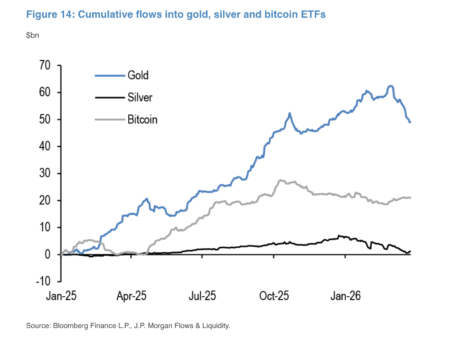
In the realm of trading signals, recent data presents a mixed bag. March has seen Bitcoin ETFs record approximately $1.5 billion in net inflows, marking a notable turnaround from the previous month’s outflows, but still falling short of January’s robust performance. This shift hints at cautious re-engagement from institutional players without signs of full commitment.
In tandem, a recent analysis from K33 indicates that the prevailing market phase could represent a foundational setup, characterized by waning selling pressure even amid ongoing macro headwinds. Current derivatives positioning further underscores a defensive posture, with negative funding rates and heightened demand for downside protection prevailing. While spot trading volumes have not yet experienced sustained growth, these indicators suggest that the market is absorbing substantial pressure without making any definitive moves.
Conclusion: Awaiting Clarity in Uncertain Times
Bitcoin stands at a crossroads where it is neither definitively breaking out nor succumbing to a breakdown. It demonstrates a willingness to absorb fluctuations, with various opinions emerging regarding potential accumulation beneath the surface. Many see a market poised to await critical external clarity—whether it be from inflation data, central bank decisions, or geopolitical developments—before making concrete moves.
As we navigate this complex landscape, the ongoing narrative surrounding Bitcoin underscores its evolving role in the broader financial ecosystem. Whether it emerges as a top investment choice or remains a speculative asset largely hinges on external factors and investor sentiment in the coming weeks and months. For now, the macro squeeze shows no signs of abating, leaving Bitcoin’s immediate future hanging in the balance.
As always, it’s essential for investors to stay informed and aware, understanding the intricate dynamics at play in both cryptocurrency and traditional markets. The ever-shifting landscape demands vigilance, as changes in macroeconomic conditions can have immediate and profound effects on Bitcoin and the broader digital asset market.