



Bitcoin’s Resurgence as a Geopolitical Hedge: An Analysis of Recent Trends
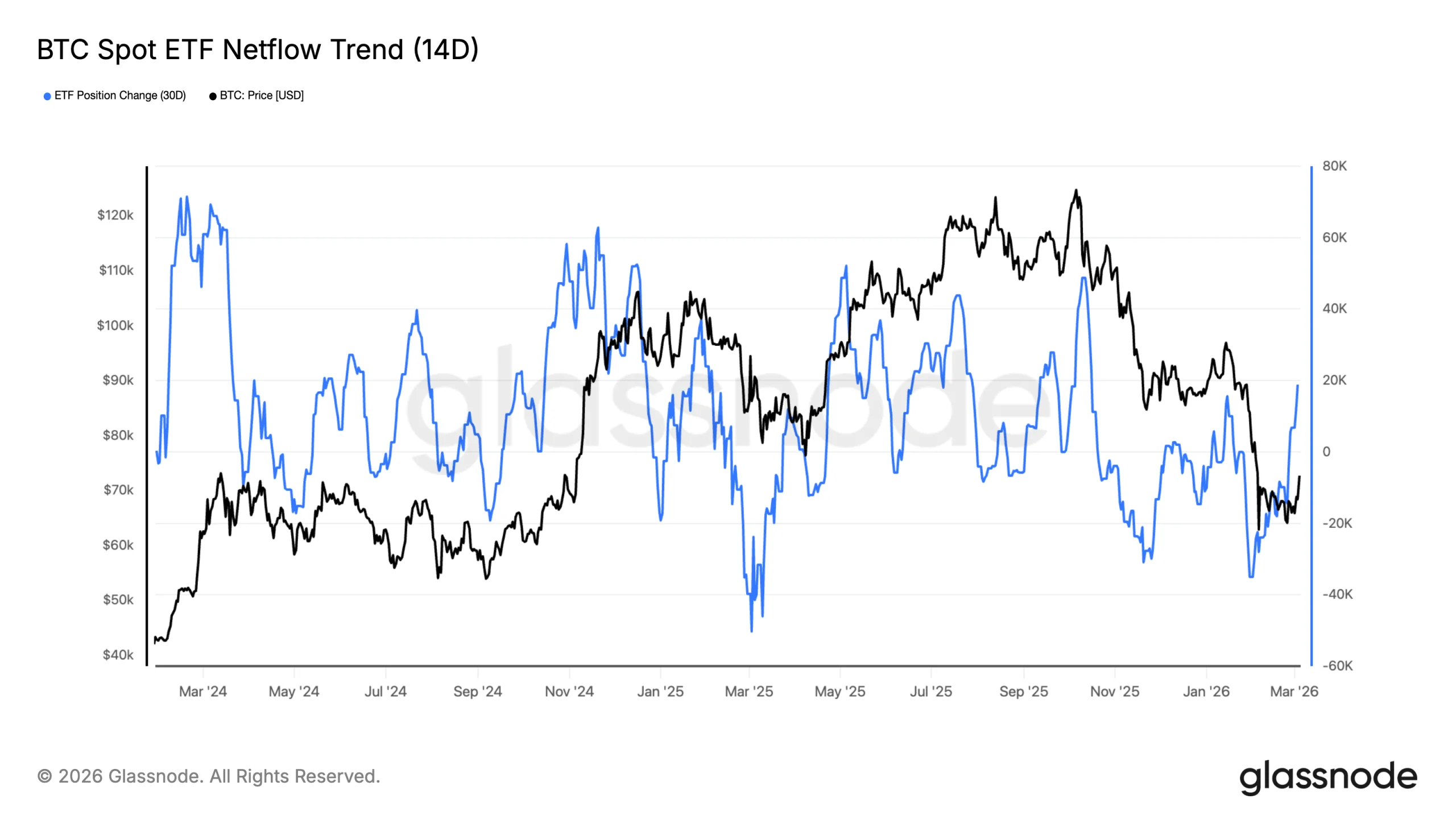
Bitcoin is experiencing a noteworthy revival, moving closer to the mid-$70,000 range, driven by a surge in institutional inflows. This uptick comes at a time of heightened geopolitical tensions in the Middle East, positioning Bitcoin as a potential hedge against instability. Recent data reveals that spot Bitcoin exchange-traded funds (ETFs) have attracted approximately $1.1 billion in net inflows over just three trading sessions from March 2 to March 4. This marks a significant recovery from prior weeks characterized by outflows that had dampened market sentiment. As institutional interest grows, Bitcoin has shown resilience, making substantial gains and reaching approximately $74,000, underscoring its potential as a safe haven asset.
The Surge in Institutional Inflows
On March 4 alone, spot Bitcoin ETFs recorded net inflows of around $461.9 million, with BlackRock’s IBIT fund leading the charge with inflows of $306.6 million. These figures highlight a renewed appetite for Bitcoin among institutional investors, a demographic that had previously been cautious due to market volatility. Analysts note that this significant inflow trend, especially in the wake of global equity market instability, reinforces the notion that Bitcoin is being increasingly viewed as a viable hedge during uncertain times. As Bitcoin touched $74,000 on March 4, the cryptocurrency demonstrated an impressive performance, outpacing many traditional markets.
Bitcoin’s Role as a Safe Haven Asset
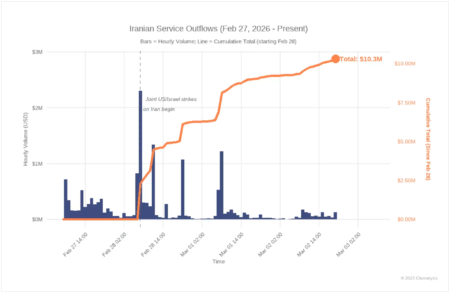
The analysis surrounding Bitcoin’s price movements suggests that its latest rally is not just a fleeting trend but rather a response to broader economic and geopolitical conditions. Nic Puckrin, co-founder of Coin Bureau, emphasizes the importance of these large ETF inflows occurring amidst heightened global volatility. The narrative around Bitcoin increasingly paints it as a geopolitical crisis hedge — a digital asset that provides a refuge in times of turmoil. This fresh perspective is essential in understanding Bitcoin’s evolving identity as either a risk asset similar to technology stocks or a store-of-value asset akin to gold, especially as it behaves more like the latter during recent geopolitical escalations involving the U.S., Israel, and Iran.
Cross-Asset Movements and Bitcoin Resilience
The divergence observed in the performance of Bitcoin compared to traditional risk assets showcases its unique characteristics. As equities and the U.S. dollar fluctuated in response to geopolitical developments, Bitcoin maintained a steady upward trajectory. Kyle Rodda from Capital.com noted that Bitcoin’s ability to push higher amid ongoing volatility stands out as a critical trend. Historically, Bitcoin has demonstrated a tendency to rally during geopolitical crises, especially involving regions like Iran. The recent price action suggests this pattern may be reasserting itself, reinforcing Bitcoin’s stance as an alternative to traditional safe-haven assets.
Macro Uncertainty and Investor Sentiment
Despite the positive developments in Bitcoin’s market performance, macroeconomic uncertainties loom large. Ongoing geopolitical headlines, particularly surrounding the Strait of Hormuz and global energy supply risks, continue to inject volatility into the market. Recent economic indicators from the U.S. hint at a stable but cautious framework for investors, highlighting a "Goldilocks" scenario where economic expansion persists while inflationary pressures temper. Market strategist Michael Brown observes a shift back to risk-on strategies, as investors cautiously navigate the unpredictable landscape marked by renewed global tensions.
The Future of Bitcoin’s Safe Haven Narrative
As the market grapples with shifting currency dynamics and broader economic signals, Bitcoin’s performance will be closely scrutinized. Analysts are particularly interested in whether the positive trend in ETF inflows continues, suggesting a stabilization of sentiment after weeks of declining interest. Glassnode reports that spot Bitcoin ETF flows are finally stabilizing, indicating that selling pressure is easing as Bitcoin reestablishes its foothold above the $70,000 mark. If Bitcoin manages to sustain its current trajectory while traditional assets fluctuate, it could solidify its reputation as a genuine safe haven, attracting even more institutional interest moving forward.
In summary, the evolving landscape of Bitcoin’s market dynamics amidst geopolitical upheaval is indicative of a broader narrative shift. As institutional inflows increase and Bitcoin displays resilience in turbulent times, its potential as a safe-haven asset grows. Investors are increasingly reassessing their views on Bitcoin, and its future performance may depend on the continuation of these inflows in the days ahead. As the narrative surrounding Bitcoin strengthens, it becomes essential for market participants to monitor its progress as both a digital currency and a potential safeguard in uncertain geopolitical climates.