




Robinhood: Navigating Potential Downturns in Crypto Trading
Robinhood (Nasdaq: HOOD) has found itself at a critical juncture as the cryptocurrency market faces ongoing volatility. Analysts at Bernstein have provided insights suggesting that this popular trading platform has various mechanisms in place to mitigate the potential impact of a protracted downturn in digital assets. Despite a volatile landscape, Robinhood’s recent stock pullback indicates that it is approaching an attractive valuation range. However, investors remain cautious, as they weigh the immediate future against the broader trends in crypto trading.
Current Market Trends and Stock Performance
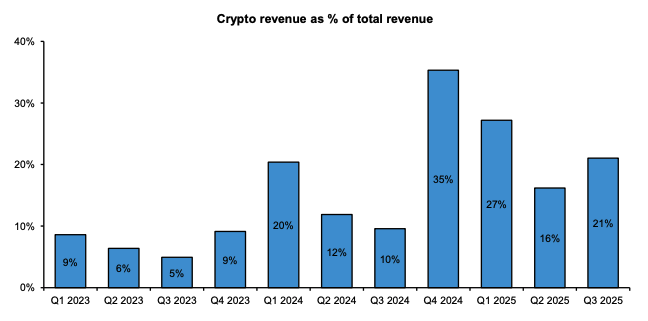
As of this week, Robinhood’s share prices have dipped approximately 21% year-to-date and around 41% from its peak of $89.91. This decline can largely be attributed to the broader downturn in the cryptocurrency market, with crypto trading currently representing around 21% of the company’s total revenue. This revenue reliance places investor focus heavily on whether this crypto market slump is merely a temporary pause or signifies a longer contraction in retail trading sentiment.
Downside Scenarios in Crypto Trading
To illustrate the uncertainty surrounding the crypto market, Bernstein analysts have outlined three potential downside scenarios for Robinhood. The first scenario suggests that if Bitcoin (BTC) stagnates around $60,000 for two years, trading volumes will revert to pre-Trump election levels. In this case, analysts predict 2027 earnings per share (EPS) of about $3.10 and a potential share price in the range of $46 to $61.
Conversely, the second scenario considers a similar dip to $60,000, but anticipates a rebound in the second half of 2026, maintaining equity options volumes. Under this forecast, Robinhood’s EPS could rise to about $3.50, with a potential share price between $70 and $88. The most bearish outlook envisions a drastic 50% drop in both crypto and equity options volumes, reflecting a peak retail risk cycle. This could lead to 2027 EPS estimates of $2.40, translating to a share price in the range of $24 to $36.
Diversification Beyond Crypto Trading
Despite the potential risks outlined in these scenarios, Bernstein analysts argue that Robinhood’s diversified business model could help cushion it against the impending downturn in crypto trading. The company has seen notable growth in areas such as equity trading, prediction markets, and banking services. Notably, non-trading revenue has surged to approximately 43% of total revenue, reflecting a compound annual growth rate of about 29% over the past two years. This diversification could play a key role in stabilizing the business as crypto trading experiences fluctuations.
Long-Term Growth Outlook
Bernstein’s analysis indicates a cautious yet optimistic long-term outlook for Robinhood. The firm believes that the current downturn in crypto is likely to be temporary, projecting a reversal by 2026. A potential Bitcoin bottom around $60,000 may be on the horizon, laying the groundwork for a recovery in trading volumes. Against this backdrop, Bernstein has maintained an "outperform" rating on Robinhood, setting a price target of $160. This suggests that investors should consider the longer-term potential of Robinhood, beyond immediate market volatility.
Conclusion: A Look Ahead
In summary, Robinhood has various strategies to navigate the current challenges posed by volatility in the cryptocurrency market. While near-term fluctuations may continue to create uncertainty, the company’s diversified revenue streams and growth potential in areas beyond crypto trading could potentially offer a buffer against downturns. Investors and stakeholders are encouraged to look beyond current trends, focusing instead on Robinhood’s long-term trajectory as it adapts to market changes.