




Bitcoin’s Remarkable Surge: Navigating Economic Headwinds
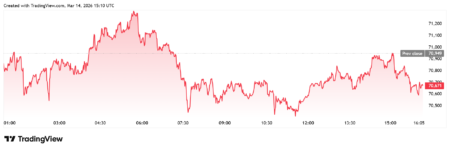
Bitcoin started the week with an impressive upward momentum, peaking near $94,000, marking its highest level in 2026. This rally took place against a backdrop of weak U.S. manufacturing data, signaling ongoing economic challenges. Despite briefly touching this substantial figure, Bitcoin saw a slight pullback but managed to retain a significant portion of its gains throughout the session. This phenomenon highlights the cryptocurrency’s resilience as it continues to attract interest amid adverse macroeconomic conditions.
Bitcoin’s Rise Amid Weak Manufacturing Data
In a notable upward trend, Bitcoin gained over 3% in a single day, reaching its peak mark in nearly four weeks. This surge can be attributed to a broader interest in risk assets, even in the face of weak economic indicators. The recent Institute of Supply Management (ISM) report revealed further weakening in U.S. manufacturing activity. The ISM Manufacturing Purchasing Managers Index (PMI) dropped from 48.2 in November to 47.9 in December, extending the contraction period to ten consecutive months.
While the overall report sent mixed signals, it underscored persistent challenges in the manufacturing sector. The Employment Index saw a marginal rise to 44.9, compared to 44 the previous month, but still indicated a contracting job market. The Prices Paid Index remained steady at 58.5, suggesting sustained inflation pressure in a slowing economic environment. According to Susan Spence, chairwoman of the ISM Manufacturing Business Survey Committee, these figures signal deeper challenges in production and inventories, pointing towards thinning demand.
Analysts Weigh In: The PMI’s Impact on Bitcoin
Analysts have shared varying insights regarding the PMI’s implications on Bitcoin and broader market dynamics. Market commentator Bull Theory emphasized the importance of the PMI indicator, suggesting it must surpass a reading of 50 to sustain bullish momentum in risk assets like Bitcoin. The prevailing weak economic indicators may prompt the Federal Reserve to take further action if conditions worsen, which could subsequently influence cryptocurrency investments.
Conversely, analyst Milk Road highlighted the prolonged downturn in manufacturing as a cautionary factor. With PMI readings consistently below 50, there is a defensive allocation of capital, limiting liquidity flows into riskier exposures. Such a landscape creates challenges for Bitcoin and other cryptocurrencies, as investors tend to be more conservative during economic downturns.
Structural Resilience in Bitcoin’s Marketplace
Despite facing macroeconomic headwinds, structural signals surrounding Bitcoin remain intact, suggesting a more positive outlook. Regulatory clarity in the U.S. is steadily improving, while markets in Japan are benefiting from developing policy frameworks aimed at supporting cryptocurrency. Furthermore, Bank of America has engaged in extensive work on on-chain infrastructure, contributing to greater market visibility and bolstering investor confidence in the long term.
Add to this a noticeable uptick in U.S. demand indicators; active buying interest for Bitcoin has returned significantly. The Coinbase Bitcoin Premium Index, which hit a nine-month low when Bitcoin traded around $88,000 on January 1, indicates that demand is picking up again. Such increasing demand could play a crucial role in stabilizing Bitcoin prices despite broader economic uncertainties.
Geopolitical Factors and Bitcoin’s Resilience
Interestingly, Bitcoin’s ascent coincides with increasing geopolitical tensions, particularly following the recent capture of Venezuelan President Nicolás Maduro by the United States. Despite these global uncertainties, investor risk appetite for Bitcoin remains robust. The cryptocurrency’s gains align with advancements seen across traditional financial markets, including gold, silver, and U.S. equities, which all experienced session highs.
This interconnectivity between Bitcoin and traditional markets may suggest that cryptocurrency is becoming increasingly viewed as a legitimate asset class. As the lines between traditional and digital currencies continue to blur, Bitcoin may serve as a safe haven for investors looking to navigate economic turbulence and uncertain times.
Conclusion: Bitcoin’s Outlook in an Uncertain Economy
In summary, Bitcoin’s recent surge towards the $94,000 mark, even amid weak manufacturing data and geopolitical tensions, indicates its growing resilience and appeal as a risk asset. Market conditions, underscored by mixed economic indicators and the necessity for further policy actions, create a complex landscape for investors. As regulatory frameworks improve and demand signals strengthen, Bitcoin may continue to carve a distinct path through a challenging macroeconomic environment.
With six paragraphs detailing Bitcoin’s recent performance, the underlying economic indicators shaping its journey, and the broader implications for the cryptocurrency market, this article aims to provide a comprehensive overview while remaining optimized for search engines. Understanding the factors at play will be essential for investors looking to navigate the ever-evolving landscape of cryptocurrency investments.