



Bhutan’s Continued Bitcoin Sales Amid Market Downturn
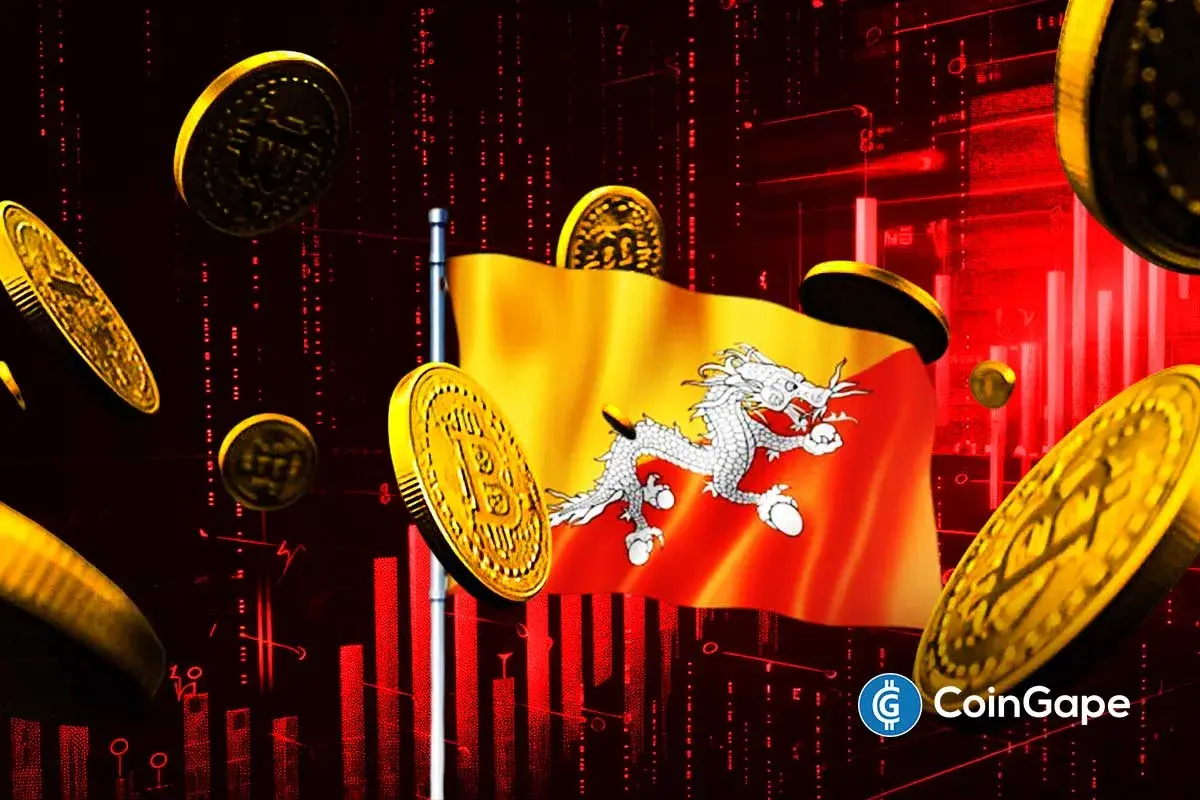
In a striking move during a recent market downturn, the Royal Government of Bhutan has maintained its Bitcoin selling strategy, reacting to a decline in BTC prices that fell to approximately $66,000. The government’s decision to sell off parts of its Bitcoin holdings comes at a time when many investors are facing bearish projections. This ongoing trend in Bhutan’s crypto dealings highlights both the country’s continued engagement with digital assets and the complexities of managing a substantial cryptocurrency portfolio.
Recent Transactions from Bhutan’s Bitcoin Holdings
Recent reports indicate that the Royal Government has offloaded considerable amounts of Bitcoin from its portfolio, bringing in impressive revenue. According to data compiled by Arkham, Bhutan transferred $6.7 million worth of Bitcoin to QCP Capital, a Singapore-based institutional market maker. This transaction follows two significant sales that occurred only a week prior, wherein the investment arm of the Kingdom, Druk Holding Investments (DHI), sold 184.03 BTC for $14.09 million and 100.82 BTC for $8.31 million. Notably, both transactions were also made to QCP Capital, underscoring the government’s ongoing relationship with the institutional trader.
Volume and Timing of Bitcoin Sales
Analysis by Arkham has revealed that Bhutan typically executes Bitcoin sales in increments of around $50 million. For instance, in September 2025, the country engaged in some of its largest trades, with multiple transactions exceeding that $50 million mark. While the recent sales of $6.7 million and the prior amounts may seem modest in comparison, they reflect a broader strategy aimed at managing their holdings effectively. Since starting Bitcoin mining in 2019, Bhutan’s holdings have fluctuated significantly, peaking at an all-time high of 13,295 BTC in October 2024 before dwindling to approximately 5,600 BTC in recent months.
Bhutan’s Position in Global Bitcoin Holdings
Despite the recent declines in their Bitcoin stash, Bhutan remains a significant player on the global crypto stage. According to Bitcoin Treasuries, the country ranks seventh worldwide in terms of BTC holdings. This unique position illustrates Bhutan’s strategic approach to cryptocurrency mining and trading, setting the stage for the government to leverage its digital assets in various market conditions. However, the recent sell-off may raise questions about future strategies and the long-term sustainability of their investments.
Institutional Pullbacks in Bitcoin Investments
On a broader scale, recent market trends indicate that institutional investors are pulling back from Bitcoin investments. A report by SoSoValue has shown a total net outflow of approximately $410.37 million from Bitcoin Spot ETFs, indicating a significant shift in investor sentiment. Leading the outflows was BlackRock’s ETF IBIT, which saw a net withdrawal of $157.56 million, followed closely by Fidelity’s FBTC ETF, with a net outflow of $104.13 million. This dramatic pullback coincided with Bitcoin’s drop to $66,000, further complicating the landscape for crypto investors.
Market Reactions and Predictions
In the midst of these downturns, analysts are divided on Bitcoin’s future trajectory. Standard Chartered has notably lowered its price target for BTC, predicting it could plummet to as low as $50,000 amid the recent decline. However, Bernstein maintains a bullish outlook, holding firm on a price forecast of $150,000 for Bitcoin. This divergence illustrates the varying methods analysts are employing to assess the market, particularly during tumultuous periods. Bernstein has characterized the current market pullback as the “weakest bear case” in Bitcoin’s history, citing no substantial failures in the market’s foundational infrastructure.
Conclusion
As the Royal Government of Bhutan continues its Bitcoin selling spree amid a turbulent market landscape, the interplay of national strategy, global investments, and institutional behavior reflects the complexity of cryptocurrency trading. While recent sales may seem relatively minor compared to past transactions, they signify Bhutan’s proactive approach to managing its digital assets. With institutional investors pulling out significant funds and analysts offering mixed predictions, the cryptocurrency scene remains a volatile arena. For Bhutan and other stakeholders, navigating these unpredictable waters will be crucial in establishing sustainable practices and long-term success in the digital asset economy.