



Ethereum’s Quantum Resistance and Future Upgrades: A Vision by Vitalik Buterin
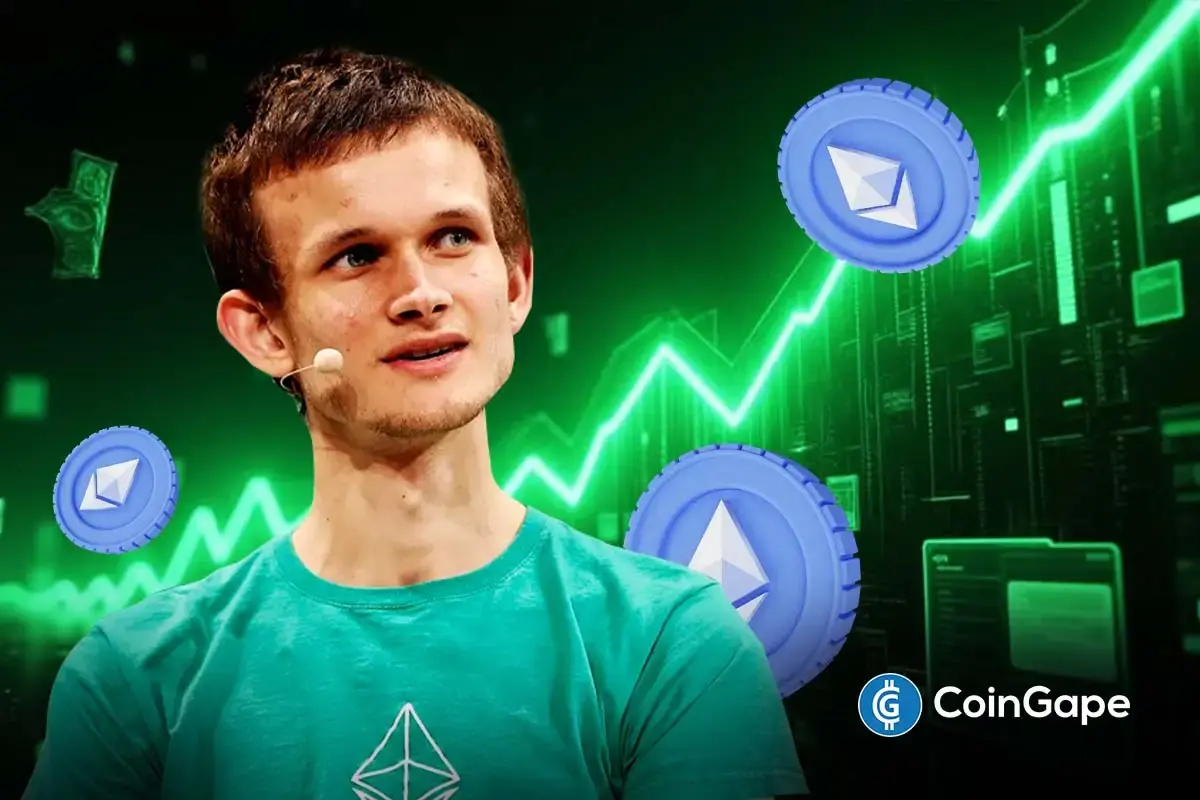
Ethereum co-founder Vitalik Buterin has recently unveiled an ambitious quantum resistance strategy alongside researcher Justin Drake’s introduction of the Ethereum Strawmap. This initiative underscores the critical need for Ethereum to evolve continuously, focusing on eight core objectives: accelerated finality, enhanced throughput, integrated privacy features, and resilience against quantum threats. This article delves into these proposed upgrades, structured over the next several projected forks through 2029 while emphasizing the importance of coordinated protocol enhancements.
Addressing Quantum Vulnerabilities in Ethereum
Vitalik Buterin identified four primary quantum-vulnerable areas within Ethereum that merit urgent attention. These areas include BLS signatures at the consensus layer, KZG-based data availability, ECDSA signatures for externally owned accounts (EOAs), and application-level proofs employing KZG or Groth16. Buterin proposed a systematic approach for addressing these vulnerabilities through incremental changes rather than a sweeping overhaul. Moving away from BLS signatures, he suggested the implementation of more secure hash-based signatures, such as Winternitz variants, thereby reinforcing Ethereum’s cryptographic foundations.
In terms of consensus, Buterin advocated for using STARKs (Scalable Transparent Argument of Knowledge) to aggregate under a leaner consensus structure. Before Ethereum adopts a thorough lean finality, it could deploy a lean available chain, incorporating fewer signatures per block, ultimately mitigating the demands for aggregation. Careful selection of hash functions is critical in this evolution; he noted the inefficiencies in conventional hashes and raised concerns about the aggressive Poseidon2 variants that faced scrutiny over security. Addressing these vulnerabilities, potential options include an enhanced Poseidon2 or other secure hashes like Poseidon1 and BLAKE3, aligning with Ethereum’s security-first approach.
Navigating Data Availability Challenges
Data availability poses additional complexities for Ethereum’s quantum resistance strategy. The current system relies heavily on KZG commitments for both erasure coding and linearity. Buterin highlighted that while STARKs might offer a replacement for KZG, their implementation introduces challenges in two-dimensional data availability sampling and necessitates recursive proofs that exceed the size of typical data blobs. However, he posited that solutions like PeerDAS and one-dimensional sampling could potentially satisfy Ethereum’s conservative scaling ambitions without overwhelming the network infrastructure.
Innovations in Account Abstraction and Proof Aggregation
Buterin also discussed native account abstraction, particularly under EIP-8141, which would facilitate the adoption of quantum-resistant schemes for EOAs. This enhancement acknowledges the quantum threats facing not only Ethereum but also Bitcoin, which has been increasingly analyzed for its vulnerabilities to future quantum attacks. While concerns linger, Buterin asserts that effective hash-based signatures do come with their challenges, costing around 200,000 gas to verify as opposed to the more manageable 3,000 gas for ECDSA.
He also delved into lattice-based signatures, whose inefficiency in verification has been a roadblock. However, innovations such as vectorized arithmetic precompiles could significantly lower gas expenses, making operations like number-theoretic transforms and dot products more accessible. Through time, the aim is to realize recursive signature aggregation at the protocol level, effectively driving the verification costs closer to zero and opening doors for enhanced throughput.
Understanding Ethereum’s Updated Roadmap
Justin Drake described the Ethereum Strawmap as a pivotal coordination tool, outlining essential targets for Ethereum’s evolution. The roadmap incorporates five major objectives: achieving fast Layer 1 (L1) performance, gigagas-level throughput on L1, teragas-scale Layer 2 (L2) expansion, post-quantum security at L1, and private L1 transactions. This roadmap’s introduction follows a pivotal moment where the Ethereum Foundation began staking 70,000 ETH as part of its treasury strategy, indicating a serious commitment to the platform’s future.
Over a span of seven proposed forks by 2029, assuming an upgrade cadence of six months, Ethereum’s evolution is meticulously structured across consensus, data, and execution layers. Notable targets include enabling throughput of 10,000 transactions per second (TPS) on L1 and 10 million TPS across L2 solutions, coupled with achieving finality in a timeframe between six and 16 seconds. This would be possible through the introduction of a streamlined BFT algorithm called Minimmut, reflecting Ethereum’s commitment to scalability and efficiency.
Gradual Evolution Towards Enhanced Performance
In his discussions, Buterin noted that slot times could potentially shrink from the current 12 seconds to as low as two seconds. However, he assured stakeholders that changes will only proceed following rigorous safety validations. The overhaul symbolizes a methodical “Ship of Theseus” approach— iteratively replacing components of the network without disrupting its operational integrity, a process designed to ensure Ethereum remains robust and functional during significant transitions.
Conclusion: Ethereum’s Commitment to the Future
In summary, Ethereum’s proposed upgrades and roadmaps signify a forward-thinking vision driven by the need for enhanced security, particularly against quantum threats. The dual focus on immediate limitations and long-term scalability, as articulated by both Buterin and Drake, sets a thoughtful foundation for Ethereum as it stands at the intersection of innovation and resilience. With the roadmap clearly outlined, the Ethereum community can prepare for a transformative journey poised to elevate its blockchain protocol well into the next decade, ensuring it remains a leading figure in the decentralized space.