



Optimistic Outlook for US-Iran War Negotiations: A Potential Peace Deal on the Horizon
As negotiations related to the ongoing US-Iran war progress, the atmosphere has shifted positively, raising hopes for a potential peace agreement. Meetings held late into Saturday in Islamabad signaled a willingness from both sides to engage in comprehensive discussions. These talks are critical at this juncture, as they represent the first direct interaction between the U.S. and Iran since 1979, following weeks of escalating tensions tied to ongoing military operations.
Rising Expectations on Polymarket
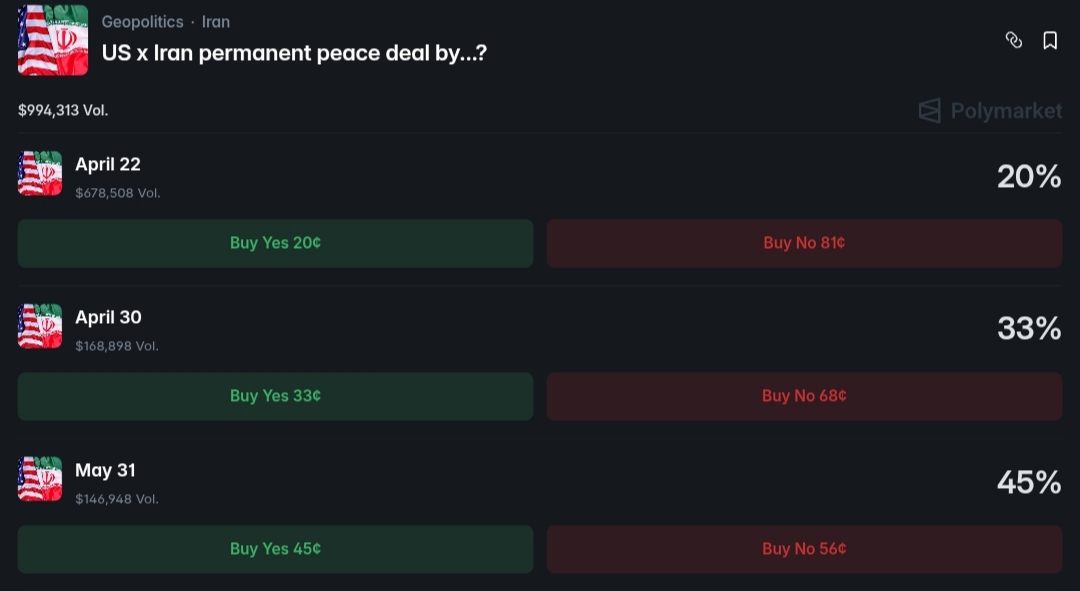
Currently, indicators from Polymarket, a prediction market platform, reflect an increasing optimism surrounding the possibility of a long-term peace deal. As of late Saturday, traders have placed a 33% chance on the likelihood of a durable agreement by the deadline of April 30. This marks a noticeable uptick in sentiment; just days earlier, odds stood at a mere 20%. By extending the timeline to May 31, chances for a resolution rose to approximately 45%, suggesting that while traders foresee a lengthened negotiation period, they are increasingly hopeful about a productive outcome.
Defining Permanent Resolutions
It’s essential to note that Polymarket’s guidelines classify a lasting peace only if there is an unequivocal cessation of hostilities. Temporary ceasefires, while beneficial in the short term, do not meet the criteria for a permanent resolution. The complexities of the conflict between the U.S. and Iran necessitate clear and lasting agreements, addressing the root causes of the hostilities rather than merely postponing them.
Impacts on Global Markets
Interestingly, as negotiations appear to gain momentum, the cryptocurrency market reacted positively, with Bitcoin surpassing the $73,000 mark. This surge indicates a potential market correlation between diplomatic progress and financial investor sentiment, suggesting that a resolution to the US-Iran conflict could stabilize not just geopolitical tensions but also economic indicators. The strategic discussions are critical not only for the involved nations but also for global financial markets sensitive to geopolitical developments.
Key Figures in the Negotiations
The U.S. delegation, which includes Vice President JD Vance and advisors like Steve Witkoff and Jared Kushner, is engaging in talks with an Iranian team led by Mohammad Bagher Ghalibaf and Foreign Minister Sayed Abbas Araghchi. The involvement of such high-profile figures underscores the seriousness of these negotiations and the potential impact they could have on future diplomatic relations.
Points of Contention: The Strait of Hormuz
Despite these optimistic developments, significant disagreements remain, particularly regarding the strategic Strait of Hormuz. Reports indicate that Washington’s "excessive demands" have slowed discussions. Central to the negotiations, this crucial waterway is vital for commercial shipping and energy transit, making it a focal point in the conflict. The U.S. Central Command’s recent initiative to clear underwater mines in the Strait aims to restore safe shipping routes, but Iranian officials maintain that negotiations must honor their rights and interests, emphasizing the need for a "genuine agreement."
Conclusion: A Path Toward Peace
As the dialogue continues, all eyes remain on Islamabad and the involved parties. The ongoing negotiations symbolize a pivotal moment in U.S.-Iran relations, with the potential to reshape not only regional dynamics but also the global landscape. Achieving a lasting peace agreement is imperative for long-term stability, and the options laid out through the talks will be critical in defining a new chapter in U.S.-Iran relations. By navigating the complexities diligently, there is a hope that both nations can reach an understanding that aligns with broader peace efforts and secures a more stable future for all involved.