



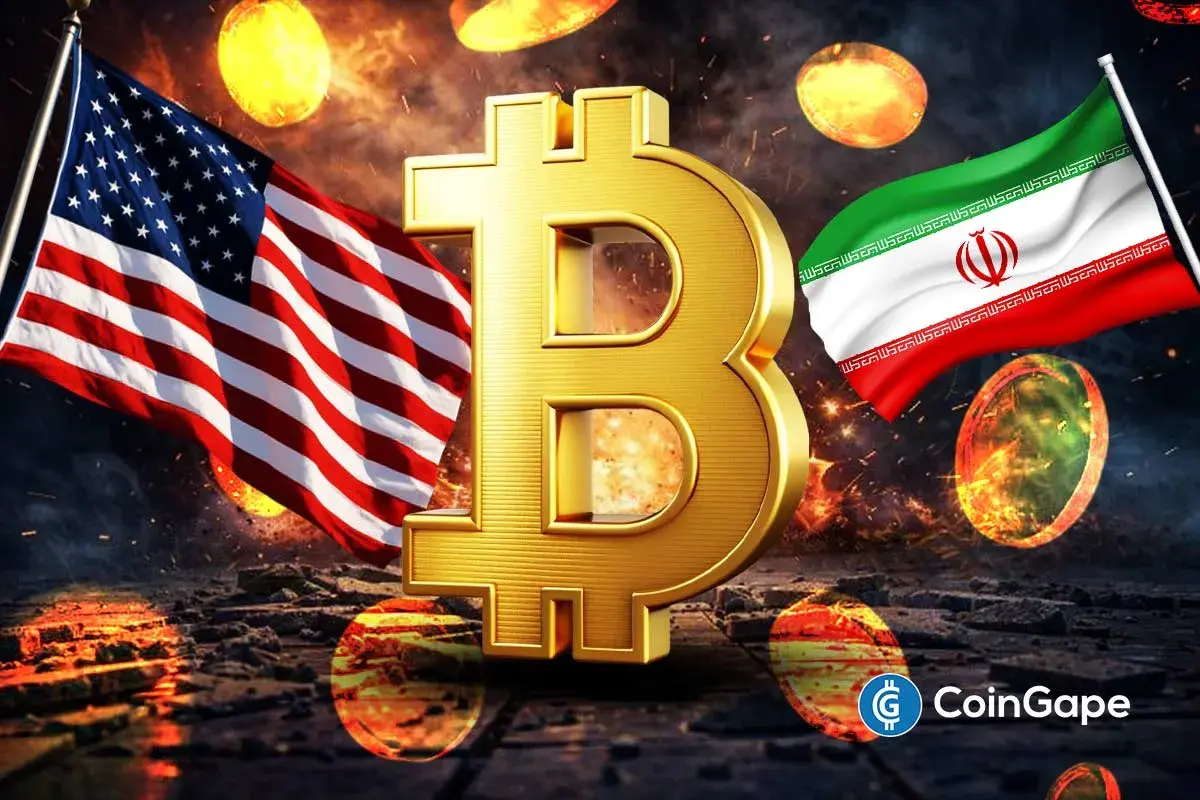

Rising Tensions and Market Impacts: Understanding the U.S.-Iran War and Bitcoin Dynamics
As tensions escalate in the ongoing U.S.-Iran War, a recent report suggested that the United Arab Emirates (UAE) launched an attack on an Iranian desalination facility. This incident has the potential to provoke further military responses, particularly given that Iranian drones and missiles are actively targeting Gulf areas. Market analysts warn that these geopolitical risks could influence global markets, pushing Bitcoin prices down towards the critical support level of $65,000 amid ETF outflows and increased volatility in the cryptocurrency space.
UAE’s Alleged Military Actions and Regional Responses
Sunday’s reports of a UAE strike on an Iranian facility signal a notable shift in Gulf military dynamics. This would be the region’s first military response to ongoing Iranian assaults involving drones and missiles. However, a senior UAE official swiftly countered these claims, insisting that no such strike occurred and reaffirming the nation’s intention to avoid civilian infrastructure targets. The official indicated that any military action from the UAE would be limited to confirmed military sites if absolutely necessary. Nevertheless, the allegations and subsequent denials have only heightened tensions, compelling regional governments to bolster defensive measures as they seek to safeguard their territories.
The Broader Implications of Leadership Changes in Iran
Adding another layer to the complexity of the situation, Iranian authorities are reportedly preparing to announce a new Supreme Leader following the death of Ayatollah Ali Khamenei. This leadership shift could significantly alter Iran’s approach to military engagements, increasing uncertainty in an already volatile environment. Israel has already expressed its readiness to target individuals involved in the succession process, emphasizing the potential consequences of these developments in the context of the U.S.-Iran War. Such shifts in leadership can have profound implications for regional stability and geopolitical strategy, raising concerns among investors and market analysts alike.
Bitcoin Faces Geopolitical Headwinds
As the U.S.-Iran conflict escalates, Bitcoin is feeling the pressure. Analysts highlight that the cryptocurrency recently dipped below the key level of $67,000, with projections suggesting it could plummet toward $65,000 if selling pressures persist. Analyst Ted has identified critical support levels, positioning a crucial zone between $64,500 and $65,000 that Bitcoin needs to hold to prevent further declines. The recent market actions have been characterized by significant ETF outflows, amplifying the uncertainty surrounding Bitcoin’s price movements amid geopolitical developments.
Market Dynamics: Analyzing Bitcoin’s Price Action
Currently, Bitcoin is trading within a specific range of $62,000 to $72,000, which investors are watching closely for the next major move. Analyst Crypto Patel notes that the inability to break the $74,000 resistance level could foreshadow a deeper correction, with potential dips below $50,000. Recently, Bitcoin’s value has shown a tendency to create lower highs and lows, suggesting weakness in buying momentum. As of the latest data, Bitcoin was trading at approximately $67,294, reflecting a decline of about 1.1% over 24 hours. Immediate support levels now hover between $66,000 and $66,500, while resistance is noted near $68,000 and $70,000.
Strategic Support Levels and Future Considerations
Market figures indicate that Bitcoin initially surged to around $68,000 before the upward momentum fizzled out by the $74,000 peak. The cryptocurrency has since retraced to its support levels, raising concerns over the sustainability of its recent performance. As geopolitical developments continue to unfold, these influences on Bitcoin’s market behavior will be critical as investors analyze and adapt their strategies in the face of fluctuating conditions. If Bitcoin can stabilize above the identified support levels, it may have a chance to recover; however, the ongoing U.S.-Iran tensions will remain a key factor influencing market sentiment.
Conclusion: Navigating Uncertain Times
In summary, the escalation of tensions in the U.S.-Iran War, coupled with critical leadership changes in Iran and potential military responses from the UAE, is causing ripples across global markets. Bitcoin appears highly susceptible to these geopolitical factors, with analysts keenly observing critical support and resistance levels to gauge future price trajectories. As investors navigate this uncertain landscape, they must remain vigilant and adaptable, keeping a close eye on both market fundamentals and geopolitical developments that could dictate the direction of both the cryptocurrency and broader financial markets.