



Trump Pushes for Federal Reserve Rate Cuts: Economic Implications and Market Reactions
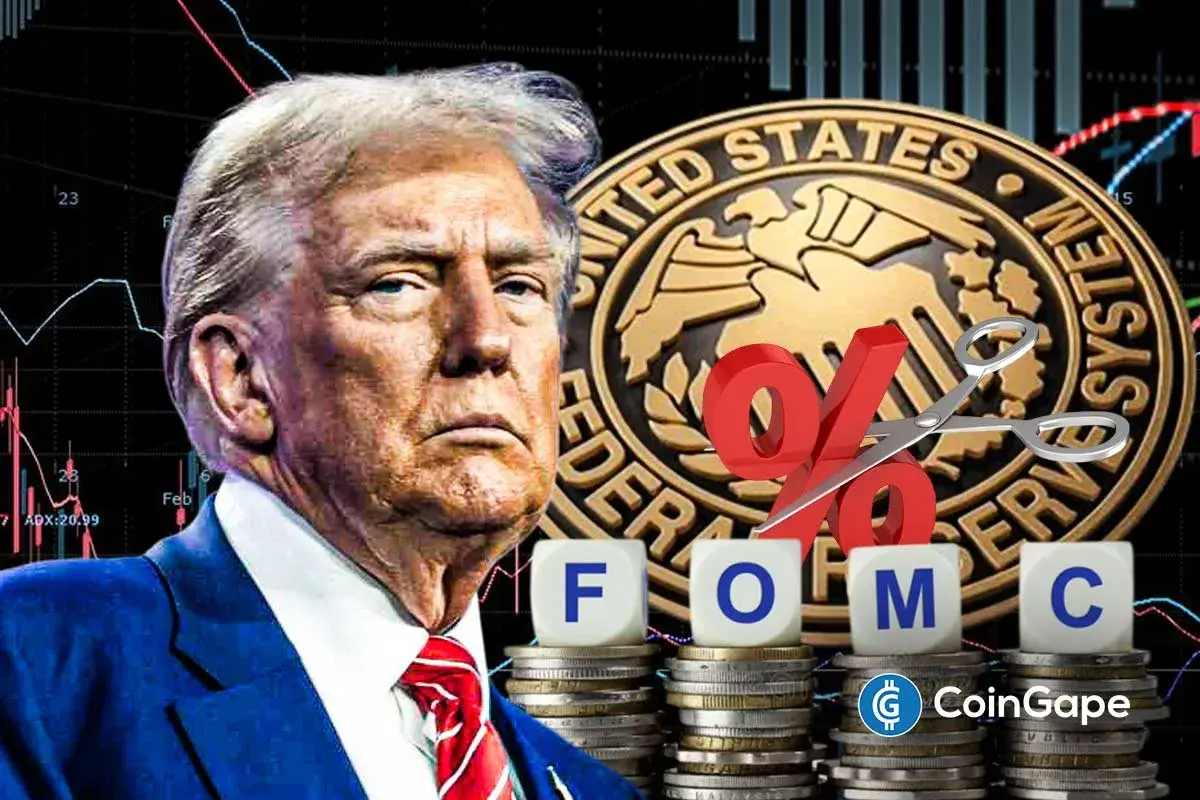
President Donald Trump has reignited the debate over interest rates following the recent Federal Reserve Open Market Committee (FOMC) meeting. As the Fed opted to maintain interest rates steady at 3.50% to 3.75%, Trump expressed dissatisfaction with Chair Jerome Powell, insisting on immediate rate cuts. He argues that high rates are detrimental to the economy and national security, emphasizing that inflation is no longer a pressing concern. This article delves into Trump’s demand for rate cuts, his defense of tariffs, and the implications for financial markets, particularly cryptocurrencies.
Trump’s Call for Immediate Rate Cuts
In a provocative post on Truth Social, President Trump underscored the urgent need for the Federal Reserve to cut interest rates significantly. He criticized Powell for refusing to act on interest rates, echoing his longstanding view that the Fed’s current stance is harming the U.S. economy. According to Trump, higher rates are costing the nation billions in unnecessary interest expenses and stifling growth amid conditions he deems favorable. He reiterated that inflation no longer poses a substantial threat, claiming the Fed is ignoring key indicators pointing toward economic improvement.
The decision to maintain interest rates has sparked discussion about the timing and potential need for cuts in the future. The FOMC has indicated it will be closely evaluating incoming economic data before determining the appropriate course of action. This cautious approach reflects a broader sentiment within the Fed regarding economic stability and monitoring inflation metrics.
Defending Tariffs: An Economic Strategy
Trump didn’t stop at demanding rate cuts; he also staunchly defended his administration’s tariff policies, stating that they significantly contribute to U.S. revenue. He asserts that the tariffs imposed are crucial for maintaining a competitive edge, allowing the U.S. to potentially secure the lowest interest rates globally. Trump’s rationale is that countries with lower interest rates benefit from substantial trade surpluses, bolstered by tariffs he has implemented.
Contrasting Trump’s assertions, Fed Chair Jerome Powell indicated that the majority of the recent inflation spike can be attributed to these tariffs rather than consumer demand. He highlighted that the inflationary impact from tariffs is expected to reach its peak by mid-2026, suggesting that a decline in inflation could eventually lead to more aggressive rate cuts. This perspective underscores the intricate relationship between trade policies and macroeconomic indicators.
Labor Market Considerations: Current Economic Environment
During his post-FOMC press conference, Powell articulated that a weak labor market could necessitate further Fed rate cuts. However, he clarified that the current labor market appears stable, indicating that immediate cuts may not be warranted. Powell underscored the need for continued vigilance regarding inflation, noting that while conditions may be improving, they remain elevated compared to historical norms.
The Fed’s approach involves a delicate balancing act between fostering economic growth and combating inflation. Policymakers must interpret labor market signals accurately to forecast potential rate adjustments. The overall focus remains on stabilizing economic indicators before committing to significant monetary policy changes.
Bitcoin and Cryptocurrency Market Reaction
The Fed’s recent decision had immediate repercussions in the cryptocurrency market, particularly for Bitcoin, which saw a decline of approximately 2%. Generally, lower interest rates are favorable for risk assets, including cryptocurrencies, as they can drive more investment into these high-risk markets. However, the absence of an immediate rate cut has limited Bitcoin’s potential upside. Recent attempts to breach the $90,000 mark have proven unsuccessful in the sustained volatile landscape of crypto trading.
Ironically, while traditional asset classes like the S&P 500 and gold have been performing well, Bitcoin and other cryptocurrencies have exhibited a range-bound performance. This divergence highlights the ongoing struggles of digital assets in a market dominated by uncertainty regarding monetary policy.
Future Projections: Rate Cut Probabilities
Market expectations surrounding future Fed rate cuts have been captured by Polymarket data, which indicates fluctuating odds for upcoming rates. Presently, March’s rate cut odds stand at 10%, with probabilities for April at nearly 25%. Notably, estimates for June have surged to 67%, particularly due to Powell’s term conclusion in May, which could influence decisions at that juncture.
These speculative scenarios create a dynamic backdrop for both traditional and digital asset markets. Investors are closely monitoring the Fed’s policy direction, as shifts in monetary policy play a vital role in broader economic stability and growth prospects.
Conclusion: Economic Oversight in a Changing Landscape
President Trump’s demands for lower interest rates and his defense of tariffs highlight the ongoing tensions between political leadership and monetary policy. As the Fed navigates these challenges, economic indicators will dictate their responses to changing conditions. The interplay between tariffs, interest rates, and market reactions reveals the complexity of the economic landscape, underscoring the significance of informed monetary policy.
While much is at stake for the U.S. economy, the implications extend beyond traditional markets, heavily influencing the evolving landscape of cryptocurrencies. As the world watches closely, one thing remains clear: the decisions made by the Federal Reserve will have lasting repercussions on various sectors and asset classes well into the future.