



Trump’s Optimistic Outlook for U.S. Stock Market: A Davos Address Summary
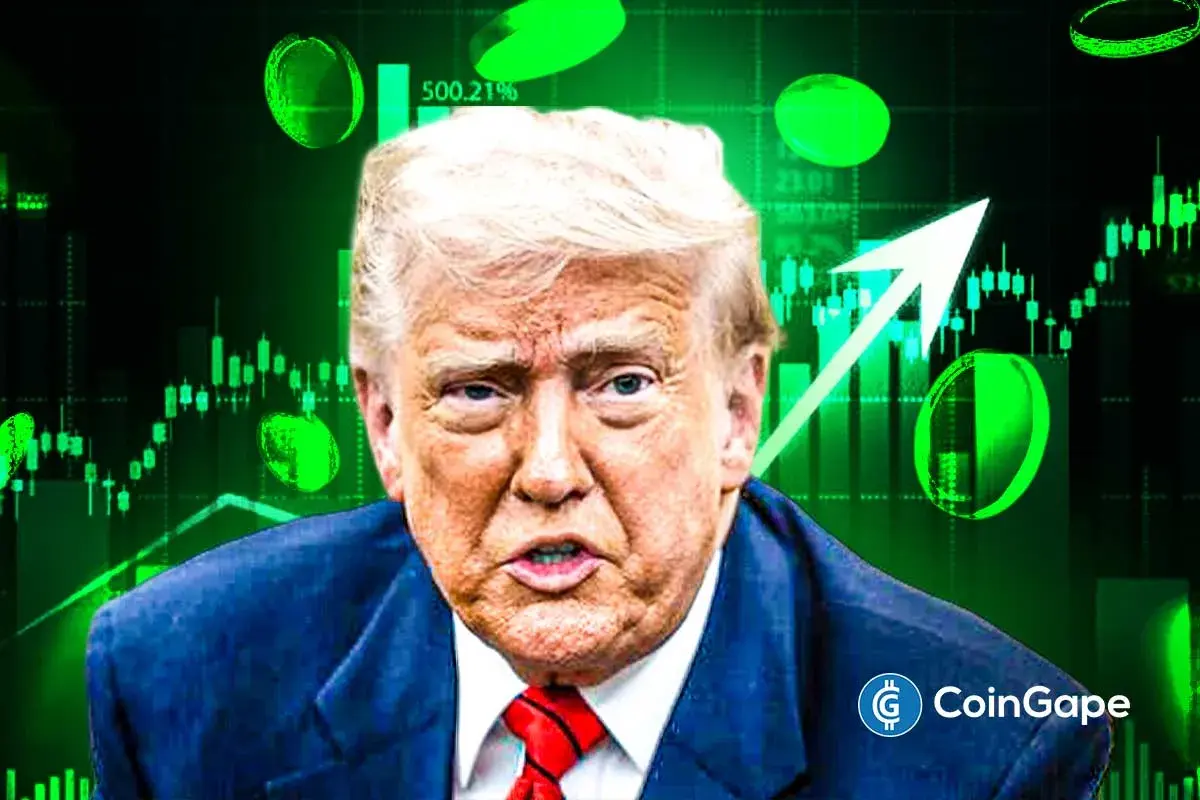
In a bold and optimistic address at the World Economic Forum in Davos, U.S. President Donald Trump expressed his confidence in the resilience of the U.S. stock market. He declared that the market is poised to double, despite recent fluctuations. This marked a significant moment, especially as it came on the heels of a notable selloff that had investors concerned. Trump’s remarks not only aimed to soothe immediate fears but also to project a long-term vision of continuing economic growth.
Market Reactions to Trump’s Remarks
During his speech, Trump dismissed concerns over a recent dip in market values, labeling the decline as mere “peanuts.” This commentary underscored his belief that the U.S. equities are fundamentally strong. He predicted that the Dow Jones Industrial Average could eventually soar to an astonishing 50,000, possibly even doubling to 100,000 within a short time frame. This ambitious outlook sent ripples through the market, as investors reacted positively to his words, leading to a rebound during his address. The Dow increased by 519 points, or 1.1%, while the S&P 500 and Nasdaq also experienced similar gains.
Rapid Market Rebound Amidst Uncertainty
The immediate aftermath of Trump’s speech illustrated the volatile nature of the stock market. After a day in which all major indexes had fallen nearly 2%, the market quickly reversed course as buyers returned, motivated by the President’s optimistic projections. Financial analyst Jeffrey Kleintop pointed out that since Trump’s return to office a year ago, global stocks, excluding the U.S., have gained approximately 30%, compared to the S&P 500’s performance. This indicates a broader market recovery that has been somewhat decoupled from American equities, emphasizing the unique positioning of the U.S. market.
A Dismissive Tone Towards Market Concerns
Trump’s remarks also brushed aside criticisms and negative sentiments that were linked to external factors, such as his Greenland comments. He suggested that such remarks had economic repercussions but dismissed them in the larger context of market dynamics. His confident forecast appeared to be a strategic move to bolster investor sentiment at a time when many were feeling uneasy.
The Volatility Continues Post-Speech
However, the glow of optimism did not last long. Following the initial gains post-speech, major indexes began to retract, leading to renewed volatility. The Nasdaq 100 fell by 1.5% shortly after the address, while the S&P 500 lost approximately 50 points. Notably, some high-profile stocks like Apple and Tesla experienced gains, while others such as Netflix and crypto stocks continued to grapple with losses, illustrating the uneven nature of market recovery.
The Crypto Market’s Decline
The cryptocurrency market, which has been experiencing its own set of challenges, continued to see declines. Coinbase stock fell by 1.68%, and shares of Circle dropped by 2.25%, marking an extensive downturn over the past six months. With Circle losing more than 63% of its value since its IPO, the crypto landscape continues to show signs of distress. These movements in the digital asset space highlight the complexity of market reactions in the wake of policy announcements and global economic events.
Conclusion: The Path Ahead for Investors
As the U.S. markets continued to react to Trump’s optimistic projections, the volatility inherent in financial markets was starkly evident. While his predictions of a doubling stock market serve to inspire hope among investors, the immediate aftermath reminds us of the sensitivity of markets to external comments and events. It’s crucial for investors to remain informed and cautious, acknowledging the multifaceted influences that can impact market conditions. As this chapter unfolds, attention will be on how economic policies and global factors will shape the path forward for the U.S. stock market.
In an era of uncertainty, continuing to analyze and adapt to changing circumstances will be vital for all stakeholders involved in the financial markets.