

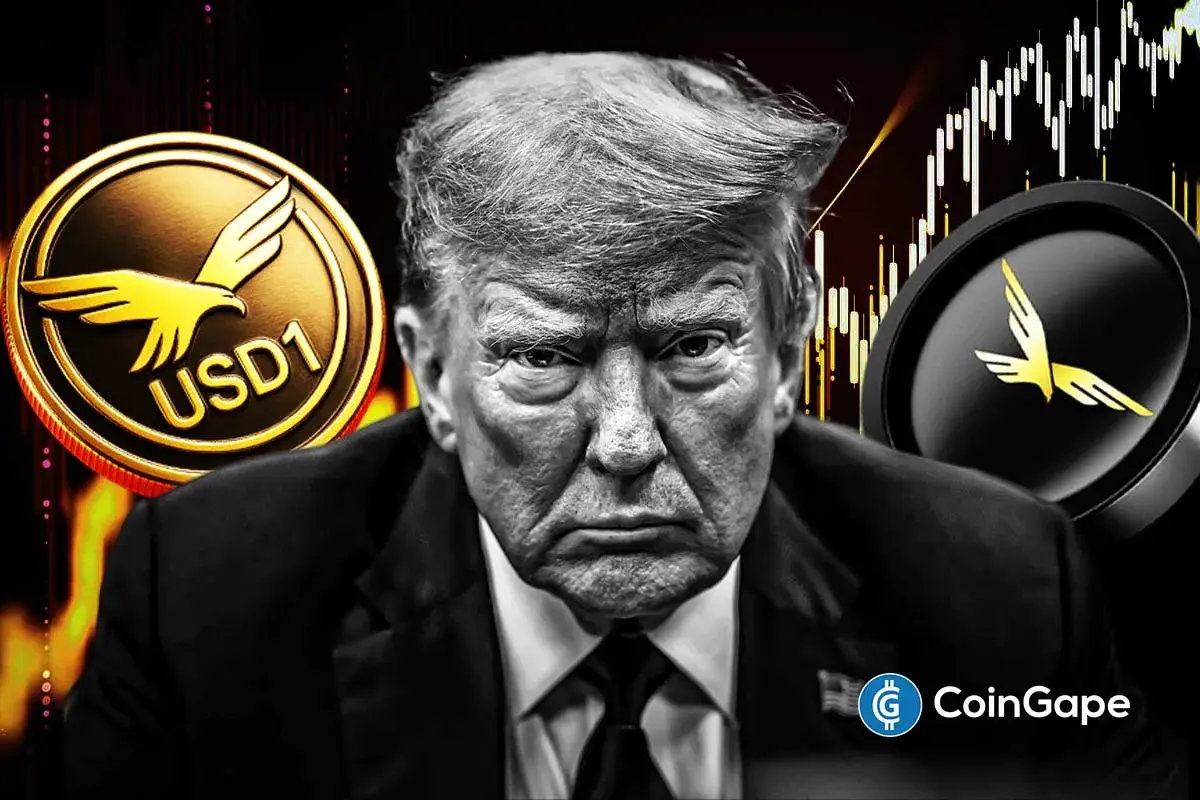

USD1: The Rise of World Liberty Financial’s Stablecoin
World Liberty Financial’s USD1 stablecoin has recently achieved a remarkable milestone, surpassing a market capitalization of $5 billion. This accomplishment not only places USD1 as the fifth-largest stablecoin globally but also highlights its rapid ascent in a competitive market. As debates around the World Liberty Financial Inc. (WLFI) bank continue to unfold, the stablecoin’s growth reflects a confluence of strategic planning, institutional adoption, and external scrutiny.
A New Contender in the Stablecoin Arena
Launched less than a year ago, USD1 has quickly moved past notable competitors, including PayPal’s PYUSD, which is currently valued at $3.75 billion. This meteoric rise has cemented USD1’s position among the top 25 cryptocurrencies as tracked by CoinMarketCap. Donald Trump Jr., co-founder of World Liberty Financial, recently took to social media to celebrate this achievement, emphasizing the importance of building infrastructure within the financial ecosystem. Trump’s words underscore a commitment to delivering a stablecoin that is "built in America," designed for real-world scalability, and attracting substantial institutional interest.
Strategies Fueling Rapid Growth
The impressive growth of USD1 can be attributed to several strategic initiatives by World Liberty Financial. Earlier this year, the firm unveiled its new platform, World Liberty Markets, which allows users to borrow digital assets using USD1 and other major tokens like USDC and USDT. This platform showcases the firm’s commitment to integrating USD1 into broader financial systems, effectively increasing its usability.
Additionally, World Liberty Financial has proposed a plan to utilize a portion of its treasury to increase the supply of USD1—an initiative put to a governance vote among community members. This move aims to ensure that the stablecoin remains adequately backed and widely accessible, thereby solidifying its market presence.
Diversifying with Real-World Assets
In conjunction with these strategies, World Liberty Financial is planning to launch various products backed by real-world assets, further bolstering the credibility of USD1. By utilizing USD1 as collateral for these offerings, the firm not only enhances the utility of their stablecoin but also provides a tangible dimension to its digital currency model. This diversification appears to be a strategic move designed to attract both institutional and retail investors.
Controversy Surrounding World Liberty Bank
The stablecoin’s success has not been without controversy. WLTC Holdings LLC, the entity behind World Liberty Financial, has submitted an application to the Office of the Comptroller of the Currency (OCC) for establishing a national trust bank specifically focused on stablecoin issuance. Senator Elizabeth Warren has vocally opposed this initiative, citing concerns about its connections to Donald Trump and the potential risks posed to national security.
In her communications with the OCC, Warren expressed worries regarding the stablecoin’s ties to the decentralized exchange Pankeswap, which reportedly holds a significant amount of laundered funds. The OCC has, however, affirmed its intent to review the application in line with standard procedures, showcasing its commitment to a regulated approach despite the ongoing scrutiny.
Institutional Trust and Community Governance
While external challenges remain, the backing from the community and institutional investors suggests strong confidence in USD1. Co-founder Zach Witkoff has pointed out that the aim of the bank application is to leverage the momentum USD1 has achieved as one of the fastest-growing stablecoins in history. By actively engaging community members in governance, World Liberty Financial strengthens its ties to users and investors, ensuring that the direction of the stablecoin aligns with collective interests.
The Future of USD1 and Its Impact on the Crypto Landscape
Looking ahead, the future of USD1 appears promising. With its growing market capitalization, innovative platform solutions, and plans for real-world asset integration, the stablecoin is well-positioned to further disrupt the financial sector. However, the company must navigate regulatory hurdles and public scrutiny, particularly regarding its potential risks and connections to external entities. As debates continue, all eyes will be on how USD1 evolves in the fast-paced world of cryptocurrencies.
In conclusion, the rise of USD1 as one of the leading players in the stablecoin market reflects a calculated approach by World Liberty Financial, tapping into infrastructure, community support, and real-world integrations to create a viable digital currency option. As the company addresses regulatory concerns and expands its offerings, both enthusiasts and skeptics will be watching closely to see how USD1 shapes the future of cryptocurrency.