



Senator Elizabeth Warren Calls for Halt on World Liberty’s Bank Charter Application: Implications for Transparency and Regulation
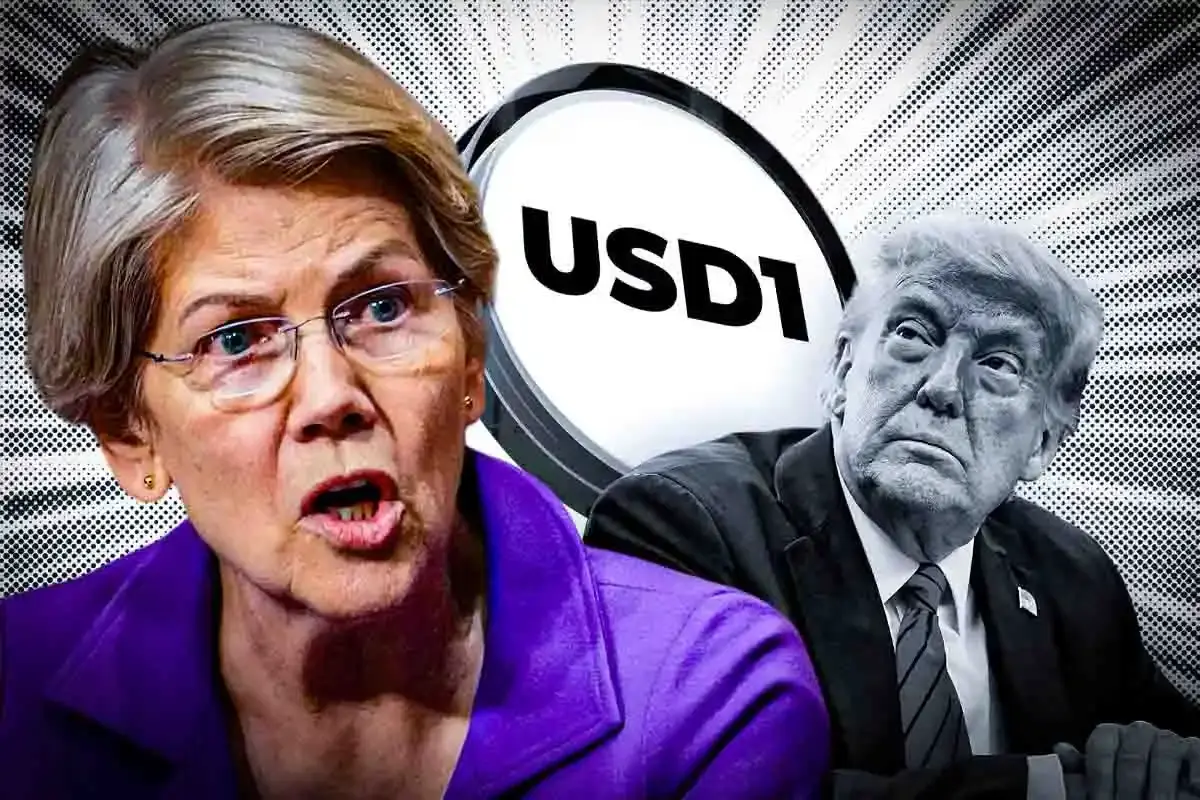
U.S. Senator Elizabeth Warren has initiated a significant push against the banking regulators by demanding that the application for a bank charter by World Liberty be temporarily halted. The urgency of this request stems from World Liberty’s close ties to former President Donald Trump, a connection that raises critical questions about regulatory integrity and the potential for conflicts of interest. In a direct letter to the Office of the Comptroller of the Currency (OCC), Warren is advocating for regulatory caution and transparency as the realm of cryptocurrencies continues to evolve at an unprecedented pace.
Warren’s Concerns Over Regulatory Integrity
In her letter addressed to Comptroller Jonathan Gould, Senator Warren outlines her apprehensions regarding the review process for a national trust bank charter application filed by World Liberty, which was co-founded by President Trump and his family. Warren emphasizes that allowing this application to proceed could undermine the integrity of federal banking oversight. She cites her previous warnings about the potential conflicts of interest posed by Trump’s financial involvement in the cryptocurrency sector. Given Trump’s status as a former president, there are valid concerns regarding the extent to which regulatory decisions could be influenced by his financial interests.
Warren’s letter is not merely alarmist rhetoric; she raised these issues earlier in the summer. At that time, she asked how the OCC could ensure that Trump’s financial interests would not undermine regulatory decisions. Gould’s previous response characterized these fears as speculative, but now, Warren argues that the reality validates her initial concerns. The implications of granting World Liberty a bank charter could enable Trump to leverage federal financial oversight to influence the profitability and operations of his businesses, thereby raising critical ethical questions.
Impact of Approval on Financial Oversight
The stakes of the situation are substantial, as Warren pointed out that if World Liberty’s bank application is approved, it would lead to a scenario where the President could have indirect control over his financial enterprises through federal regulations. This creates a cycle of potential conflicts: the same agency responsible for overseeing financial compliance would also be monitoring Trump’s businesses. Warren’s assertion holds weight, suggesting that the OCC would not only influence Trump’s company but also enforce laws that could impact both his business and his competitors in the volatile cryptocurrency market.
To mitigate these issues, Warren has urged the OCC to pause its review of World Liberty’s application until Trump completely divests from his interests in the company. Such a divestment would presumably remove any conflict of interest and restore public trust in the regulatory process involving cryptocurrency and banking.
Growing Public Concern Over Trump’s Crypto Ventures
Warren’s call to action reflects a broader societal unease regarding Trump’s increasing involvement in the cryptocurrency landscape. Recently, the crypto community has expressed concerns regarding the political implications of such engagements. Notably, Charles Hoskinson, a well-known figure in the crypto space, recently voiced his lack of confidence in the current political trajectory, indicating that many in the industry share Warren’s sentiment.
The heightened scrutiny surrounding Trump’s financial dealings complements a report published last November by Jamie Raskin, which alleged that Trump has been capitalizing on his investments in cryptocurrency as a means to amass wealth. This concern about the intertwining of politics and financial interests signals the potential for regulatory bodies to become entangled in conflicts that could undermine the credibility of their oversight.
World Liberty’s Recent Developments
Adding another layer to the unfolding story is World Liberty’s confirmation that it has filed a formal application for a nationally chartered trust bank license. Alongside this application, the company has established a new subsidiary, WLTC Holdings LLC, and submitted a de novo application with the OCC. This move not only puts World Liberty in the spotlight but also amplifies the urgency of Warren’s concerns regarding regulatory oversight and potential conflicts stemming from Trump’s financial ties.
The financial growth of the company has been significant; according to public disclosures, World Liberty has amassed billions of dollars in value from its cryptocurrency activities. This exponential growth raises questions about the potential power dynamics at play should the bank charter be approved, particularly regarding how a former president could steer fiscal outcomes through regulatory frameworks.
The Bigger Picture: Crypto, Regulation, and Ethics
As cryptocurrencies become more mainstream, the questions surrounding their regulation are becoming increasingly complex. Warren’s actions and concerns bring to the forefront the need for rigorous scrutiny in any financial system, especially when high-profile political figures are involved. The intertwining of cryptocurrency and political status creates a unique regulatory challenge, one that necessitates transparent processes to maintain public trust.
The ramifications of this situation extend beyond just one bank charter application. They signal the urgent need for stronger regulatory frameworks in the cryptocurrency space, particularly to prevent conflicts of interest that could arise when influential figures are financially involved. Lawmakers and regulatory agencies must navigate this new terrain with utmost care to foster a responsible environment for both innovation and ethical oversight.
Conclusion: Calls for Accountability and Transparency
Senator Elizabeth Warren’s staunch stance against the World Liberty bank charter application serves as a critical reminder of the ethical responsibilities inherent in financial regulation, particularly when prominent political figures are involved. Her call for the OCC to pause its review until Trump has divested reflects growing public concern regarding transparency and accountability in regulatory processes.
As we move forward into an era increasingly defined by digital currencies, the need for thorough regulatory practices becomes paramount. By addressing potential conflicts of interest proactively, regulators can help to ensure the integrity of the financial system and maintain public confidence in its oversight. Ultimately, Warren’s efforts echo a larger demand for accountability in a rapidly changing financial landscape.