



Kevin Warsh Emerges as Front-Runner for Next Fed Chair: What You Need to Know
Former Federal Reserve Governor Kevin Warsh has recently become the clear favorite to succeed Jerome Powell as the next Fed chair, following comments from U.S. President Donald Trump. The speculation around Warsh’s candidacy has intensified after Trump indicated he does not intend to nominate his advisor, Kevin Hassett, for the role. This shift has significant implications for monetary policy and the future direction of the U.S. economy.
Trump’s Comments Shift the Landscape
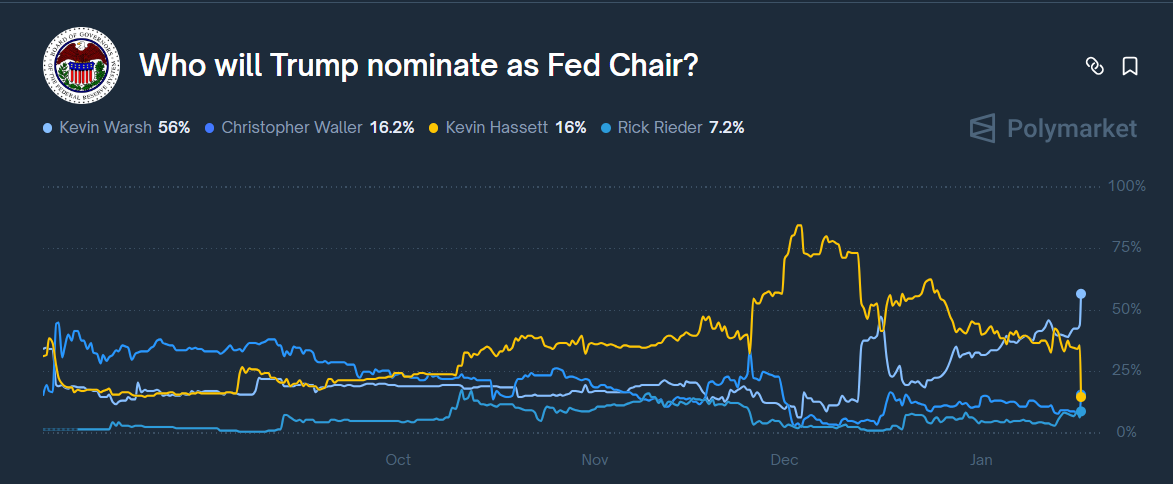
During a recent event at the Rural Health Roundtable, President Trump stated, “I actually want to keep you where you are,” referring to Kevin Hassett, the current Director of the National Economic Council. This statement marked a notable pivot in the Fed chair race that was previously dominated by Hassett, who had been a strong contender with a probability of over 80% until the end of last year. The president’s comments have created a new narrative, with Warsh now holding a 56% chance of nomination according to Polymarket data.
Polling Trends: Warsh on the Rise
The odds for Warsh’s nomination have surged in light of Trump’s remarks. He is now widely considered the best option to take over leadership at the Federal Reserve. As the pressures of inflation, economic recovery, and employment rates continue to loom over the U.S., the Fed’s leadership plays a critical role in determining monetary policy strategies and overall economic health. With Hassett’s chances dwindling, Warsh’s resurgence reflects a growing confidence in his capabilities to guide the Fed through these challenging times.
The Competition: Waller and Rieder
As the race tightens, it’s important to consider other candidates who might also be vying for the position. Following Trump’s statements, Fed Governor Chris Waller has also gained traction, currently holding a 16.2% chance of being nominated. In addition, Rick Rieder, the Chief Investment Officer of BlackRock, has risen in the ranks with a 7.2% chance. Notably, all three candidates, Waller, Rieder, and even Hassett, share a common view favoring lower interest rates, which aligns with Trump’s economic vision.
Warsh’s Silent Stance on Monetary Policy
While Warsh has remained largely silent on his specific stance regarding monetary policy, Trump has hinted that Warsh would likely support lowering interest rates. Given the backdrop of economic challenges, including inflationary pressures and recovery from the COVID-19 pandemic, the next Fed chair must navigate these issues thoughtfully. Warsh’s previous experience at the Fed places him in a well-suited position to address these complexities and implement effective monetary strategies.
Implications for the U.S. Economy
The decision on who will take the helm at the Federal Reserve will inevitably impact U.S. economic policies and financial markets. With rising inflation and demands for greater fiscal intervention, the new Fed chair will need to balance these priorities carefully. Warsh’s nomination could potentially lead to a shift in the Fed’s approach, influencing key indicators such as interest rates and employment.
Conclusion: The Future of the Fed
As we move forward, the selection of the next Federal Reserve chair will be a critical juncture for U.S. economic policy. Kevin Warsh’s rising odds indicate a shift in the administration’s strategy, while also emphasizing the importance of steady leadership in uncertain economic times. Given his background and the current political landscape, Warsh may well become a pivotal player in shaping the future monetary policies that will guide the U.S. economy.
In summary, the market observes closely as these dynamics unfold, with Warsh now firmly positioned as a strong contender, making the Fed chair race one of the most crucial discussions in today’s economic discourse. As the nomination process progresses, all eyes will be on the candidates and their approaches to managing the challenges that lie ahead for the U.S. central bank.