




Bitcoin Price Predictions Amid Geopolitical Tensions: Insights from JPMorgan
Recent analyses by JPMorgan have raised concerns regarding Bitcoin’s future, even after its impressive rally to $74,000, driven largely by the escalating geopolitical tensions between the U.S. and Iran. The firm’s analysts, particularly Nikolaos Panigirtzoglou, have drawn parallels between current events and the market’s behavior during the onset of the Ukraine war in 2020, suggesting that Bitcoin’s trajectory may be subject to similar vulnerabilities. As the market reacts to these geopolitical crises, investors are urged to tread carefully.
Historical Patterns: The Impact of Geopolitical Crises on Bitcoin
Historically, Bitcoin’s performance has mirrored that of traditional risk assets during geopolitical upheavals. During the early days of the Ukraine conflict, retail investors were initially unwilling to exit the market, holding on to stocks for about a month before daunting realities forced them to reconsider. Panigirtzoglou points out that a prolonged conflict, such as the ongoing tensions in Iran, could lead to a similar decline in Bitcoin. When the dust settled from the Ukraine war, Bitcoin experienced both an initial surge and a subsequent downturn, highlighting its susceptibility to broader market dynamics.
Current Market Dynamics: Insights from JPMorgan Analysts
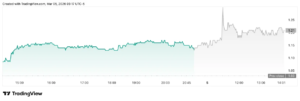
In their recent analysis, JPMorgan noted how Bitcoin’s price surged by nearly 40% when the Ukraine war broke out, only to plummet by 67% afterward. Drawing from this analysis, market expert Ted Pillows has predicted that Bitcoin might initially push upwards to around $80,000 before facing another downturn reminiscent of past geopolitical conflicts. With Bitcoin recently hitting a one-month high of $74,000, the market is currently fueled by hopes that the conflict with Iran will wrap up quickly.
Caution from Industry Leaders: The "Dead Cat Bounce"
Amidst these predictions, voices within the cryptocurrency sphere are issuing caution. Arthur Hayes, the co-founder of BitMEX, has warned that Bitcoin’s recent rally might represent a "dead cat bounce." He emphasized that Bitcoin has not fully disentangled itself from the performance of U.S. Software as a Service (SaaS) tech companies, hinting that Bitcoin could decline sharply if these stocks fall. This interconnectedness suggests that investors need to be well-informed and prepared for potential market shifts.
Driving Forces: ETF Inflows and Market Sentiment
Despite the pessimistic outlook from some analysts, there are driving forces behind Bitcoin’s recent rebound. An analysis from CryptoQuant has indicated that renewed inflows into U.S. spot Bitcoin ETFs played a significant role. Inflows surged to $458 million on the first trading day following the outbreak of the Iran crisis, followed by additional inflows of $225 million and $462 million on subsequent days. This surge signals a growing interest in Bitcoin among investors, hinting at a potential short-term bullish sentiment.
On-Chain Analysis: Mixed Signals for Bitcoin
The broader market context reveals a mixed outlook for Bitcoin. On-chain data shows some bearish indicators, such as the 90-day Realized Profit/Loss Ratio remaining below 1.0 and an uptick in coins held at unrealized losses. On the flip side, the Coinbase Premium Index has returned to positive territory, suggesting renewed demand for Bitcoin among U.S. investors. This dichotomy between negative and positive signals emphasizes the importance of ongoing analysis and the need for investors to stay vigilant regarding market fluctuations.
In conclusion, while JPMorgan analysts caution against potential declines in Bitcoin’s price due to geopolitical tensions, the market remains responsive to various factors such as ETF inflows and investor sentiment. As history has shown, Bitcoin’s future is uncertain and closely tied to broader market trends. Investors must remain well-informed about these dynamics in order to navigate the volatile landscape of cryptocurrency successfully.