



Goldman Sachs Adjusts Fed Rate Cut Predictions Amid Rising Inflation Concerns
Goldman Sachs, a prominent Wall Street investment bank, has made significant adjustments to its forecast regarding the U.S. Federal Reserve’s (Fed) anticipated timeline for interest rate cuts this year. Originally projecting the first rate cut in June, Goldman has now shifted this expectation to September. This revision comes in the wake of escalating concerns that the ongoing conflict in Iran could exacerbate inflation, leading the Fed to adopt a more cautious approach to monetary policy easing.
The adjustment was reported by Reuters, which indicated that Goldman Sachs anticipates a 25 basis points (bps) cut in December, following the September adjustment. The ongoing geopolitical tensions have spurred inflation fears, which Goldman Sachs links directly to the conflict. Notably, the International Energy Agency (IEA) has halved its 2026 global oil supply forecast due to unrest in the Middle East, posing a risk of higher inflation as supply shocks can ripple through the economy.
Goldman Sachs believes that by September, a combination of softening labor market conditions and favorable progress on fundamental inflation metrics will support the case for a Fed rate cut. The bank has also indicated that an earlier cut remains plausible if labor market deterioration occurs sooner or more significantly than currently expected. Interestingly, data from the February U.S. jobs report pointed to a continued weakness in the labor market, raising questions about the Fed’s trajectory in the face of external economic pressures.
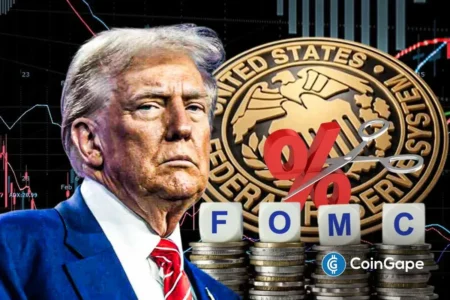
Comments from Fed Governor Chris Waller emphasize this delicate balancing act. Waller suggested during a recent speech that the upcoming Federal Open Market Committee (FOMC) meeting should consider another rate cut given the persistent weakness in the labor market. He noted his belief that the inflationary impact driven by the Iran conflict could be transient, allowing room for more accommodative monetary policy.
Despite Greenlight remarks from Goldman Sachs, the dynamics in the market are shifting. According to data from Polymarket, cryptocurrency traders have revised their expectations, now pricing in a greater likelihood of only one Fed rate cut this year. Odds are currently pegged at a 28% chance for a single cut and a 27% probability for two cuts. The market has also witnessed a rise in the chances of no cuts at all, now standing at 20%.
In stark contrast to the earlier consensus, which foresaw three rate cuts starting in June, the recent upheaval has driven speculation about a prolonged Iran conflict, now seen as having a 70% likelihood of extending until at least May. President Donald Trump has voiced support for maintaining military engagement, which could further fuel oil prices and, consequently, inflation, complicating the Fed’s decision-making process regarding interest rates.
In light of the current economic landscape, there is also a potential scenario where the Fed may need to raise rates. Recent FOMC minutes revealed that several committee members expressed readiness to support an increase if inflation continues to exceed the targeted 2% mark. The ongoing pressures from the Iran conflict highlight the complexities involved in navigating inflationary risks while considering labor market conditions, making the path forward for Fed policy increasingly murky.
As these economic indicators and geopolitical developments continue to unfold, traders and policymakers alike remain watchful. The interplay between inflationary pressures from the Iran war and labor market dynamics will be critical in shaping the future monetary policy direction of the Federal Reserve. This evolving landscape underscores the importance of closely monitoring not just the internal economic conditions, but also external factors that can profoundly impact monetary policy decisions in the United States.
In conclusion, Goldman Sachs’s revisions reflect a broader cautious sentiment among market participants regarding the Fed’s potential actions as they navigate an uncertain economic climate brought on by geopolitical instability. This uncertainty not only impacts Wall Street forecasts but also highlights the interconnectedness of global events and domestic economic policy. Investors and stakeholders must stay attuned to these developments as they influence the overall economic outlook for 2023 and beyond.