


Circle Faces Class Action Lawsuit After $280 Million Drift Protocol Hack
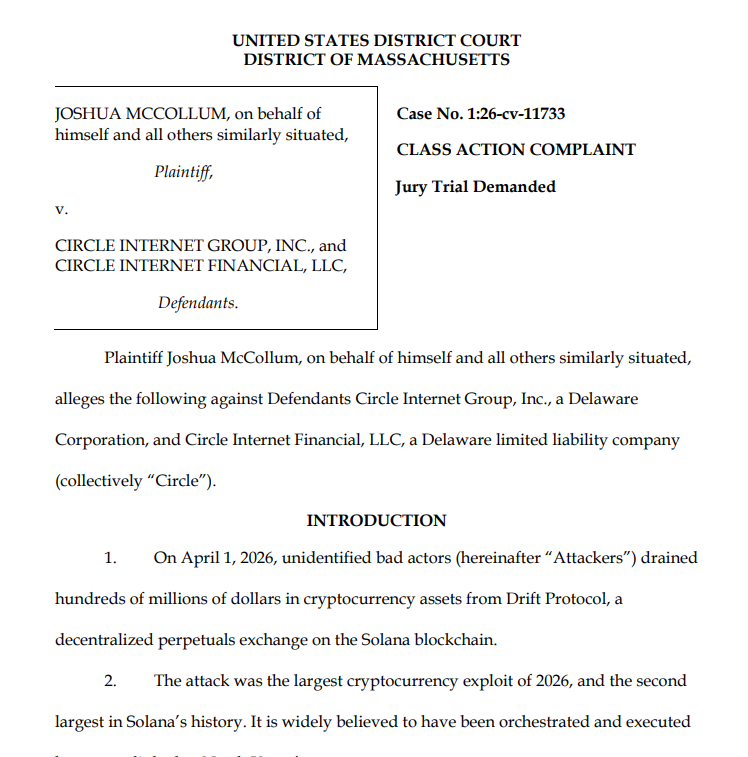
Circle Internet Financial, the issuer of the stablecoin USDC, is currently embroiled in a class-action lawsuit following the $280 million hack of Drift Protocol. This incident has not only raised concerns within the cryptocurrency community but has also affected Circle’s stock market performance. The lawsuit, filed in the Massachusetts District Court by law firm Gibbs Mura on behalf of aggrieved Drift Protocol investors, alleges that Circle failed to act decisively to freeze the stolen USDC despite possessing the technical capability and contractual authority to do so. With Joshua McCollum as the lead plaintiff, the case underscores the potential risks and liabilities associated with cryptocurrency asset management.
Details of the Hack and Allegations Against Circle
The attack on Drift Protocol, reportedly linked to North Korean hackers, involved a sophisticated method where over $230 million in stolen USDC was bridge-moved from Solana to Ethereum. The heist was executed using Circle’s Cross-Chain Transfer Protocol (CCTP) through more than 100 transactions spread over eight hours. Investigations revealed that the attackers posed as a quantitative trading firm for six months, using durable nonce accounts to pre-sign transactions that allowed them to delay execution. Prominent blockchain investigator ZachXBT criticized Circle for its lack of intervention during this critical time, citing that there was a significant window during U.S. business hours when action could have been taken to mitigate the damage.
Drift Protocol’s Recovery Efforts and Shift to USDT
In light of the devastating hack, Drift Protocol announced a $150 million recovery plan in collaboration with Tether, transitioning from USDC to USDT as its primary settlement asset. This shift not only aims to restore investor confidence but also reflects a broader trend among cryptocurrency projects to reassess their stablecoin associations in light of recent events. The lawsuit against Circle adds to the challenges faced by Drift Protocol as investors seek restitution for their losses. This episode raises questions about the security of funds within decentralized protocols and the responsibilities of stablecoin issuers in protecting users’ assets.
Circle’s Defense and Corporate Governance Approach
In response to the escalating situation, Circle CEO Jeremy Allaire defended the company’s actions, emphasizing the importance of adhering to formal law enforcement directives and court orders before taking any action to freeze assets. Allaire articulated concerns over the potential risks of unilateral decisions that deviate from legal obligations. He advocated for clearer guidelines for stablecoin issuers in potential crisis situations, calling for legislative safe harbors such as those proposed in the CLARITY Act. Circle has faced previous criticism for freezing unrelated wallets, demonstrating the complex balancing act between risk management and legal compliance in the crypto space.
Impact on Circle’s Stock Performance
The fallout from the Drift Protocol incident has had a tangible effect on Circle’s stock performance. Following the hack and the subsequent lawsuit announcement, Circle’s CRCL stock price experienced significant volatility. After closing higher at $107.46 during regular trading hours, the stock plummeted 1.42% in after-market trading as news of the class-action lawsuit broke. With an intraday trading range of $101.75 to $108.02 and a notable decrease in trading volume, Circle’s stock has seen a recent surge of over 22% but still faces overall monthly losses of 18%. Analysts, including Compass Point, have revised their price targets, downgrading CRCL stock from neutral to sell amid concerns of insider selling by company directors.
Looking Ahead: Regulatory Challenges and Market Responses
As the class-action lawsuit proceeds, Circle and other crypto entities will need to navigate the increasingly complex regulatory landscape surrounding digital assets. The Drift Protocol hack exemplifies the vulnerabilities in the decentralized finance (DeFi) space and the importance of robust security measures. Stakeholders are watching closely as Circle’s response to the lawsuit could shape the future of stablecoin regulation and the operational standards expected of cryptocurrency firms. The evolving nature of the crypto market demands that companies like Circle not only work to safeguard their users but also establish clear governance frameworks that address both operational risks and regulatory obligations.