




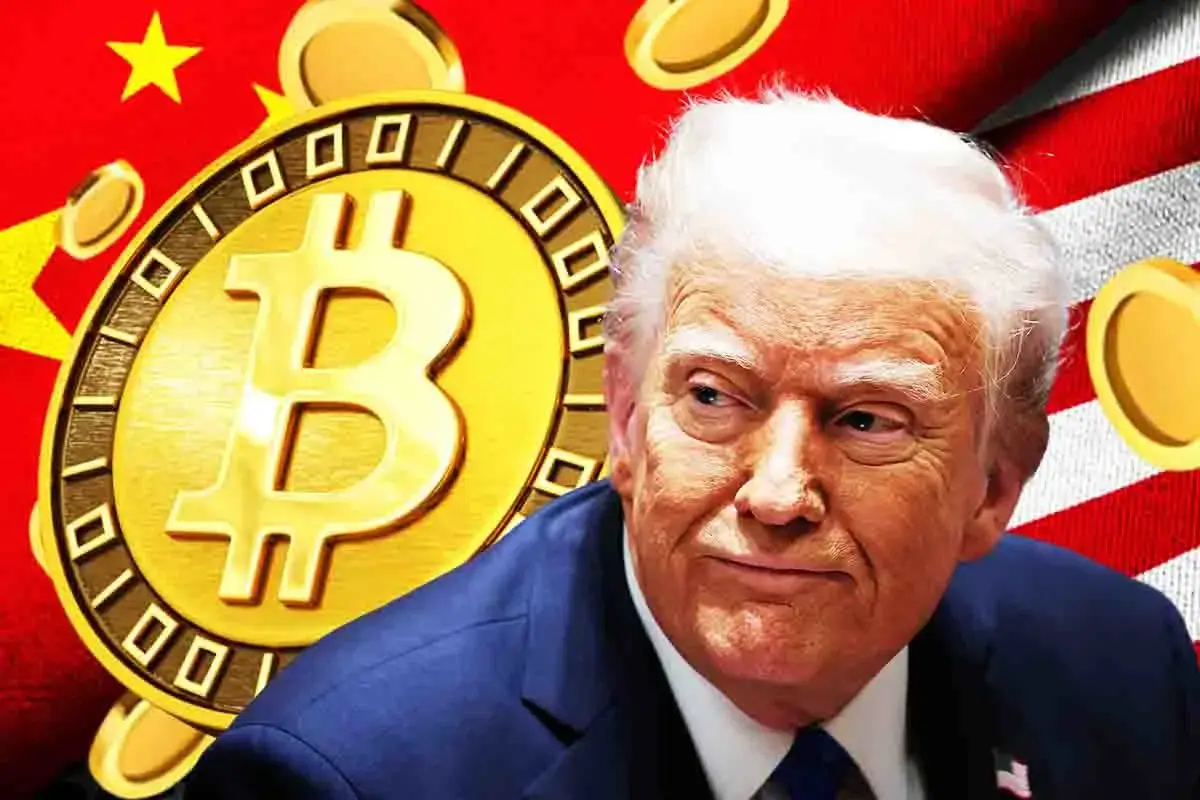
The U.S. Emerges as a Crypto Capital: A Shift in Global Digital Asset Dominance
In recent weeks, President Donald Trump’s statements on cryptocurrency have ignited discussions about the U.S.’s intention to establish itself as the leading crypto nation. Trump boldly declared, “We’re leading China in crypto,” emphasizing the significance of digital assets in the ongoing economic rivalry between the two nations. This transition in focus—from traditional trade disputes to supremacy in technological assets—marks a new chapter in U.S.-China relations. As the nation gears up to potentially adopt Bitcoin as a national reserve, the implications for the global crypto market are profound.
U.S. vs. China: The Battle for Bitcoin Dominance
According to reports, the U.S. currently holds approximately 198,012 BTC, translating to roughly $20.56 billion. This substantial accumulation has primarily resulted from seizures associated with cybercrime. In close pursuit, China holds nearly 190,000 BTC, valued at about $19.7 billion. This revealing data was brought to light by crypto commentator Altcoin Gordon, further amplifying the dialogue surrounding digital asset supremacy. While the U.S. adopts an approach grounded in strategic acquisitions, China employs its control over the technical infrastructure of blockchain and cryptocurrency to assert its presence in the sector.
A Strategic Shift Away from Trade Deals
As the global economy has increasingly focused on the U.S.-China trade war, another pressing issue has emerged: the race for crypto dominance. The crypto market has shown substantial volatility in response to the escalating tensions. Following Trump’s tariff announcement, a major market correction occurred; however, there was a swift rebound as a result of a subsequent easing strategy. This oscillation reaffirms that cryptocurrencies are not immune to macroeconomic factors, and highlights the intricate connection between traditional trade relations and the digital asset market.
Implications of a Bitcoin Reserve
Trump’s vision of turning the U.S. into a “crypto capital” comes hand-in-hand with the government’s exploration of adopting Bitcoin as a national reserve. This move could further solidify the U.S.’s position in the global crypto landscape and draw more institutional investors into the space. As both the U.S. and China contemplate the potential benefits of a Bitcoin reserve, the competition is not merely about asset accumulation but encompasses the broader technological advancements and regulatory frameworks that support them.
Market Reactions and Performance
In light of Donald Trump’s remarks regarding U.S. dominance, the crypto market has experienced significant fluctuations. Over the past week, prices for key tokens have been volatile, influenced not only by U.S.-China tensions but also by developments in other nations like the U.K. Following Trump’s statement, a marginal increase of 0.7% was reported in the crypto market, which brought its total market capitalization to $3.34 trillion after recovering from previous lows. These shifts indicate that investor sentiment is intricately linked to geopolitical narratives, making the market exceptionally reactive.
Conclusion: The Future of Cryptocurrency on the Global Stage
As the U.S. positions itself as a leader in the realm of cryptocurrency, it is crucial to observe how these developments will unfold in the coming months. The competition with China is not limited to Bitcoin holdings but also encompasses the technological innovations and regulatory policies that support or inhibit cryptocurrency adoption. As discussions around a Bitcoin reserve gain momentum, the future landscape of digital currencies will likely be shaped by these two economic powerhouses. Investors and analysts alike must stay informed about these ongoing changes, as they will undoubtedly have far-reaching implications for the global financial ecosystem.
In summary, the digital asset narrative is shifting, and it will be intriguing to see how the U.S. and China navigate this evolving landscape since the stakes have never been higher.