


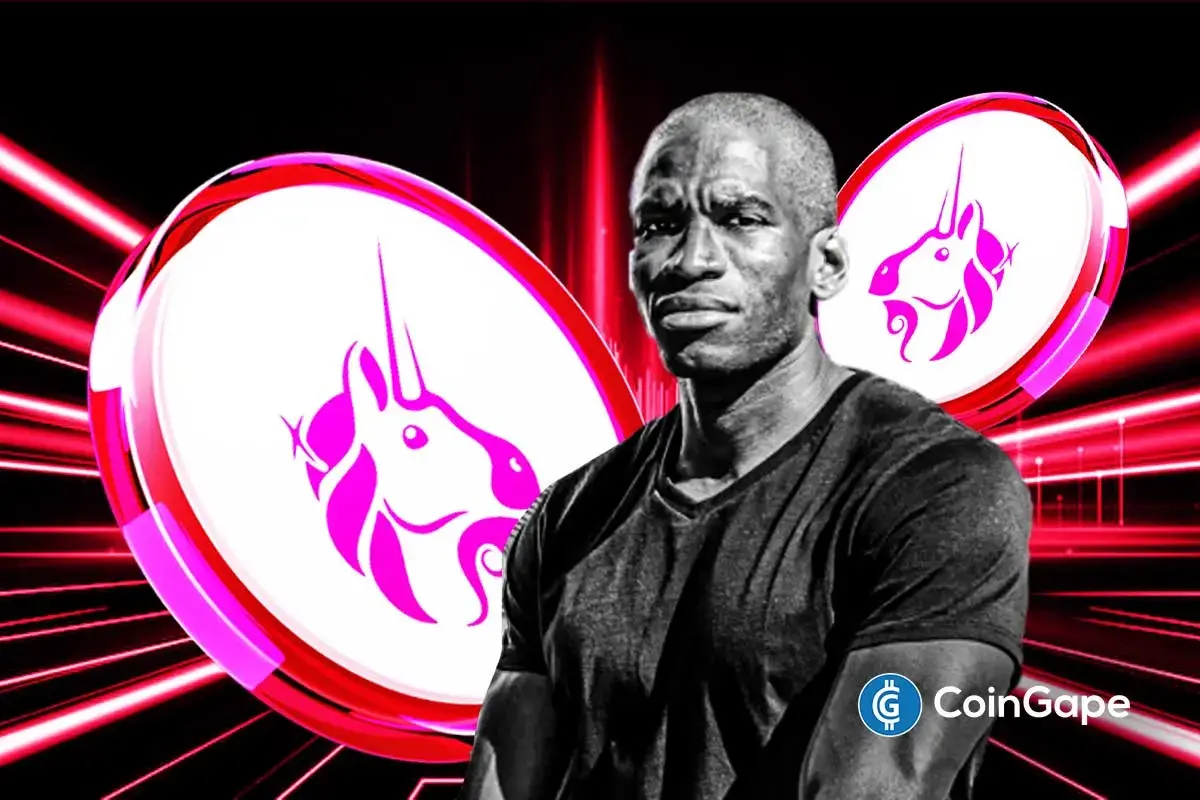

Uniswap’s Future Brightens: Arthur Hayes Makes Bold Move with UNI
In a significant development for the decentralized finance (DeFi) space, Arthur Hayes, co-founder of BitMEX, has made a notable investment in the governance token of Uniswap, known as UNI. This marks Hayes’ return to Uniswap trading after a three-year hiatus, coinciding with the token’s impressive 21% surge that pushed its price to around $10. Such actions and price movements underline the ascendant momentum of growing interest in the DeFi landscape.
Hayes Reacquires UNI Tokens
Blockchain analytics platform Lookonchain recently reported on Hayes’ purchase of 28,670 UNI tokens valued at approximately $244,000. This transaction aligns with the recent announcement of the Unification proposal from Uniswap Labs in partnership with the Uniswap Foundation. This proposal aims to implement protocol fees specifically for funding a significant token burn, which is set to affect around 100 million tokens since the inception of the platform. The news not only rejuvenates interest in UNI but also offers fresh potential for investors examining the evolving dynamics of decentralized exchanges.
The Unification Proposal’s Key Elements
The Unification proposal isn’t just about burning tokens; it’s a comprehensive strategy designed to attract liquidity and bolster governance token value. The outlined fee-switch system is intended to boost rewards for liquidity providers, thus incentivizing more active participation. Given that liquidity is the lifeblood of any decentralized exchange, these enhancements could lead to an uptick in trading volume and, consequently, a sustained increase in UNI demand, benefiting holders and traders alike.
Post-Proposal Market Reaction
The announcement of the Unification proposal has evidently catalyzed a spike in trading volume for UNI, directly correlating with Hayes’ significant purchase. This investment is a testament to growing investor confidence, indicative of the speculative optimism surrounding the future of Uniswap. The surge reflects a broader trend in the DeFi space, where innovations and strategic developments are rapidly shifted into market enthusiasm—ultimately creating a potential snowball effect for other investors eyeing UNI as a lucrative opportunity.
Supply Shock Predictions by CryptoQuant CEO
Ki Young Ju, the CEO of analytics firm CryptoQuant, has voiced bullish sentiments regarding Uniswap following the announcement of the fee-switch mechanism. He predicts a supply shock for UNI if the proposal receives approval, leading to possible explosive price increases. Ju’s analysis indicates that with a staggering $1 trillion in year-to-date trading volume for Uniswap’s V2 and V3, the potential for annual burns stands at about $500 million annually, significantly mitigating the circulating supply of UNI tokens.
Diverging Opinions in the Crypto Community
The cryptocurrency community, however, exists in a landscape of divided opinions regarding the implications of the Unification proposal for UNI’s future. While some investors resonate with Ju’s optimistic interpretation, suggesting an impending price uptrend, others express skepticism. This mixture of buoyancy and caution reflects the unpredictable nature of the crypto market, where excitement can lead to volatility, requiring careful consideration for both seasoned and novice investors.
Conclusion: A Pivotal Moment for Uniswap and Its Investors
In summary, Arthur Hayes’ recent investment in UNI signals renewed interest in Uniswap amid the unveiling of the Unification proposal, designed to enhance liquidity provider rewards and activate an expansive token burn. Predictions of a supply shock from analysts like Ki Young Ju further fuel the excitement, suggesting that a wave of innovative initiatives could propel UNI’s value substantially. As the DeFi landscape continues to evolve, the focus on fundamental improvements will likely shape the future of token sales, market dynamics, and investor sentiment in real-time. For both longtime supporters and potential newcomers, this moment offers a glance into what may shape the course of decentralized finance.