



Understanding the Supply Shock: How the West Asian Crisis is Revolutionizing Oil Trading and Driving Demand for Hyperliquid
In the current economic landscape, supply shocks are profound catalysts, particularly for traders capitalizing on short-term gains. The ongoing crisis in West Asia is creating a notable supply-side squeeze in the oil market, altering investor sentiment and leading to an increase in oil flows. Traders are positioning themselves for further price increases, with long positions becoming increasingly aggressive as the narrative around rising oil prices gathers momentum. This situation has placed Hyperliquid [HYPE] in a unique and advantageous position, making it a key player in the evolving trading landscape.
Hyperliquid is emerging as a standout performer in the decentralized finance (DeFi) space. Recent data from DeFiLlama reveals that it is now dominating perpetual DEX (decentralized exchange) trading volume, achieving an impressive weekly volume of nearly $48 billion—approximately double that of its nearest competitor. This surge in trading activity aligns closely with the shifts in oil trading dynamics prompted by geopolitical tensions. Major traditional finance (TradFi) players, like JPMorgan, are taking note of this trend, indicating that the desire for around-the-clock oil exposure is driving the demand for Hyperliquid’s services. This gap in the market has positioned Hyperliquid favorably to capture incremental flow and liquidity, further solidifying its place in the trading ecosystem.
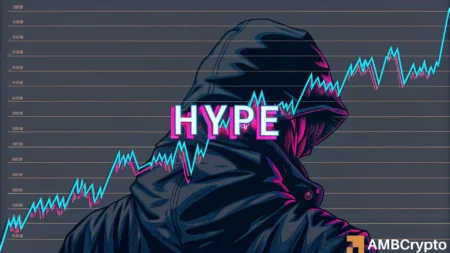
The evidence of this burgeoning demand can also be seen in HYPE’s price performance. In the recent months leading up to this analysis, HYPE has seen a remarkable uptick of around 30%. This performance stands in stark contrast to many high-cap altcoins, which have largely recorded single-digit gains during the same period. The market is beginning to recognize Hyperliquid’s unique position and potential, resulting in a price action that reflects heightened confidence among traders. Nevertheless, HYPE is currently facing resistance at the $2.3k mark, raising concerns that the current momentum might be spurred more by macroeconomic uncertainties and an overly crowded trading landscape than by sustainable trends.
To frame the broader implications, the ongoing geopolitical tensions in the Middle East have thrown the global oil market into a state of volatility. The Kobeissi Letter has highlighted significant price increases in oil since December, with predictions indicating that conflicts may persist well into the spring, underpinning expectations of $180 as a baseline for oil prices. In this charged atmosphere, traders are using leverage to amplify their bets on price increases, further leading to speculative investments in platforms like Hyperliquid. For instance, a recent deposit of 4.105 million USDC on Hyperliquid to open a 5x long position on Brent oil at $20.19 illustrates this trend vividly, emphasizing the increasing FOMO (fear of missing out) among traders eager to reap substantial returns.
From a technical perspective, the activities surrounding perpetual contracts on Hyperliquid appear strategically sound. For example, Brent oil prices have surged notably by 47% in March, marking a significant milestone as it recorded the highest monthly increase since the onset of the COVID-19 pandemic. With prices returning to pre-pandemic levels and setting liquidations at comfortable thresholds, many traders are sitting on substantial unrealized gains. However, the overall crypto market remains stagnant, hovering around a $2.4 trillion market cap. As traders chase oil momentum, Hyperliquid stands out as a solitary altcoin producing double-digit gains, indicating a significant capital rotation within the crypto ecosystem.
The dynamics at play raise critical questions about the future of the crypto market. As observed by AMBCrypto, the next potential risk-on momentum in the broader crypto space may rest upon the unwinding of long positions on Hyperliquid. If traders begin to exit these leveraged positions, it could signal an easing of geopolitical tensions and, potentially, an opening for a wider risk-on rotation across various investment sectors. The intricate dance between upcoming macroeconomic indicators and trader sentiment will be pivotal in determining the near-term direction of both oil and crypto markets.
Conclusion
In summary, the crisis in the Middle East is fueling a pronounced supply shock in the oil market, which has precipitated a wave of FOMO-driven long positions on Hyperliquid, resulting in a 30% increase in HYPE. As Brent oil prices soared by 47% in March while the broader crypto market remains frozen in place, the potential for market resets hinges upon the eventual unwinding of these leveraged positions. This suggests that while Hyperliquid is thriving, the broader implications for both the oil and cryptocurrency markets remain intricately linked to geopolitical developments and changing investor sentiment.