

BTC’s Market Stability Amid Geopolitical Tensions: What It Means for Investors
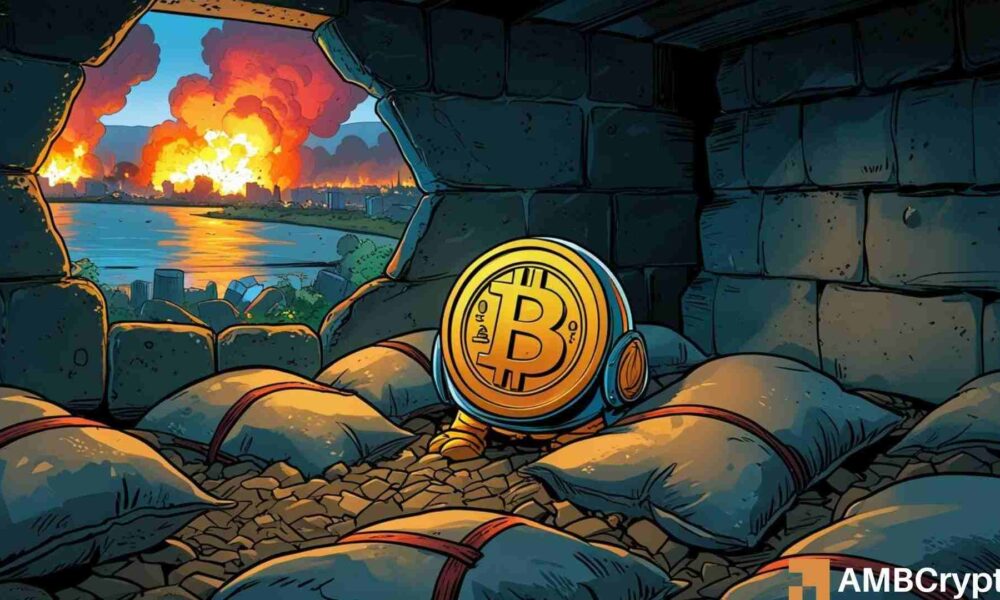
Amid escalating geopolitical tensions, particularly the ongoing Israel-Iran conflict, Bitcoin (BTC) has displayed remarkable resilience, remaining within a price range of $100K to $110K. While this stability may seem promising, market analysts including those from QCP Capital warn that the increasing global unrest, particularly involving U.S. military involvement, could lead to economic ripple effects impacting inflation and market sentiment.
The Current Landscape: Market Resilience Amid Conflict
The Israel-Iran war has now extended into its sixth day, yet BTC has managed to hold its ground above the $100K threshold. However, uncertainty looms, driven by the potential for U.S. intervention in the conflict. Market experts highlight the precarious position BTC finds itself in, sandwiched between the chilling realities of geopolitical instability and its implications for inflation rates. The involvement of the U.S. military has led to heightened concerns that inflation could surge, creating a negative impact on risk-sensitive markets.
Inflation and Risk Aversion: Analyzing the Risks
QCP Capital elaborates on the risks posed by the ongoing conflict, noting that it presents a double-tail risk—both from geopolitical tensions and inflationary prospects. They point out that a disruption in the Strait of Hormuz, a critical chokepoint for global oil shipping, could lead to skyrocketing oil prices, further compounding inflation challenges. The firm emphasizes that if such a scenario unfolds, BTC could face undue pressure as adverse macroeconomic conditions intensify.
As President Trump adopts a hawkish stance by demanding Iran’s “unconditional surrender,” market movements indicate rising tensions. Key military assets are reportedly on high alert, with predictions from sources like Polymarket estimating a 60% chance of U.S. involvement in the conflict by July, and as much as a 90% likelihood by August. Such heightened expectations raise critical questions for BTC investors: Will Bitcoin prove to be a reliable hedge against these geopolitical upheavals, or will it falter alongside equities?
The Potential Impact on Fed Policy
The ongoing conflict has also led to speculation about U.S. Federal Reserve monetary policy. QCP Capital suggests that the situation may compel the Fed to reconsider any early rate cuts scheduled for the latter half of the year. Current market predictions indicate a consensus for two rate cuts in 2025; however, QCP analysts believe this may be revised to just one. Such a modification in expectations could further affect BTC and other risk assets as traders adjust their positions accordingly.
Bitcoin’s Correlation with Equities
Interestingly, recent analyses show that BTC’s behavior resembles that of equities rather than serving as a traditional safe haven during times of unrest. Although Bitcoin has often been characterized as an alternative asset for hedging against wars and inflation, current correlations reveal a stronger alignment with stocks, particularly the Nasdaq Composite, than with traditional safe-haven assets like gold. This shift in behavior raises questions about Bitcoin’s role in diversified portfolios during turbulent economic times.
The BTC Pearson Correlation reveals a mere -0.07 correlation with gold and a striking +0.61 alignment with the Nasdaq Composite. In effect, BTC is acting more like a high-beta tech stock than the hedge investors might hope for during conflicts and inflationary scenarios.
Trading Signals and Investor Sentiment
Market positioning hints at increasing investor interest in bullish bets despite recent price fluctuations. The rising 25 Delta Skew for near-term options suggests that traders anticipate a rebound, with bullish sentiment evident even as Bitcoin dropped from $108K to $103K. Notably, the short-term demand for puts (bearish bets) remains significant, indicating increased caution among investors as they consider the potential ramifications of rising inflation.
Overall, while Bitcoin has shown resilience amidst ongoing geopolitical tensions, the implications for inflation and market sentiment remain critical considerations for investors. The interplay between BCH and equities raises fresh questions about traditional risk assessments and hedging strategies amid these uncertain times.
Conclusion: Navigating the Future of BTC Investments
In summary, BTC’s current performance amidst the Israel-Iran conflict illustrates the digital asset’s complex relationship with geopolitical events and economic trends. While it has shown a sturdy price range above $100K, QCP Capital’s warnings highlight the potential risks tied to escalating inflation and U.S. military involvement. As investors navigate this landscape, an understanding of the factors influencing BTC, including correlations with equities and the Federal Reserve’s policy adjustments, will be crucial for making informed decisions.
As the markets continue to react to the unfolding geopolitical landscape, investors in Bitcoin must remain vigilant, assessing both immediate market conditions and longer-term inflationary pressures to adequately navigate this unpredictable terrain.