



The Rapid Rise of World Liberty Financial’s USD1: A Shift in Crypto Liquidity
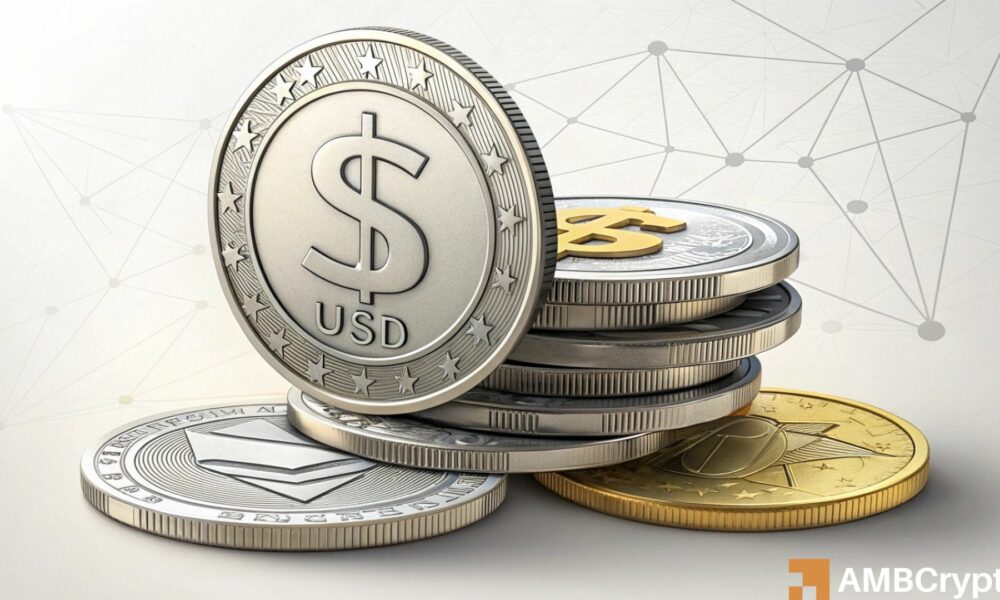
World Liberty Financial’s stablecoin, USD1, is on an impressive trajectory across major cryptocurrency exchanges, marked by significant volume contributions from high-volume wallets. As the crypto landscape evolves, a critical question arises: is USD1 being utilized as strategic balance-sheet capital or is it merely being recycled to generate yield?
The Emergence of USD1
USD1 has quickly established itself as a dynamic force within the crypto ecosystem, boasting a market capitalization of approximately $3.31 billion and an impressive daily trading volume of around $843 million. The stablecoin’s ability to maintain a consistent price peg of $1 is crucial for transaction efficiency and minimizing slippage, making it an essential liquidity resource on platforms like Solana. As trading volumes on decentralized exchanges (DEXs) like Raydium skyrocket past $260 million, the integration of USD1 is reshaping liquidity dynamics within the space.
Shifting Trends in Solana DEX Volume
The DEX landscape on Solana has experienced a notable regime shift, particularly from late December into January. After a period of muted activity in Q4, where volumes were largely stagnant, January saw a remarkable resurgence with daily trading volumes exceeding $260 million. This surge coincided with a total cross-chain volume that surpassed $786 million, underscoring a pivotal moment for the Solana ecosystem. Deep liquidity from automated market makers (AMMs) and seamless transaction routing empowered traders to move into high-risk, high-reward DeFi projects.
Cross-Chain Capital Flows: A New Era
This surge in trading activity signals a pronounced risk appetite among traders, revealing that capital is increasingly migrating from Ethereum-based ecosystems to burgeoning cross-chain opportunities. Solana has captured a significant portion of this flow, showcasing its capacity to host vibrant trading activities. However, despite these positive indicators, there are potential hurdles that could dampen momentum, including a backlash in meme trading activities, unexpected price volatility in SOL, or network congestion.
The Competitive Landscape of Stablecoins
USD1’s rapid ascent has put pressure on established players in the stablecoin market, including Tether (USDT) and USD Coin (USDC). As USD1 garners retail interest fueled by strategic partnerships—such as those in Abu Dhabi—and attractive yields close to 20% supported by Binance, it positions itself as a competitive alternative within the liquidity space. However, the interplay between political scrutiny due to those partnerships and market positioning remains a delicate balance that could influence the coin’s future.
The Future of USD1 and Cross-Chain Liquidity
As the crypto ecosystem continues to evolve, cross-chain flows have now eclipsed $786 million, setting the stage for potentially revolutionary changes in settlement processes and real-world asset (RWA) tokenization by 2026. Sustained success for USD1 will rely heavily on regulatory clarity, ongoing yield incentives, and deeper integrations within decentralized finance (DeFi). Conversely, any political backlash or cuts in yield could result in a rapid slowdown of the current momentum.
Conclusion: The Path Ahead
The rapid growth and cross-chain dominance of USD1 are indicative of a broader shift in cryptocurrency liquidity, particularly toward Solana. With ongoing inflows, competitive yields, and the introduction of new AMMs, the potential for sustaining this upward trend is significant. However, vigilance is essential as regulatory challenges or market turbulence could quickly undermine the progress made. As USD1 continues to carve out its niche in the fast-paced crypto environment, its role as a pioneer in stablecoin integration and liquidity provision will be closely watched by investors and analysts alike.