



The Zaporizhzhia Nuclear Power Plant: A New Frontier in U.S.-Russia Relations and Cryptocurrency Mining
In a recent year-end State Council meeting on December 25, 2022, President Vladimir Putin’s remarks hinted at a significant shift in U.S.-Russia relations, particularly regarding the Zaporizhzhia Nuclear Power Plant (ZNPP). While the official agenda focused on the routine training of government staff, reports suggest that the Kremlin is contemplating a transformative phase for the ZNPP, potentially utilizing it for large-scale cryptocurrency mining. This unexpected twist could elevate the facility’s role from a contentious frontline asset to a pivotal hub in the global digital economy.
Cryptocurrency Mining: A New Dimension
Discussions surrounding cryptocurrency mining have emerged as a pivotal theme in recent geopolitical dialogues. Instead of merely focusing on Ukraine’s energy needs or military strategies, the ZNPP could be leveraged as a bargaining chip in broader peace negotiations. Transitioning the plant into a cryptocurrency mining facility encapsulates an intriguing fusion of energy politics, digital economics, and high-level diplomacy. This merger is emblematic of how contemporary conflicts can evolve to embrace unconventional solutions in a rapidly changing world.
Territorial Concessions and ZNPP’s Role
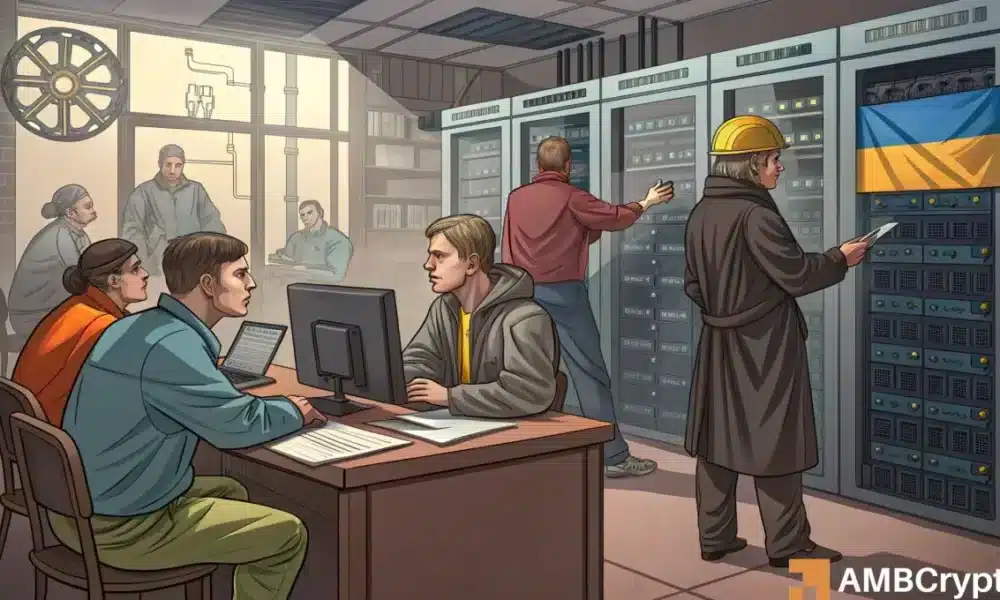
According to reports from Kommersant, Putin showed a willingness to revisit territorial negotiations, specifically regarding the Donbas region. While he intends to maintain full control over Donbas, he appears open to trading land beyond this area. In this complex scenario, the ZNPP could serve as a significant bargaining tool, especially given its strategic importance amid ongoing conflict. The occupation of the plant by Russian forces since March 2022 has led to a unique situation where Ukrainian engineers, under coercion, continue to manage its operations. This forced collaboration may reflect a broader trend towards joint operations as part of peace talks.
Management Disputes: U.S. vs. Ukraine
The primary contention now revolves around who will control the ZNPP. Reports indicate that the U.S. has proposed a three-way split, assigning a third of the management to American officials. However, Ukraine has outright rejected any joint business dealings with Russia, advocating instead for a 50-50 partnership with the U.S. This would empower Washington to determine whether any of its designated share could benefit Russia. Notably, the ZNPP is currently non-operational, relying on diesel generators and facing severe damage from numerous Russian strikes, which have significantly strained Ukraine’s energy infrastructure.
Potential and Political Realities
Although Ukraine’s current cryptocurrency miners utilize a minimal amount of energy compared to what the ZNPP could provide, the restart of the facility remains fraught with challenges. Safety concerns, infrastructure damage, and legal limitations have rendered the plant inoperative for the foreseeable future. Nonetheless, the very idea of repositioning the ZNPP from a conflict zone to a major player in cryptocurrency mining symbolizes a dramatic shift in Russia’s approach to digital assets. By 2026, Russia aims to implement a tightly regulated digital-asset system that primarily benefits institutional investors. This change underscores that Russia’s embrace of cryptocurrency is not simply ideological but is being harnessed as a strategic maneuver in the context of international relations.
The Broader Implications
Putin’s approach reveals a willingness to engage in selective flexibility regarding territorial negotiations, all while seeking to cement unassailable control over the regions he deems crucial. The intertwining of cryptocurrency mining into peace talks marks a new chapter in diplomatic relations, illustrating the unpredictability of 21st-century geopolitics. By fusing energy and digital resource management, the ZNPP may play an unexpected yet central role in facilitating dialogue and negotiations.
Conclusion: Navigating Uncertain Waters
The potential for the Zaporizhzhia Nuclear Power Plant to transform from a wartime asset to a cornerstone of cryptocurrency mining highlights the fluid nature of modern diplomacy and the inventive solutions nations may pursue amid conflict. It signifies that as the world grapples with economic and geopolitical upheavals, new dimensions of negotiation can emerge from the most unlikely scenarios. The evolving landscape surrounding the ZNPP not only reflects ongoing tensions but also underscores the nuanced and often unpredictable interactions between global powers in the age of digital economies.
As the international community monitors these developments, the Zaporizhzhia Nuclear Power Plant stands as both a symbol of contention and a potential bridge toward a more stable dialogue between the U.S. and Russia. The complex interplay of territorial concessions, energy resource management, and digital asset regulation will likely shape future policies and strategies in a rapidly evolving global landscape.