



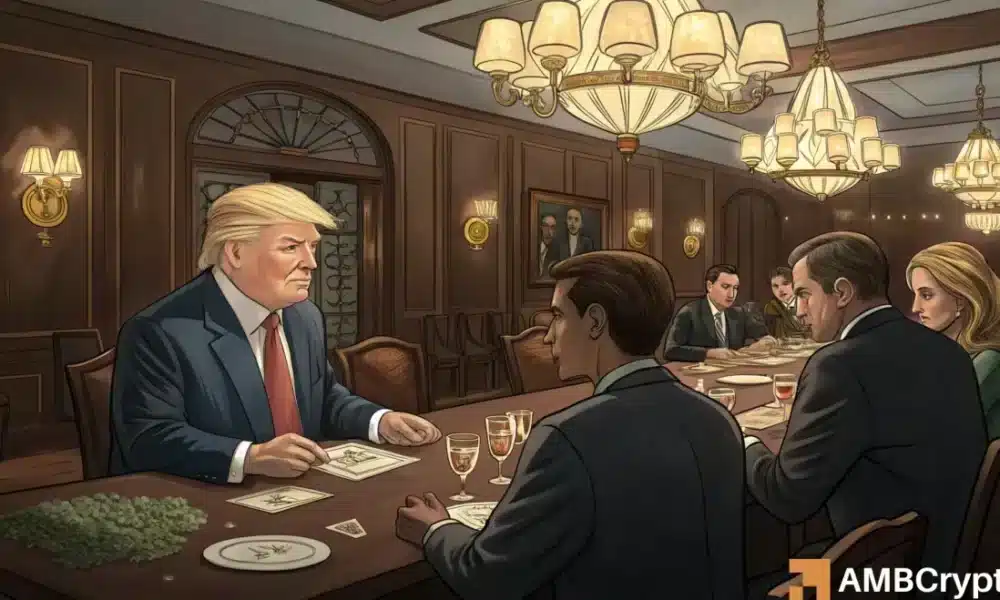

Trump Hosts Crypto Dinner: Navigating the Landscape of U.S. Digital Assets
Former President Donald Trump’s recent crypto dinner in Loudoun County, Virginia, has sparked significant discussion across political and financial sectors. The event, attended by approximately 220 influential investors, reinforced Trump’s ongoing assertion that the U.S. is at the forefront of Bitcoin (BTC) and digital asset innovation. Ahead of the gala, Trump took to Truth Social, proclaiming, "The U.S.A. is DOMINATING in Crypto, Bitcoin, etc., and we are going to keep it that way!" This statement underlines his commitment to solidifying the nation’s leadership in the rapidly evolving digital asset space.
Trump’s claims resonate with recent analyses from Bitcoin Treasuries, which indicate the U.S. now holds the largest national reserve of Bitcoin, accumulating around 198,012 BTC—outpacing China’s roughly 190,000 BTC. Much of this Bitcoin has been obtained through government seizures, and Trump proposes a strategic shift in handling these assets. His vision includes establishing a U.S. Strategic Bitcoin Reserve, aimed at halting future sales of seized crypto, contrasting with the liquidation methods employed by previous administrations. This move could fundamentally alter how the U.S. engages with digital assets on a national scale.
Political Backlash: Maxine Waters Proposes Restrictive Legislation
As Trump’s crypto-focused event took center stage, it also drew political scrutiny spearheaded by U.S. Representative Maxine Waters. Hours before the dinner, Waters introduced the "Stop Trading, Retention, and Unfair Market Payoffs in Crypto Act of 2025," or the "Stop TRUMP in Crypto Act." This proposed legislation aims to prohibit top U.S. officials—from the president to lawmakers—from acquiring, holding, or promoting cryptocurrencies during their tenure in office. Waters stated that the goal of this legislation is to prevent the potential misuse of political influence for personal gain within the crypto sphere.
In the details of the proposed legislation, Waters revealed that any individual subject to reporting requirements under SEC regulations would be barred from conducting business involving digital assets while in office. Her remarks underscored a strong skepticism of Trump’s crypto endeavors, labeling them as "not just a scam" but a potential avenue for foreign entities to influence American policy. Waters’ bill aims to safeguard democratic integrity within the rising crypto landscape, though it remains subject to much debate.
Support for Trump Amid Controversy
While Waters’ bill has garnered attention, it’s important to note that not everyone shares her views. A White House spokeswoman defended Trump during this controversy, emphasizing that his financial assets are managed in a blind trust operated by his children. She argued that Trump’s business acumen was one of the many reasons voters re-elected him to office. This dichotomy illustrates a divided political landscape in the U.S. regarding cryptocurrencies and their implications for governance, with proponents emphasizing innovation and skeptics urging caution.
Market Reactions: The TRUMP Memecoin Rollercoaster
The timing of the crypto dinner coincided with notable volatility in the Official Trump (TRUMP) memecoin. Leading up to the dinner, the token saw a near-instant surge to $15.12 on May 21, but the excitement proved fleeting. Following the dinner, the token dipped to approximately $13.76—reflecting a 4.95% decrease within just 24 hours. This volatility underscores the speculative nature of meme-based cryptocurrencies, often swayed by media attention and public sentiment rather than fundamental developments.
Meanwhile, Bitcoin continued to demonstrate resilient upward momentum, trading at around $110,796.74 with a recent 6.45% gain over the week. This divergence in market sentiment between established cryptocurrencies like Bitcoin and newer memecoins illustrates a broader dynamic in the digital asset landscape, where not all assets respond uniformly to political events or celebrity endorsements.
Implications for U.S. Crypto Policy
Trump’s continued advocacy for a strong American stance in the crypto market raises questions about the future of U.S. regulatory policies surrounding digital assets. His vision for a Strategic Bitcoin Reserve could pave the way for innovative approaches to asset management and create new opportunities for government and private sector engagement in cryptocurrency. Conversely, Waters’ legislative push reflects a growing concern about transparency, accountability, and the potential for exploitation in a rapidly evolving landscape.
As discussions surrounding crypto governance heat up, the need for a balanced approach becomes increasingly apparent. Policymakers will need to navigate the complexities of innovation while addressing legitimate concerns about regulatory oversight and potential conflicts of interest within public office.
The Road Ahead: What’s Next for Crypto in the U.S.?
The future of cryptocurrencies in the U.S. appears to be set for an intense debate, influenced by events like Trump’s crypto dinner and Waters’ legislative proposals. As both sides elevate their arguments, the outcomes could have lasting ramifications for the American crypto ecosystem. Will the U.S. solidify its leadership in the digital assets arena, or will legislative measures stifle innovation? As stakeholders from both political and financial backgrounds continue to engage, only time will tell where the U.S. digital asset narrative will lead.
In summary, Trump’s crypto dinner serves as a pivotal moment in the ongoing discourse surrounding digital assets in America. With strong assertions of U.S. dominance juxtaposed with emerging regulatory challenges, the discussions are likely only beginning. The evolving landscape underscores a critical juncture in which innovation must coexist with accountability and integrity, setting the course for the future of cryptocurrencies in the nation.