



Title: Trump’s Call for Urgent Crypto Legislation: The GENIUS Act and Clarity Act in Focus
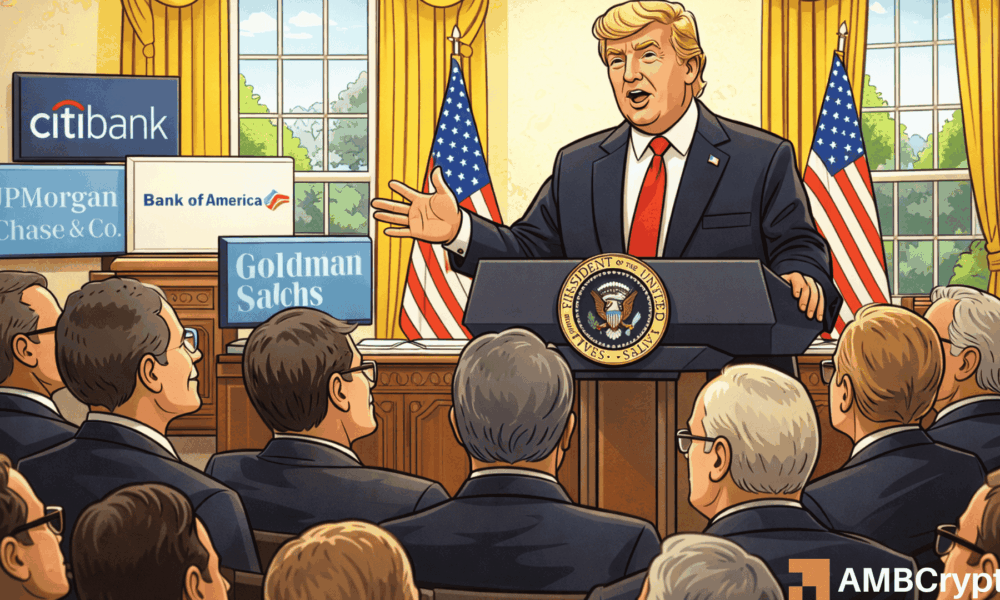
In a significant move this week, former President Donald Trump publicly criticized U.S. banks for allegedly undermining critical cryptocurrency legislation, particularly the GENIUS Act and the pending Clarity Act. Trump’s statements highlight the urgency for comprehensive regulatory reforms in the cryptocurrency sector to enhance the United States’ position in the global digital asset landscape. He argued that delays in legislative progress could inadvertently drive the U.S. crypto industry overseas, particularly towards competitors like China.
Trump’s comments come at a time when the GENIUS Act, enacted last year, has laid down a federal framework for payment stablecoins, marking a pivotal regulatory advancement for dollar-pegged digital assets. The initial success of this act has led to increased focus on the Clarity Act. This additional legislation aims to delineate regulatory responsibilities among various agencies while ensuring legal certainty for cryptocurrency markets. However, progress has stalled in the Senate, with pivotal disagreements impeding its passage.
One of the core issues at the heart of the debate surrounding the Clarity Act is whether stablecoins should offer yield or interest-like rewards. Banking groups argue that such features could divert funds from traditional banks, raising financial stability concerns. Crypto advocates counter that imposing stringent limits on stablecoin yield would stifle innovation and diminish the U.S.’s competitive edge in the rapidly evolving digital asset space. This ongoing tug-of-war complicates bipartisan efforts to finalize the Clarity Act, causing delays in crucial markups as lawmakers attempt to resolve these discrepancies.
Trump’s post brings to light the growing frustration among pro-crypto advocates, who view the stalled negotiations as a serious threat to the momentum fostered by the GENIUS Act. By framing the issue as one of national competitiveness, he urges immediate action to avoid ceding ground to foreign jurisdictions that might be more favorable to crypto innovation. The concern is that without decisive regulations, the burgeoning U.S. digital asset market could experience stagnation, benefitting overseas competitors instead.
The Clarity Act is designed to provide essential clarity on digital asset classification and oversight, potentially reducing the regulatory uncertainty that has plagued U.S.-based firms. However, the ongoing disagreements—particularly around yield mechanisms—have left this legislation in a state of limbo. While the GENIUS Act remains effective, there is significant apprehension about the necessary broader market structure that industry participants believe is crucial for sustainable growth in the crypto sector.
In conclusion, Trump’s critique underscores the increasing political pressure as negotiations on the Clarity Act remain stuck in the Senate, primarily due to conflicts over stablecoin yield and the competition with traditional banks. The outcome of these discussions will play a crucial role in shaping the future of cryptocurrency regulations in the U.S. and determining whether the nation will retain its competitive standing in the global digital asset arena. As the clock ticks, the urgency for actionable reforms becomes ever clearer, and the crypto community watches closely to see if bipartisan consensus can be achieved.