



Stablecoin Dominance: A Critical Factor in DeFi Growth
Stablecoins are increasingly becoming the cornerstone of decentralized finance (DeFi), serving as a catalyst for deeper liquidity and more efficient trading, lending, and borrowing on blockchain networks. In this competitive landscape, the dominance of stablecoins directly influences the strength of decentralized financial operations, making them a focal point in the ongoing battles for supremacy among Layer 1 (L1) networks. Tether (USDT) alone accounts for a staggering 60% of the stablecoin market, offering a foundational advantage to the networks that host it, especially when it comes to attracting users and liquidity.
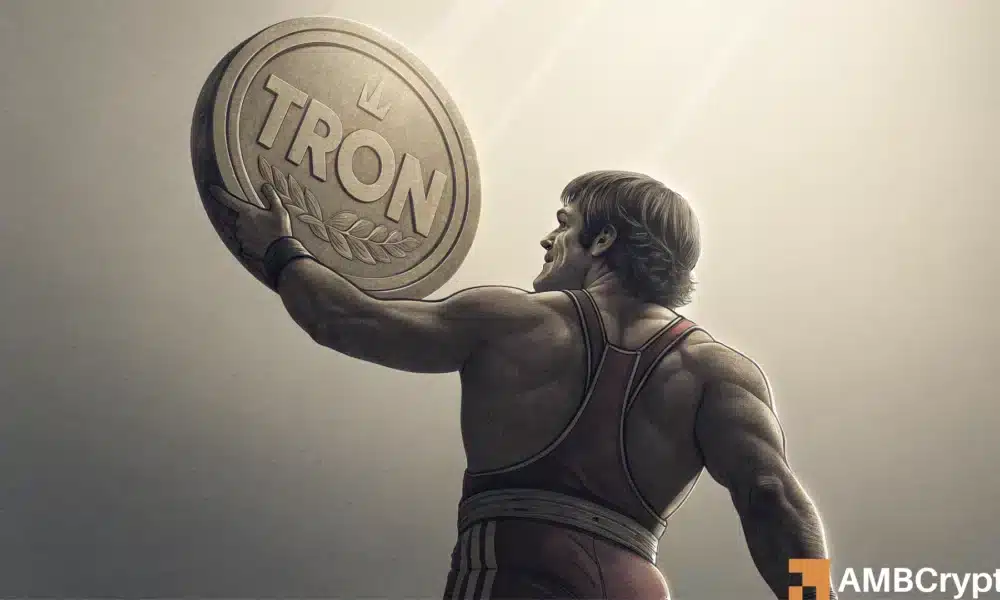
Recent data from DeFiLlama has revealed a significant shift in stablecoin dominance between major players TRON (TRX) and Ethereum (ETH). TRON has overtaken Ethereum in USDT dominance, capturing 44.97% against Ethereum’s 44.56%. This development showcases the critical role stablecoins are playing as DeFi evolves, transforming the landscape and creating a battleground where L1s compete for liquidity and user engagement. The surge in TRON’s stablecoin share may be a game-changer as both networks vie for the title of the leading DeFi platform.
Further analysis indicates TRON’s strategy is paying off, as its USDT supply surged by 3.62% over the last month, reaching 83.49 billion. Conversely, Ethereum experienced a decline of 5.6%, dropping to 82.74 billion. The contrasting performance comes at a time when the broader crypto market faces downward pressure, with Ethereum’s price sinking 15.36% to reach multi-month lows. In stark contrast, TRON has only seen a modest decrease of 2.6%. This resilience raises intriguing questions about TRON’s potential to become a more stable DeFi hub capable of weathering market volatility while capitalizing on its growing stablecoin ecosystem.
As liquidity is the lifeblood of DeFi, there is much discussion among analysts about an emerging ‘stablecoin war’ between leading L1 networks. While TRON’s recent USDT dominance is notable, it is crucial to recognize that Ethereum continues to command an overwhelming Total Value Locked (TVL) of $58 billion, dwarfing TRON’s $4 billion. Nevertheless, TRON has reached a significant milestone, with its locked TRX supply hitting a record 46.2 billion, or 48% of its total supply. This statistic indicates that TRON is establishing itself as a strong contender in the DeFi realm.
From a technical perspective, TRON’s higher staking rate is another factor contributing to its increased resilience in turbulent markets. The reduced circulating supply pressure allows the network to perform better amid volatility, further enhanced by the growing influx of stablecoins within its ecosystem. Together, high staking and USDT liquidity facilitate a self-reinforcing mechanism, or ‘flywheel,’ where staked tokens stabilize market conditions while attracting more users to the platform.
In conclusion, the rising share of TRON in USDT dominance, alongside its increasing proportion of locked TRX, is indicative of a shifting balance in DeFi. As both networks jockey for position, the role of stablecoins will only grow in importance. TRON’s strategy of capturing more USDT flows and fostering a robust DeFi environment suggests it’s positioning itself to thrive even in challenging market conditions. Observers of the crypto sector should closely monitor this developing narrative, as it has implications not only for TRON and Ethereum but for the future of decentralized finance as a whole.