




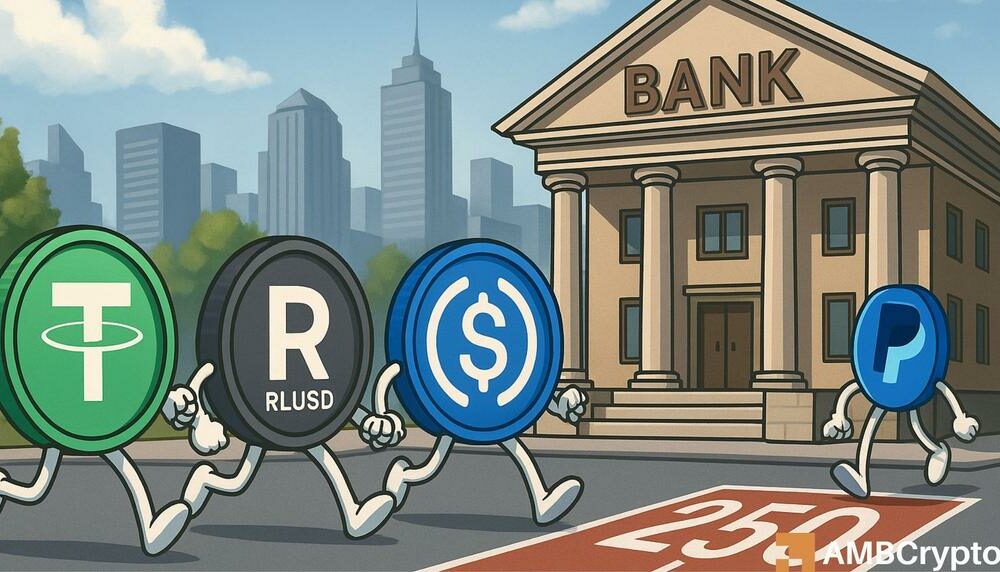
The Future of Stablecoins: Outpacing Banks and Redefining Financial Services
Introduction to the Banking Opposition and Stablecoins
The cryptocurrency landscape is witnessing a significant shift as stablecoins continue to gain traction, challenging traditional banking systems. As banks feel threatened by the rising popularity of crypto solutions, especially interest-paying stablecoins, they are resorting to aggressive tactics aimed at stifling this budding competition. Coinbase CEO Brian Armstrong has openly criticized big banks for their attempts to ban stablecoin interest, stating that such moves are designed to maintain a monopoly. This conflict emphasizes a broader theme in the financial sector: the need for innovation to better serve customers. As discussions around the CLARITY Act unfold, the crypto industry stands firm, highlighting the potential of stablecoins to disrupt conventional banking.
The GENIUS Act’s Impact on Stablecoins
The passage of the GENIUS Act has been pivotal for the stablecoin market. By enabling the offering of rewards, stablecoins have attracted a record influx of capital. So far, approximately $50 billion has been added to this financial instrument, pushing the market size to over $300 billion. The growth is not only a testament to consumer demand but also highlights how tech companies, like Meta and Google, are venturing into the stablecoin space, thereby intensifying competition against banks. Tushar Jain, Managing Partner at Multicoin Capital, echoed this sentiment, claiming that the GENIUS Act marks the beginning of the end for banks’ excessive gains at the expense of traditional depositors.
Unveiling the Concerning Reality of Traditional Banking
In a landscape where U.S. banks offer less than 1% interest on deposits, the disparity between traditional banking and stablecoin yields becomes glaringly apparent. For instance, banks often keep the majority of interest accrued from Treasury bills, with depositors only receiving a fraction of that. A hypothetical allocation of $100 billion customer deposits to T-bills at a yield of 5.3% would yield banks $5.3 billion yearly, while depositors would see less than $500 million—a stark representation of the imbalance in returns. This situation has become a rallying point for stablecoin advocates, who argue that this unfair distribution model must evolve or face disruption by digital currencies.
Increased Demand for Stablecoin Rewards
The adoption rates for stablecoins have skyrocketed since the GENIUS Act became law. Analytics indicate that PayPal’s PYUSD, for instance, has experienced a remarkable 117% increase in supply within just one month and a staggering growth of nearly 200% in the last three months. This surge can largely be attributed to the appealing 4% rewards offered on such stablecoins, which are distributed to holders either monthly or daily. Similarly, other stablecoins like BlackRock’s BUIDL and Ethena’s USDe have also witnessed impressive double-digit growth. This overwhelming demand highlights the willingness of consumers to explore alternatives that offer better returns on their capital.
The Impending Shift in Financial Services
DeFiance Capital’s Arthur Cheong posits that further developments, such as the Singapore bank transfer cap, could catalyze the adoption of stablecoins even more. As consumers look for more efficient financial solutions, the competitive landscape is likely to see a drastic transformation. The stablecoin market continues to evolve rapidly, providing convenience and financial benefits that traditional banks simply cannot match. As tech giants enter the fray, their resources and user bases will likely facilitate the acceleration of stablecoin adoption.
Conclusion: A New Financial Era
In summary, the crypto industry is poised to revolutionize financial services, largely driven by stablecoins. As banks attempt to cling to their traditional models, the emergence of interest-paying stablecoins represents a formidable threat to their monopoly. The debate surrounding regulatory measures like the CLARITY Act underscores the urgency for banks to innovate rather than resist change. The significant growth in stablecoin adoption demonstrates that consumers are ready for alternatives that prioritize their interests. As the financial ecosystem continues to evolve, it remains clear that the era of traditional banking may very well be on the brink of transformation, giving way to a more equitable financial landscape.