




Understanding Strategy’s Response to Bitcoin Price Fluctuations
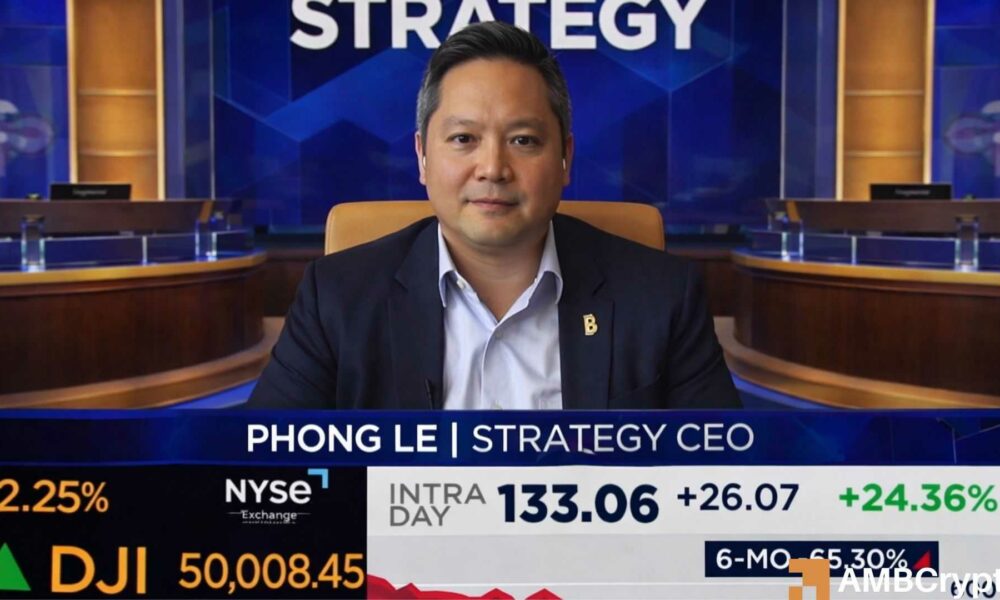
In the rapidly evolving world of cryptocurrency, companies like Strategy, led by CEO Phong Le, are facing heightened scrutiny from investors amid fluctuating Bitcoin prices. Following a significant downturn in Bitcoin’s value, Le has confronted market concerns regarding the firm’s stock, MSTR, and its implications on the company’s financial stability. With the backdrop of a staggering $17.4 billion loss reported for Q4 2025, Le has expressed confidence in the company’s position, emphasizing that such losses are not genuinely reflective of cash losses and require deeper analysis.
Addressing Market Concerns
In a recent CNBC interview, Phong Le highlighted the distinction between GAAP (Generally Accepted Accounting Principles) losses and actual cash flow. He explicitly mentioned that a drop of Bitcoin to $8,000 over five years would pose a genuine concern, hinting that current market fluctuations do not jeopardize the firm’s operations or future outlook. The company’s financial reporting must adhere to GAAP standards, which require firms to recognize impairment losses or gains based on their asset holdings. This has been particularly relevant as Bitcoin experienced a notable decline, dropping from $126,000 in October to approximately $87,000 by the end of December, leading to the reported loss.
Confidence Amid Price Volatility
Despite the dramatic shift in Bitcoin’s value, Le maintains a bullish stance on the cryptocurrency market. He stressed the unlikelihood of Bitcoin descending to $10,000, projecting confidence in the asset’s resilience. This optimism extends to the company’s financial strategies; Le indicated that they have substantial cash reserves—specifically, $2.52 billion—to support dividend payments and uphold operational integrity. His reassurances aim to quell investor fears, asserting that the company is well-prepared to weather the storm of market volatility.
Addressing Fraud Claims and Investment Strategy
Critics like Peter Schiff have recently cast doubt on Strategy’s capital-raising methods, labeling them as potentially fraudulent. In response, Michael Saylor, founder of Strategy, countered such allegations by asserting the superiority of their investment products compared to alternatives. One of their notable offerings is Stretch (STRC), which provides an attractive 11% yield to investors. However, Schiff has questioned the source of this yield, arguing that the business model resembles a pyramid scheme. This debate highlights the challenges crypto firms face in maintaining investor confidence under scrutiny.
Stability Among Bitcoin Treasury Firms
Interestingly, amidst Bitcoin’s price dip, treasury firms have remained stoic, refraining from panic-selling their crypto holdings. Data from Blockworks indicates that these firms collectively held approximately 813,000 BTC, both before and after the recent price decline. Remarkably, Strategy accounts for about 713,500 BTC of the total, underscoring its significant role within the treasury landscape. This resilience among firms not only showcases a level of commitment toward Bitcoin but also reflects an understanding among major players that short-term price fluctuations do not dictate long-term potential.
Stock Performance and Market Dynamics
The recent fluctuations in Bitcoin have directly impacted Strategy’s stock performance. Following a swift bounce-back of approximately 12% in Bitcoin’s value—from $60,000 to $71,000—MSTR stock surged by 26%, reversing a previous 17% loss. This considerable uptick validated Saylor’s characterization of MSTR as an “amplified wrapped BTC,” indicating that while MSTR can outperform Bitcoin, it also has a tendency to decline sharply when Bitcoin does. Investors should be cognizant of this volatility, as it paints a dual narrative of opportunity and risk.
Conclusion: Strategic Outlook Amid Market Disruption
Ultimately, Phong Le’s leadership during this turbulent time reflects a broader confidence that the firm’s operational health will remain unaffected by short-term market changes. The collective endurance of Bitcoin treasury firms and their strategic holdings during price downturns highlight a shared understanding of the cryptocurrency’s long-term promise. While market critics voice skepticism, Strategy seeks to navigate these challenges while capitalizing on their substantial Bitcoin investments. As the cryptocurrency market continues to evolve, firms like Strategy will play a critical role in shaping its trajectory and investor sentiment moving forward.