




Altcoin ETFs Hit the Market: A Closer Look at Market Reactions
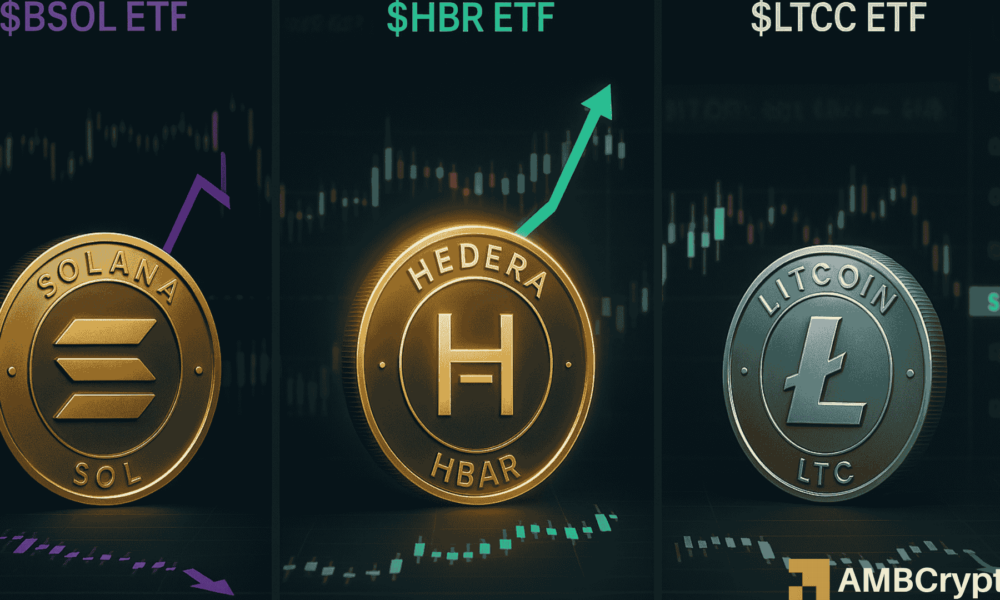
On October 27, the U.S. witnessed the launch of its first wave of altcoin exchange-traded funds (ETFs), a significant step in expanding regulated crypto offerings beyond Bitcoin and Ethereum. The introduction of ETFs for Solana ($BSOL), Hedera ($HBR), and Litecoin ($LTCC) generated a collective $65 million in trading volume on the first day. However, the market’s reaction was mixed, raising questions about whether the anticipated rally in altcoin prices would materialize.
Initial Reactions to Altcoin ETFs
The debut of these altcoin ETFs was met with cautious optimism among traders. Solana’s $BSOL ETF reported a staggering $56 million in trading volume, the highest of any ETF launch this year. Despite this strong showing, Solana’s token price fell 3.65%, suggesting that the enthusiasm may have been more speculative than sustained. This phenomenon illustrates a "buy-the-rumor, sell-the-news" dynamic, where investors take profits after an initial surge in interest surrounding the product’s launch.
Solana’s ETF: A Double-Edged Sword
The initial popularity of Solana’s ETF can be attributed to several factors, including its fundamental growth and the staking benefits it offers. However, the Technical Analysis indicates that traders were already pricing in the anticipated excitement ahead of the ETF’s launch. With the Relative Strength Index (RSI) hovering around 45, market momentum appeared neutral to weak, indicating that many traders opted to take profits rather than hold their positions after the initial hype.
Hedera: A Stronger Performance
In contrast to Solana, Hedera’s $HBR ETF, which only attracted $8 million in first-day trading activity, experienced an impressive 4.9% increase in its token price, closing at $0.193. The RSI marked at 53, showcasing renewed bullish sentiment among investors. This divergence suggests that retail traders may be increasingly exploring lower-cap Layer-1 assets, likely driven by the anticipation of staking yield announcements and a potential for further ETF inflows.
Litecoin: Lackluster Interest
Litecoin’s experience on its first day of ETF trading was markedly different. The $LTCC ETF generated a mere $1 million in trading volume, and Litecoin’s price dropped 3.3%, landing at $96. With an RSI around 43, the indicator pointed to weak demand for Litecoin. This stagnant interest highlights a broader narrative within the crypto market, where Litecoin is often perceived more as a legacy asset than an innovator. For Litecoin to regain traction, significant trading volume will be essential in the days ahead.
Market Trends and Future Implications
The mixed performance of these altcoins indicates that listing an ETF does not automatically result in a market rally. Investors are increasingly discerning, often rewarding assets that showcase robust network growth or strong staking yields, while others suffer from profit-taking. The ability to differentiate between altcoins based on market fundamentals is becoming a more prominent tactic among investors in this evolving landscape.
Conclusion: A Maturing Altcoin Market
Despite the varied reactions to the newly launched altcoin ETFs, the overall successful debut signals a maturing U.S. cryptocurrency market. Investors are beginning to explore altcoin exposure in regulated structures, marking a significant shift. As the market keeps evolving, further developments in staking mechanisms and innovative offerings could reshape trading behaviors and preferences. As traders adapt to this new normal, the landscape for altcoins appears more promising, yet remains complex and selective. The insights gained from this ETF rollout will likely influence trading strategies in the future.