


Title: The Growing Influence of Real-World Assets on Blockchains: A Look at Market Trends
Introduction to Real-World Assets (RWAs) in Blockchain
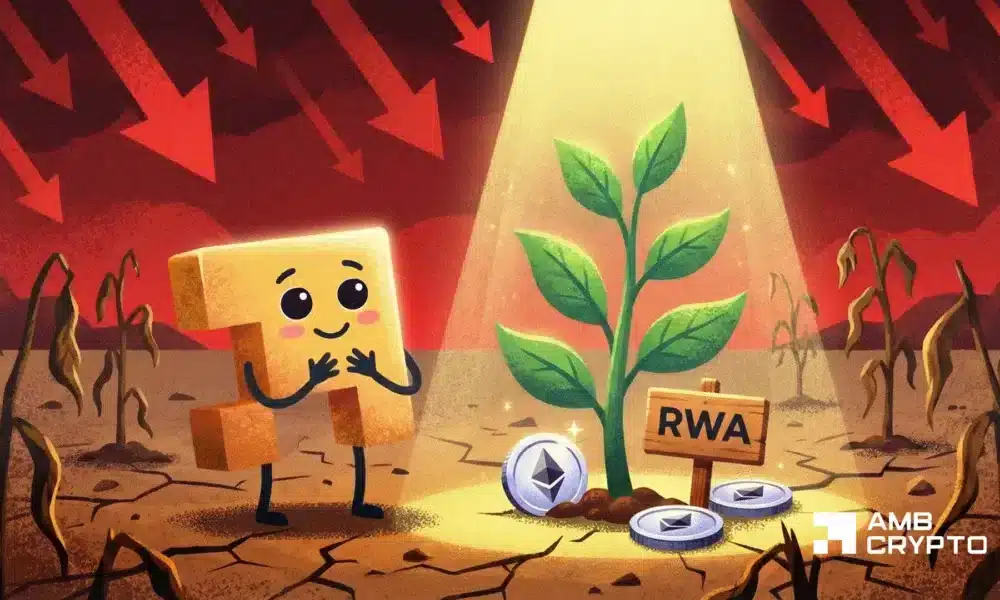
In recent months, the adoption of real-world assets (RWAs) on public blockchains has shown remarkable resilience, demonstrating significant growth even amidst a market downturn. Over the past 30 days, RWAs have surged by 13.5%, showcasing their potential to bridge the gap between traditional finance and the digital asset ecosystem. This article explores the rising prominence of RWAs, the pivotal role played by Ethereum, and the broader implications for investors.
Ethereum: The Vanguard of RWA Growth
Ethereum has emerged as the leading platform for tokenizing real-world assets, boasting an impressive market capitalization of approximately $178.9 billion for tokenized assets as of mid-February. This figure positions Ethereum well ahead of its closest competitors. Solana follows with a market cap of $17.3 billion, BNB Chain at $15 billion, and Arbitrum at $8.6 billion, highlighting Ethereum’s unrivaled dominance in this sector. The growth witnessed by Ethereum over the past month, which includes an addition of $1.7 billion in new value, indicates its central role in capitalizing the RWA space.
Emerging Competitors and Market Dynamics
While Ethereum leads the charge, it is essential to note that other blockchain networks are beginning to carve out their niches. For instance, Arbitrum and Solana have shown significant growth, with increases of $880 million and $528 million, respectively. Other platforms such as Liquid Network, BNB Chain, and XRP Ledger are also joining the fray, underscoring a robust and evolving market for tokenized assets. The diversification of capital among multiple ecosystems suggests a shift towards yield-bearing and cash-flow-backed instruments, signaling a long-term foundational change in the digital asset sector.
The Tokenization Landscape: Focus on Treasuries
Tokenized U.S. Treasuries and government debt currently dominate the RWA landscape, exceeding $10 billion in outstanding on-chain products. These instruments have proven attractive to investors, offering access to yield-bearing assets directly on blockchain networks. The recent monthly inflows into tokenized treasuries highlight their appeal and how investors are actively seeking ways to generate returns amidst broader market uncertainties. The increase in unique wallet addresses that hold RWAs indicates greater market participation, reflecting a growing trust in these investment vehicles.
Convergence of Traditional Finance and Cryptocurrency
Investment analyst and co-founder of Coin Bureau, Nic Puckrin, has emphasized that RWAs represent one of the clearest signs of convergence between the digital asset realm and traditional finance. The shift towards yield-focused instruments could redefine how decentralized finance operates. As Puckrin notes, the active on-chain market cap of tokenized RWAs has risen by 36% this year, with a substantial portion residing in tokenized T-bills, bonds, and money market funds. This trend highlights a significant pivot in investor behavior and the increasing acceptance of cryptocurrency as a serious investment avenue.
Conclusion: The Future of Real-World Assets in Crypto
As we observe the unwavering growth of RWAs, it is clear that these assets are becoming a vital component of the cryptocurrency market, offering a robust avenue for yield generation. Ethereum continues to lead, yet the participation of other chains indicates a diversifying ecosystem. With ongoing innovations in tokenization and increasing investor interest, RWAs present a promising future, poised to transform the finance landscape. The transition reflects an evolving mindset among investors, validating the prospect of integrating blockchain technology with traditional economic structures. As RWAs mature, their role as a bridge to real-world yields will undoubtedly shape the future trajectory of both blockchain and financial markets.