



Ripple’s Push for a New Legal Framework: Implications for XRP and the Crypto Market
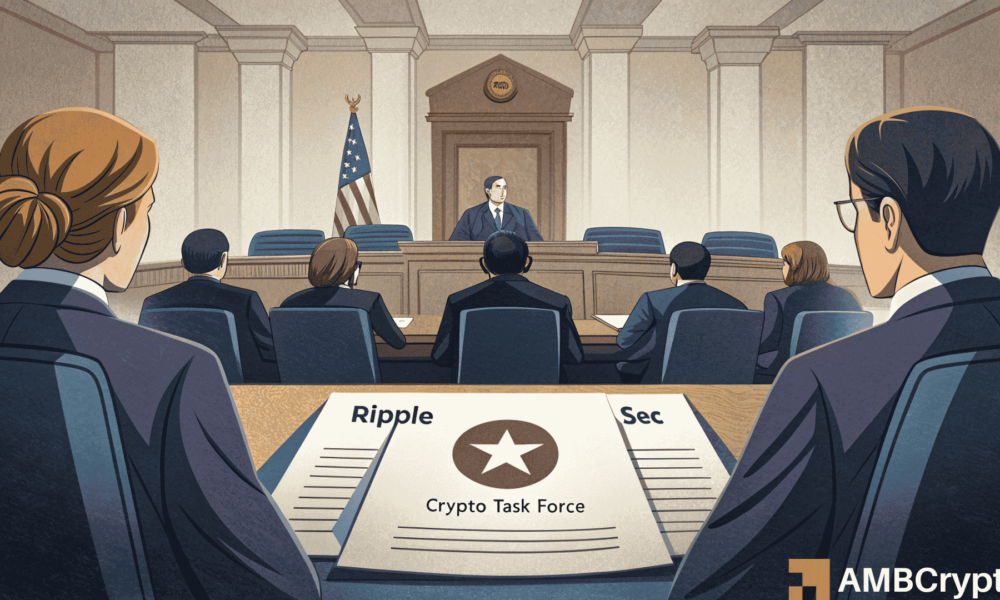
In a bid to redefine how cryptocurrencies are regulated, Ripple has formally appealed to the U.S. Securities and Exchange Commission (SEC) to adopt a legal framework that would exempt tokens, like XRP, from securities laws once their original fundraising obligations have been met. This initiative is especially pertinent with Congress gearing up for comprehensive market-structure legislation and the SEC undertaking significant revisions of its crypto regulations through its newly established Crypto Task Force.
A Clear Distinction: Securities vs. Secondary Trading
Central to Ripple’s petition is the argument for a clear differentiation between a securities transaction and the trading of the asset thereafter. Ripple posits that securities law should strictly apply only to the initial sale where there exists a direct legal relationship between the issuer and the buyer—this relationship creates ongoing rights and obligations. Post the completion of the initial sale, Ripple asserts that tokens should no longer fall under the jurisdiction of securities law. This stance addresses the dilemma of what Ripple characterizes as the “zombie promise” issue, wherein outdated statements from decades past become binding on new buyers in secondary markets who have no prior relationship with the original issuer.
The Case for Commodity-Style Regulation
Ripple advocates for a regulatory environment that treats stable and mature markets, like crypto exchanges, under commodity-style rules rather than existing securities laws. This is based on the observation that buyers in these markets are primarily concerned with liquidity, price discovery, and utility, rather than with the promises made by the token’s issuer. By proposing such a framework, Ripple seeks to align crypto regulation with the unique aspects of the market—an approach that could provide greater clarity and flexibility for all stakeholders involved.
The Significance of Ripple’s Legal Battle with the SEC
Ripple’s request is particularly relevant in light of its ongoing legal struggle with the SEC regarding whether XRP should be classified as a security. The SEC’s lawsuit, initiated in late 2020, hinged on the allegation that Ripple’s sales constituted ongoing investment contracts, which would classify XRP as a security. Ripple’s current argument highlights that even if XRP was initially distributed in a manner akin to securities, it should not maintain that status indefinitely. Under the proposed legal framework, XRP would only be considered a security when Ripple is making specific, enforceable commitments; otherwise, it should operate freely in secondary markets.
The Timing of Ripple’s Proposal
The timing of Ripple’s proposal is critical amid the rapidly evolving landscape of U.S. crypto regulation. With Congress already passing key legislation, such as the GENIUS Act concerning stablecoins, and further comprehensive legislation expected by 2026, Ripple aims to position XRP favorably in this new regulatory paradigm before the final rules are established. Additionally, the SEC’s recent pivot from an enforcement-first regulatory approach to one focused on formal rule-making suggests an opportune moment for Ripple to influence the regulatory outcome for XRP and similar tokens.
Broader Implications for the Crypto Industry
Ripple’s push for a new legal standard has significant implications not just for XRP, but for the entire cryptocurrency space. A shift towards allowing tokens to be traded as non-securities after their fundraising obligations are completed could alter the compliance landscape significantly. This framework could alleviate many regulatory burdens for other cryptocurrencies that currently face scrutiny under existing securities laws. If successful, Ripple’s initiative might pave the way for a more structured and beneficial operating environment for crypto projects, fostering innovation and investment.
Conclusion
In summary, Ripple’s call for a revised legal framework that permits crypto tokens to exist as non-securities once their original fundraising commitments are fulfilled is a noteworthy development in the ongoing discourse surrounding cryptocurrency regulation. The implications for XRP are substantial, potentially removing it from SEC scrutiny and enabling a clearer path for trading in secondary markets. As the U.S. cryptocurrency regulatory framework undergoes significant changes, Ripple’s proactive stance may well shape the future of crypto regulation, emphasizing the need for differentiated rules tailored to the unique characteristics of digital assets.