



The Inevitable Rise of Tokenization in Financial Markets
Tokenization represents a revolutionary shift in the way we perceive and interact with financial assets. MoonPay President Keith Grossman has underscored the unstoppable nature of this transformation, arguing that the forces of innovation will outpace traditional finance’s resistance. He states, “You cannot freeze progress to protect legacy economics. Innovation does not seek permission. It forces adaptation.” This article delves into the growing significance of tokenization, the challenges it faces from traditional finance players, and its potential to reshape markets globally.
Understanding Tokenization: A Game Changer
Tokenization refers to the process of representing real-world assets—such as real estate, stocks, and credit—on blockchain networks, facilitating easy and efficient transactions. This transformation is invaluable for settling trades more rapidly while significantly reducing associated costs. Furthermore, tokenized assets are globally scalable, meaning that they have the potential to reach audiences and markets that were once inaccessible. As U.S. regulators encourage the transition of capital markets to on-chain ecosystems, many industry observers believe that tokenization is not just a trend but an inevitable shift in finance.
Resistance from Legacy Players
Despite the evident benefits, tokenization has faced criticism from traditional finance incumbents. Organizations like the World Federation of Exchanges (WFE) have raised concerns about “unregulated tokenized equities,” claiming they could jeopardize market integrity. Additionally, Citadel Securities has called for regulatory frameworks to be established before tokenized markets can flourish. Such warnings indicate that established financial entities view tokenization as a threat to their traditional methods of operation. Crypto advocates interpret these actions as defensive moves against an impending revolution, indicating that the embrace of tokenization is a growing phenomenon.
The Inevitable Shift: Reflecting on Digital Media
Grossman draws an interesting parallel between the media industry’s transition to digital formats and the anticipated evolution of finance. Just as media entities adapted to digitization, Grossman argues that the finance sector will also undergo a profound transformation. “Tokenization will be just as disruptive to finance as digitization was to media; and likely faster,” he asserts. This sentiment is shared by other industry leaders, including Eli Ben-Sasson, a founder of Starknet and Zcash, who bluntly states, “crypto will eat tradfi infra. And leave no crumb.” This consensus suggests a collective belief in the inevitability of tokenization within the financial landscape.
Growth in Tokenized Markets
The numbers are compelling. Currently, tokenized markets have surpassed $700 billion, with expectations to reach an astronomical $1 trillion, largely driven by the stablecoin segment, which alone has a $300 billion supply. Recent trends indicate that tokenized equities have gained traction, demonstrating remarkable growth even amid a broader market downturn. Leading issuers like Ondo Finance, Backed Finance (xStocks), and Securitize are paving the way for this change, showcasing that the appetite for tokenized assets is strong and persistent.
Blockchain Platforms Leading the Way
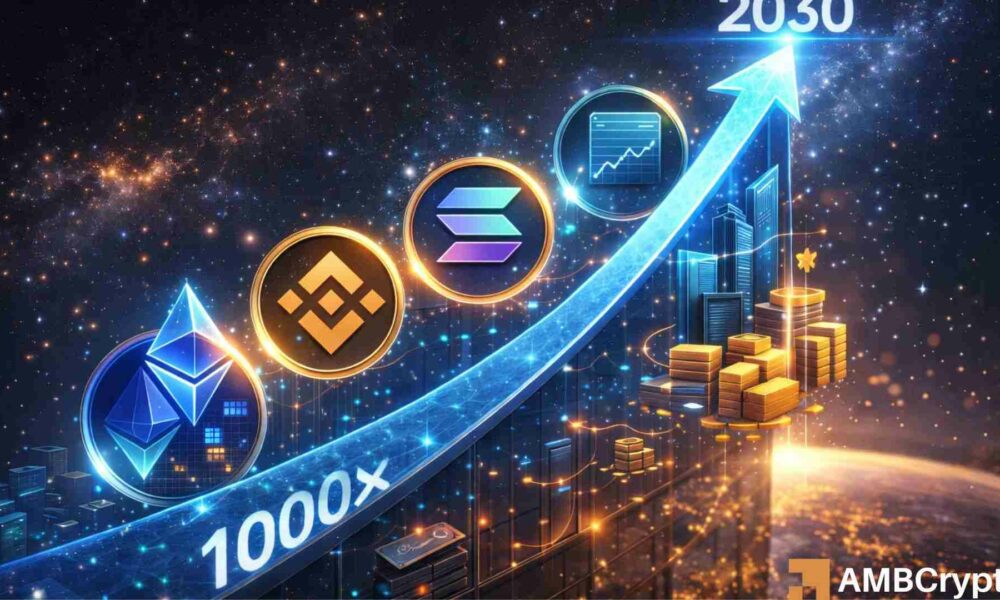
When examining the technological backbone of tokenized assets, Ethereum stands out as the leading platform, boasting $335 million in settlement transactions for on-chain stocks. Following closely are Solana with $164 million and Algorand and BNB Chain ranking third and fourth, respectively. These platforms are positioned to provide the necessary infrastructure for a tokenized future, facilitating transactions that are expected to be quicker and more secure than those offered by traditional finance avenues. Grayscale anticipates that the broader tokenized markets could expand by an astonishing 1,000 times by 2030, with Ethereum, BNB, Solana, and Chainlink [LINK] set to be key beneficiaries of this growth.
Final Thoughts
As we stand on the brink of this financial revolution, it becomes increasingly evident that tokenization represents a compelling future for asset markets. Despite the opposition from legacy financial institutions, key industry figures like Keith Grossman maintain that tokenization is an irreversible trend. The projected growth to a trillion-dollar market, along with the transformative potential for finance, positions tokenization as a catalyst for innovation. Embracing this change will likely determine the winners of the future financial landscape, as incumbents adapt or risk obsolescence.