


Lighter (LIT) Faces Significant Downturn Despite New Staking Initiative
The Current Market Dilemma for Lighter (LIT)
In recent weeks, Lighter (LIT) has experienced notable downward pressure, especially after reaching a high of $4.50. A week ago, the altcoin attempted a rally but faced resistance at $3.20, leading to a continued decline that saw it break through the crucial $2 support level. As of now, LIT is trading at approximately $1.86, reflecting a daily decrease of 14.31% and extending a bearish trend that has persisted for the past week. This situation raises concerns among investors and market watchers regarding LIT’s future trajectory.
New Opportunities: Staking and Market Reach
Despite the ongoing market challenges, Lighter has sought to enhance its ecosystem by launching a staking feature for LIT. With this initiative, users can stake their LIT tokens and gain access to the Lighter Liquidity Pool (LLP). For every token staked, a corresponding deposit of 10 USDC is made into the LLP, effectively bridging the gap between LIT holders and LLP participants. This staking model not only incentivizes users through potential yield but also aims to improve risk-adjusted returns across the ecosystem. Remarkably, the demand for staking surged shortly after its launch, with 10% of the total circulating supply staked almost immediately, highlighting a strong interest from users despite the bearish market.
Analysts Weigh In: A Mixed Perspective on Staking Potential
The introduction of staking has been met with varied opinions among analysts. Some, like Thor, perceive LIT staking as a positive development, suggesting that it could lead to increased revenues as higher trading fees are generated. However, others express caution, noting that staking might exert additional selling pressure on LIT. Concerns remain that holders could withdraw their staked tokens to capitalize on the current low prices, thus further impacting LIT’s trading dynamics. While the staking feature aims to stabilize the ecosystem, market conditions continue to oscillate, reinforcing a complex outlook for LIT.
The Impact of Whale Activity on Market Sentiment
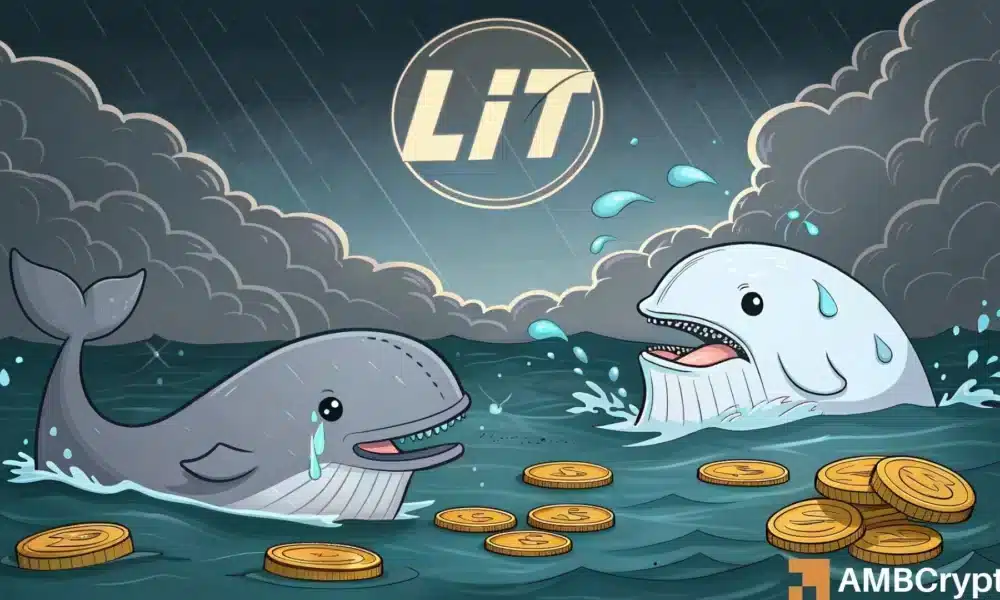
Lighter’s downward trend has particularly affected large investors, often referred to as "whales." According to Onchain Lens, one whale with a long position in LIT (3x) is facing a staggering unrealized loss of over $2.84 million, raising alarms about potential forced liquidation should conditions fail to improve. Another whale partially liquidated its LIT (1x) position, incurring a $509,000 loss. Such significant liquidations underscore the heightened risks associated with LIT and have increased market anxiety. On January 15, the total liquidated long positions reached a concerning $2.17 million, amplifying a broader trend that has seen nearly $8.7 million in liquidated positions overall.
Technical Analysis: Indicators Suggest Continued Vulnerability
Currently, LIT’s price performance exhibits concerning indicators for investors. Following its drop below the $2 mark, the asset’s Stochastic RSI has plunged deeper into the oversold zone, now sitting at 2.3. Additionally, LIT’s Relative Strength Index (RSI) has fallen to 44 after showing a bearish crossover. These technical indicators signal a continued seller dominance in the market, suggesting that if prevailing trends persist, further declines toward the $1.50 mark could be on the horizon. However, should there be a rebound in demand, particularly driven by the recent staking initiative, LIT could see a potential recovery towards the $2.60 range.
Conclusion: Navigating a Volatile Landscape
Lighter (LIT) currently faces a tumultuous period, exemplified by the challenges posed by whale liquidations and an overall bearish market sentiment. Although the launch of staking has garnered substantial participation—reaching 10% of the circulating supply—the stark reality of the current price dynamics cannot be ignored. With significant unrealized losses among whales and key technical indicators signaling vulnerabilities, the path ahead for LIT remains uncertain. Investors and stakeholders must remain vigilant, continually monitoring market conditions and the potential effects of continued staking activity to gauge LIT’s future performance.